Welcome to

Mobile tyre fitting · North West & North Wales · We fit around you

Approved by the AA and RAC. No call-out charge. Around 32 minutes on average, 24 hours a day.
info@yournewtyres.co.ukTell us your name and tyre size — we will reply on WhatsApp with a price and an ETA.
Fit winter tyres when the average daily temperature drops below about 7 degrees, which in the UK is usually early November, and take them off around Easter. The trade rule of thumb is change at Halloween, change back at Easter. Winter tyres are not a legal requirement anywhere in the UK.
If you are thinking about winter tyres, book the changeover before the first cold snap rather than after it, because everybody wants the same fortnight in November. We do the swap on your drive rather than in a queue at a depot.
The marking to look for is the three-peak mountain snowflake. It is a tested standard under UNECE R117, requiring at least 7 per cent shorter snow braking or 10 per cent faster snow acceleration than a reference tyre. M+S on its own is self-declared by the manufacturer and is not the same assurance.
A winter tyre works through compound and through sipes, the fine slits across the tread blocks that open under load and bite into snow and slush. That is also why they should come off in spring: a soft compound with an open tread wears quickly and feels vague in summer heat.
In the UK there is no legal requirement to fit them, and no insurer treats them as a modification. If you drive in Germany, Austria or much of Scandinavia in winter, there are legal requirements, and a hire car does not always come fitted.
The practical obstacle is always the changeover, which is why we do it on your drive rather than in a queue in November. Book early for the seasonal swap, because everybody wants the same fortnight, and we will tell you honestly what the lead time is.
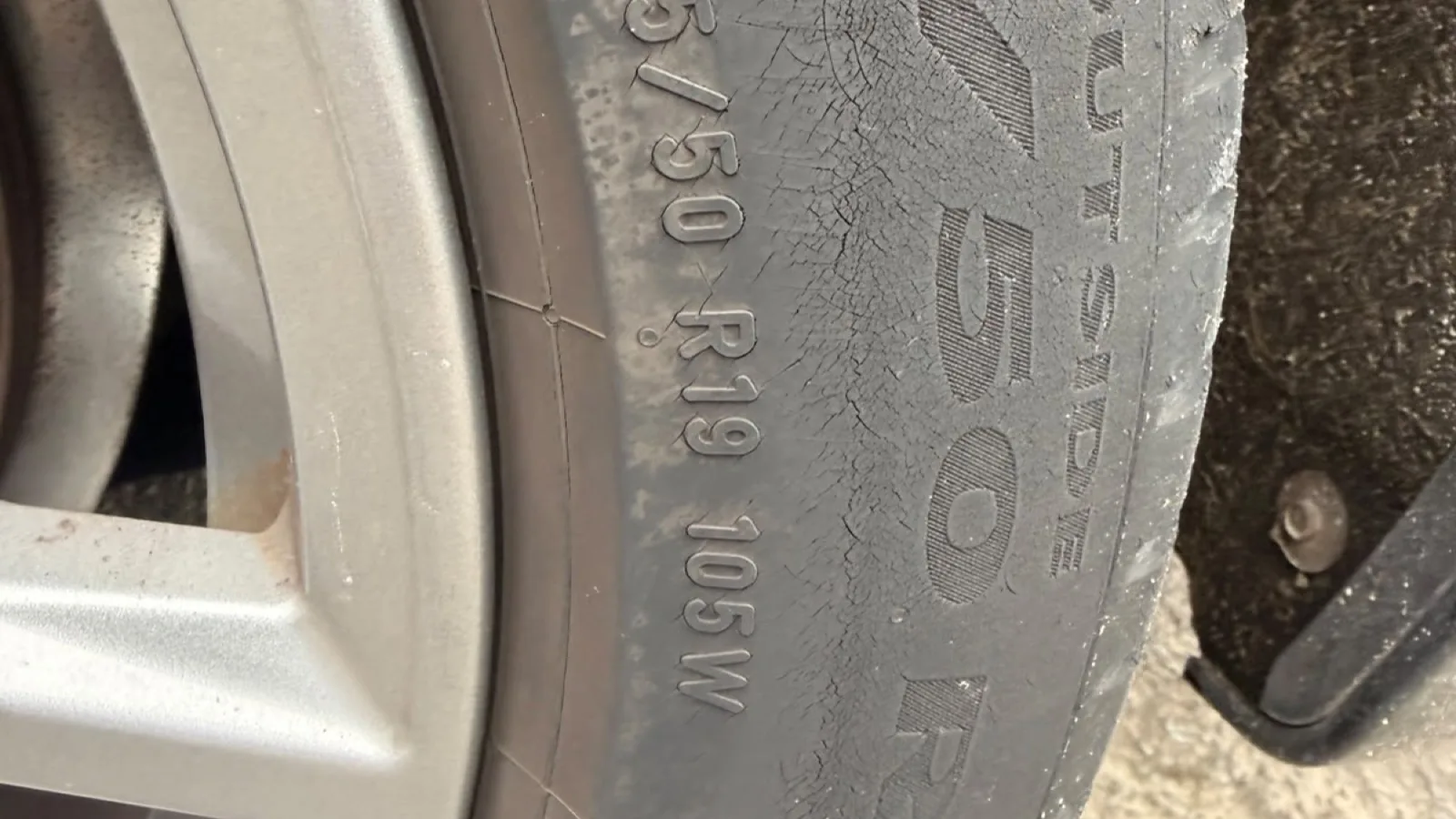
The size is on the sidewall of the tyre, or send us a photo of it. It lands with the fitter on shift. No call-out charge, and the fitting is already in the price.
You are through to YourNewTyres. What size are the tyres?
The size is printed on the sidewall, like 205/55 R16. Send that and where you are, and I will come back with a fitted price and the next slot.
A photo of the sidewall does the job if you would rather not type it out.
Opens WhatsApp with your message ready to send
This is what we get called to, every day and every night.
A blowout on the East Lancs with the traffic doing seventy. You get the car to the layby and the sealant kit does nothing for a torn sidewall. The tyre and the fitter come to you.
Nurses, warehouse staff and drivers start before any tyre bay opens. A flat at six in the morning is not a reason to lose a day. We are already on shift.
Most cars built since 2015 have a can of foam where the spare used to be. It will not fix a sidewall or a big cut. A mobile fitter is the spare wheel now.
Winter, all-season or summer is a real choice for a car that lives in the North West, and it depends on the roads you drive and the months you drive them. Here is the comparison side by side.
Best of the three. Good Wears quickly, feels vague
Compound hardens, grip drops. Good Best of the three
Poor. 30 to 50 per cent longer to stop than a winter tyre. Capable if it carries the 3PMSF snowflake Designed for it
Fewest. Between the two Up to ten times more than a summer tyre
Two, if you also run winters. One, all year Two, plus storage and two swaps a year
No. On most, check the sidewall Yes
A winter tyre is a cold tyre, not a snow tyre. Most of its benefit is on cold wet roads, which is what a British winter mostly is.
Running two sets is not hard because of the tyres. It is hard because of the two appointments a year.
Two sets of tyres means two swaps a year, booked in the two fortnights when every garage in the country is booked solid, costing you two half-days. Most people manage it for a winter or two and then stop, which leaves them on the wrong tyres for half the year. That is a worse outcome than never buying winters at all.
We come to your house with the equipment and swap the set over on your drive. Balanced, pressures set, TPMS reset, and you have not left the house. Book the first week of November and the week after Easter and it is dealt with for the year.
If your winter set is on its own wheels, the swap is quicker and cheaper and the tyres last longer because they are not being broken off the bead twice a year. If you only have one set of wheels we will still do it, it just takes longer.
Cool, dry, out of sunlight and away from electric motors. Sets on rims stack flat; loose tyres stand upright. See how to store tyres for the detail that actually makes a difference.
Six things, with the numbers where numbers exist.
Merityre's published figures put a summer tyre at 30 to 50 per cent longer to stop than a winter tyre on snow or ice.
Most of the benefit is on cold wet tarmac, which is what a British winter mostly consists of.
Kwik Fit's figure. Those extra biting edges are what grip a cold, wet or snowy surface.
A 2025 Autobild test recorded 50.9m wet braking for the winner against 70.5m for a budget winter tyre. Buying winter is not enough, buy a good one.
Two gives you grip at one end. In the cold that produces a car that pulls away confidently and then spins.
Above 7 degrees they wear fast and feel vague. If you will not swap them back, buy all-seasons instead.
No garage, no queue in the first week of November, no call-out charge.
Hills and untreated roads point to winters. Treated town roads usually point to all-seasons, and we will say so.
On their own rims is usually the better long-term buy. We will price both ways and explain the difference.
Two visits, on your drive, at a time you choose rather than whatever slot is left.
Pressures set, TPMS reset, the other set left with you or taken away, and you never queued for either.
 Spread the cost of your tyres
A second set of four is a real outlay, and it arrives in the most expensive month of the year. 0% interest on two tyres or more, subject to status.
Winter tyres are not a legal requirement anywhere in the UK. They use a softer compound and up to ten times more sipes than a summer tyre, and they work best below about 7 degrees, which in the UK is roughly November to April. On snow or ice a summer tyre takes 30 to 50 per cent longer to stop. Fit four, never two. We supply, fit and swap winter tyres at your home across the North West and North Wales, 24 hours a day, with no call-out charge. Call 0300 124 6981 or send your size on WhatsApp.
Read any page about winter tyres and you will find a great deal about grip, compounds and snow, and nothing at all about the thing that actually stops people buying them. Running winter tyres means two sets, somewhere to keep the set you are not using, and two appointments a year booked in the exact fortnights when every tyre bay in the country is at capacity. The advice offered by the biggest seller of winter tyres in this country is to drive to one of its two thousand fitting centres, twice, in the busiest weeks of its year. That is why so many people buy one set of winter tyres, use them for a season and never swap them again. Our answer is simply to come to the house. The swap happens on your drive at a time you picked, twice a year, and the objection disappears.
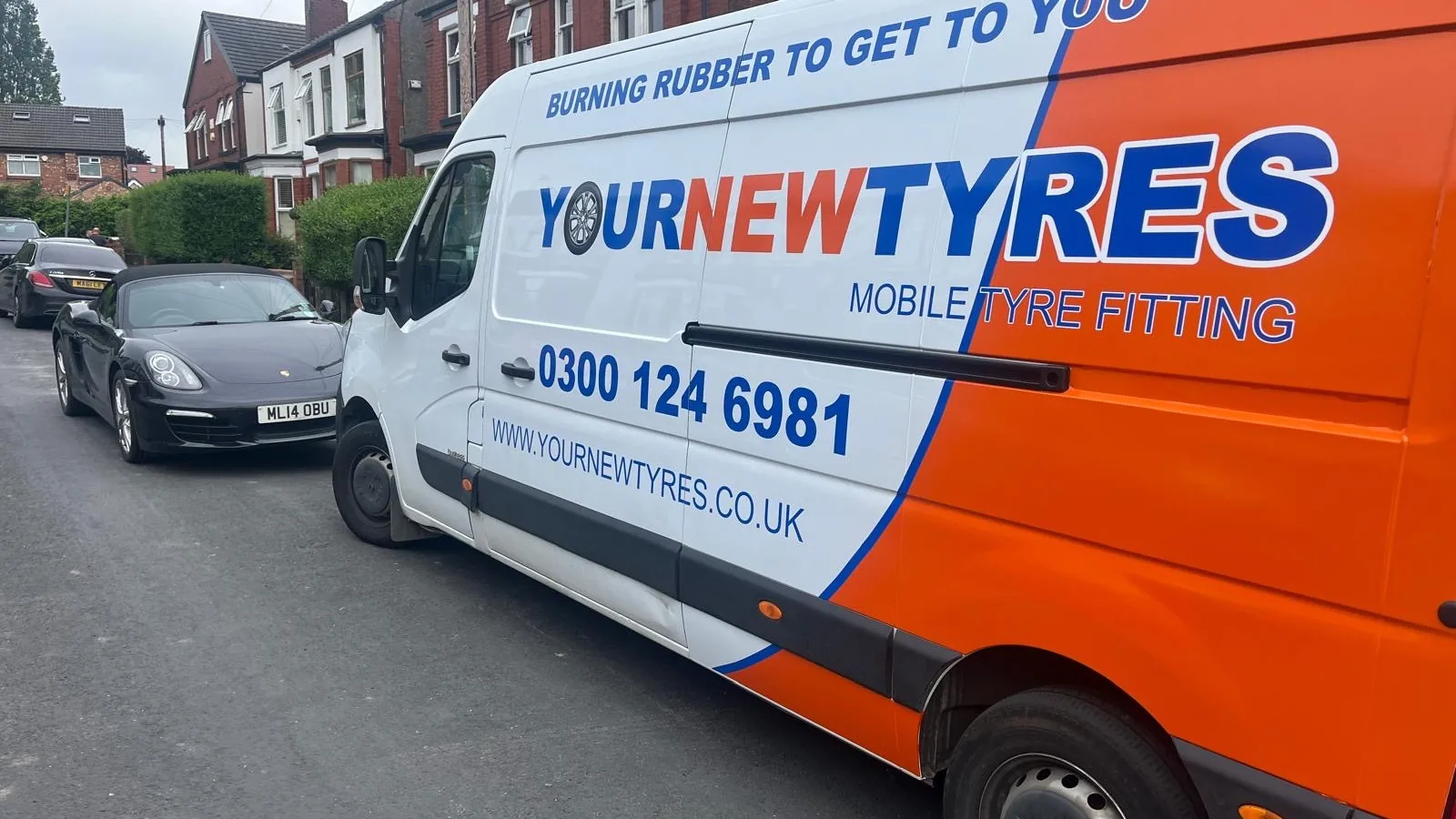
The name does the category a disservice, because it makes people think about snow, and snow is the least of it. What changes below about 7 degrees is the rubber itself: a summer compound stiffens, the contact patch stops conforming to the road surface properly, and braking distances lengthen on perfectly clear, wet tarmac. The UK average daily temperature is below that threshold from roughly November to April. So the case for a winter tyre in Britain is not built on the four days a year when it snows, it is built on the four months of dark, cold, wet mornings when a summer tyre is being asked to work outside the range it was designed for. If you have ever wondered why the car feels less planted in January on roads that are merely wet, that is the answer.
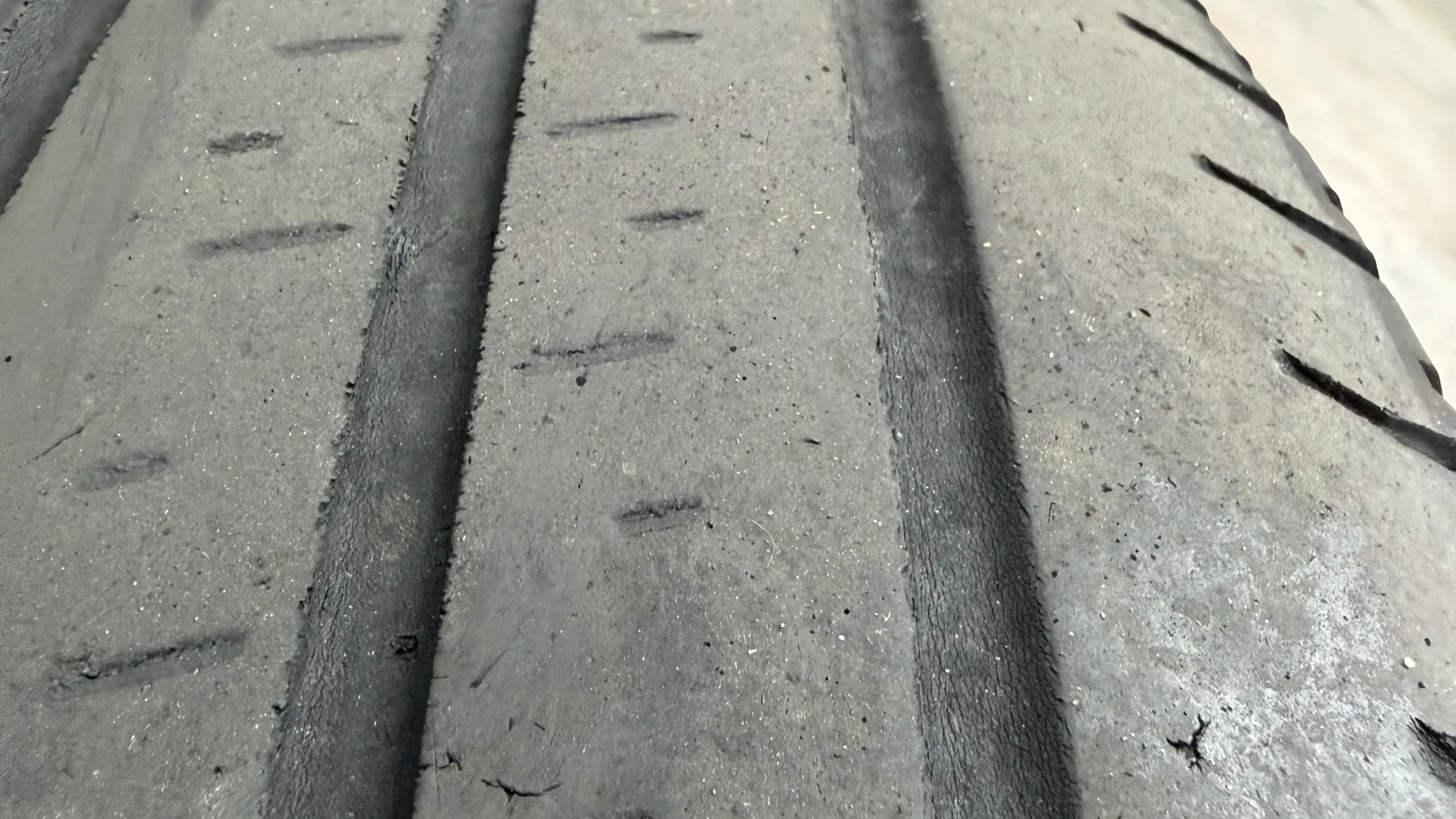
It is worth knowing how much variation sits inside this category, because the marketing implies a winter tyre is a winter tyre. In a 2025 Autobild winter test the winning Goodyear stopped in 50.9 metres in the wet where an unnamed budget winter tyre took 70.5 metres. Twenty metres, between two tyres both sold as winter tyres, both perfectly legal, both carrying the snowflake. That gap is larger than the gap between an average summer tyre and an average winter tyre, which means a cheap winter tyre can leave you worse off than you expected while feeling like you have done the responsible thing. When we quote you a winter set we will give you the EU label figures and tell you which of them is actually good, rather than which of them is cheapest to put on the invoice.
The guides that answer the question behind the question.
 Summer vs winter vs all-seasonThe three-way comparison, with the temperatures.Read the guide →
 Do you need winter tyres in the UK?The honest answer for a North West driver.Read the guide →
 Best all-season tyres for UK roadsWhat actually performs when it is cold and wet.Read the guide →
 Tyre pressure in cold weatherWhy the light comes on every November.Read the guide →
 How to store tyres properlyIf you do run two sets, this is how to keep them.Read the guide →
 Winter driving checklistEverything else worth doing before the first frost.Read the guide →
4.4★★★★★average rating on Google
Got us out of an unfortunate place of a Luton van blowout, super quick helpful and fairly priced!
Stranded in a car park with no spare! Called and they came within the hour, changed the tyre and was on my way 20 minutes later. Great service, delighted they made it so easy.
Brilliant service, same day, quick and easy. Was really rushed for time and they moved things around to ensure they got to me to get it fixed. Would defo recommend
Book the November fit and the Easter swap in one go. Send your size and postcode on WhatsApp. No call-out charge, 24 hours a day.
A fitter is out on the road as you read this. Send the size now and the next free slot is yours, at the same price whatever the hour.
The twelve questions drivers actually ask, and two nobody answers.
No. There is no UK law requiring winter tyres at any time of year, anywhere in the country. They are a choice, and for some drivers a very good one.
That is different from much of continental Europe, where several countries mandate winter or snowflake-marked tyres for part of the year, sometimes with a minimum tread depth attached.
If you are driving abroad in winter, check the rules for every country on the route, including ones you only pass through.
When the average daily temperature drops below about 7 degrees, which in the UK is roughly the start of November, and take them off around Easter.
The trade rule of thumb is change at Halloween, change back at Easter. It is approximate but it maps well onto the UK temperature curve.
The temperature matters more than the calendar and more than snow. Winter tyres are not snow tyres; they are cold tyres, and most of their benefit is on cold wet roads rather than in snow.
Four. Fitting two gives you a car with grip at one end and not the other, and in the cold that is genuinely dangerous rather than merely suboptimal.
Winters on the front of a front-wheel-drive car is the common version, and it produces a car that steers and pulls away confidently and then spins when you lift off in a wet bend, because the rear has far less grip than the front.
Every manufacturer and every serious test body says the same thing: four or none.
Yes, though less dramatically than on snow. The sipes, the tiny slits across the tread blocks, bite into the surface and the compound stays flexible when a summer tyre has gone hard.
Nothing grips well on sheet ice. What a winter tyre does is widen the margin at every point between a cold dry road and an icy one, and most of the benefit you will actually feel is on cold wet tarmac rather than ice.
For extreme conditions there are Nordic winter tyres carrying a separate ice grip icon on the EU label, tested to ISO 19447. They are rarely the right choice for the UK.
On snow or ice a summer tyre takes 30 to 50 per cent longer to stop than a winter tyre, according to figures published by Merityre. On cold wet tarmac the gap is smaller but still meaningful.
It is also worth knowing how wide the spread is within the winter category itself. A 2025 Autobild winter test recorded 50.9 metres of wet braking for the winning Goodyear against 70.5 metres for an unnamed budget tyre, a twenty metre difference between two tyres that both call themselves winter tyres.
So buying winter tyres is not the whole decision. Buying good ones is.
In the cold, no. In the warm, yes, and quickly. The soft compound that keeps working at 2 degrees is the same compound that shears away at 25.
That is the real reason to take them off in spring, more than the handling. Running winters through a hot summer can cost you most of a set.
If the twice-yearly swap is the part you will not keep up with, be honest about that now and buy all-season tyres instead. They are a better outcome than winter tyres left on all year.
Slightly. The softer compound and the extra sipes raise rolling resistance a little, and the EU label's fuel efficiency class from A to E lets you compare before you buy.
The RAC puts the whole spread from best to worst class at about 7.5 per cent, so the difference between a good winter tyre and your summer tyre is normally small.
It is a fair item on the debit side of the ledger, but it is not the reason to decide either way.
Because above about 7 degrees they are worse at everything: longer braking distances, vaguer steering, more noise and much faster wear.
The compound is engineered to stay flexible in the cold. In summer heat that same flexibility means the tread squirms under load, which is what makes the car feel imprecise and what wears the tyre out.
If running one set all year is what you actually want, that is what all-season tyres are for.
Usually a little, yes. Kwik Fit notes that winter tyres can have up to ten times more sipes than a summer tyre, and all those extra edges make noise.
Premium winter tyres have narrowed the gap considerably and the EU label gives you the external noise figure in decibels with an A to C class so you can compare.
For most people the noise is noticeable for the first week and then unremarkable.
Across an axle, no. Front to rear it is legal, and we would still advise against it.
Two different seasonal compounds on one car gives you two different levels of grip in the cold, and you find out where the boundary is at the worst possible moment.
If you are moving to winters, do all four. See mixing tyres.
Very well in cold wet conditions, which is what most of a British winter actually is. In warm rain a summer tyre is better.
This is the point most often missed about winter tyres. They are not for the four snow days; they are for the four months of cold, wet, dark mornings where a summer compound is operating below its designed temperature.
That is also the argument for all-seasons, which capture most of the same benefit without the swap.
Somewhere cool, dry and out of direct sunlight, stacked flat or stood upright but not hung, and away from anything running an electric motor because ozone degrades rubber.
This is the part of running two sets that people underestimate, particularly without a garage. Tyres on rims can be stacked; tyres off rims are better stood upright and turned occasionally.
Our guide on how to store tyres covers it properly.
Yes, and this is the single best reason to use a mobile fitter for winter tyres. The twice-yearly changeover is the whole friction of running two sets, and we remove it.
We come to your drive with the equipment, swap the set over, balance them, set the pressures and take nothing away except the tyres you want storing elsewhere. It happens while you are at home rather than costing you two half-days at a garage in the busiest fortnight of their year.
Book it for the first week of November and the week after Easter and you never have to think about it again. Call 0300 124 6981 or send a message on WhatsApp.
It depends where you drive. If you are in the hills, regularly on untreated roads, or cannot afford to be stuck, yes. If you drive treated main roads in a town, all-season tyres get you most of the benefit with none of the swapping.
The North West and North Wales cover both cases within an hour of each other. Somebody in central Warrington and somebody above Llangollen are not answering the same question.
Tell us where you drive and we will give you a straight recommendation rather than the more expensive one. Read do you need winter tyres in the UK.