Welcome to

Mobile tyre fitting · North West & North Wales · We fit around you

Approved by the AA and RAC. No call-out charge. Around 32 minutes on average, 24 hours a day.
info@yournewtyres.co.ukTell us your name and tyre size — we will reply on WhatsApp with a price and an ETA.
Your car's tyre pressure is set by the car maker and printed on a sticker inside the driver's door frame, inside the fuel flap and in the handbook. Most cars sit between 30 and 36 psi, about 2.1 to 2.5 bar. Use your car's own figure, set it cold, and check it once a month.
Five steps, two minutes:
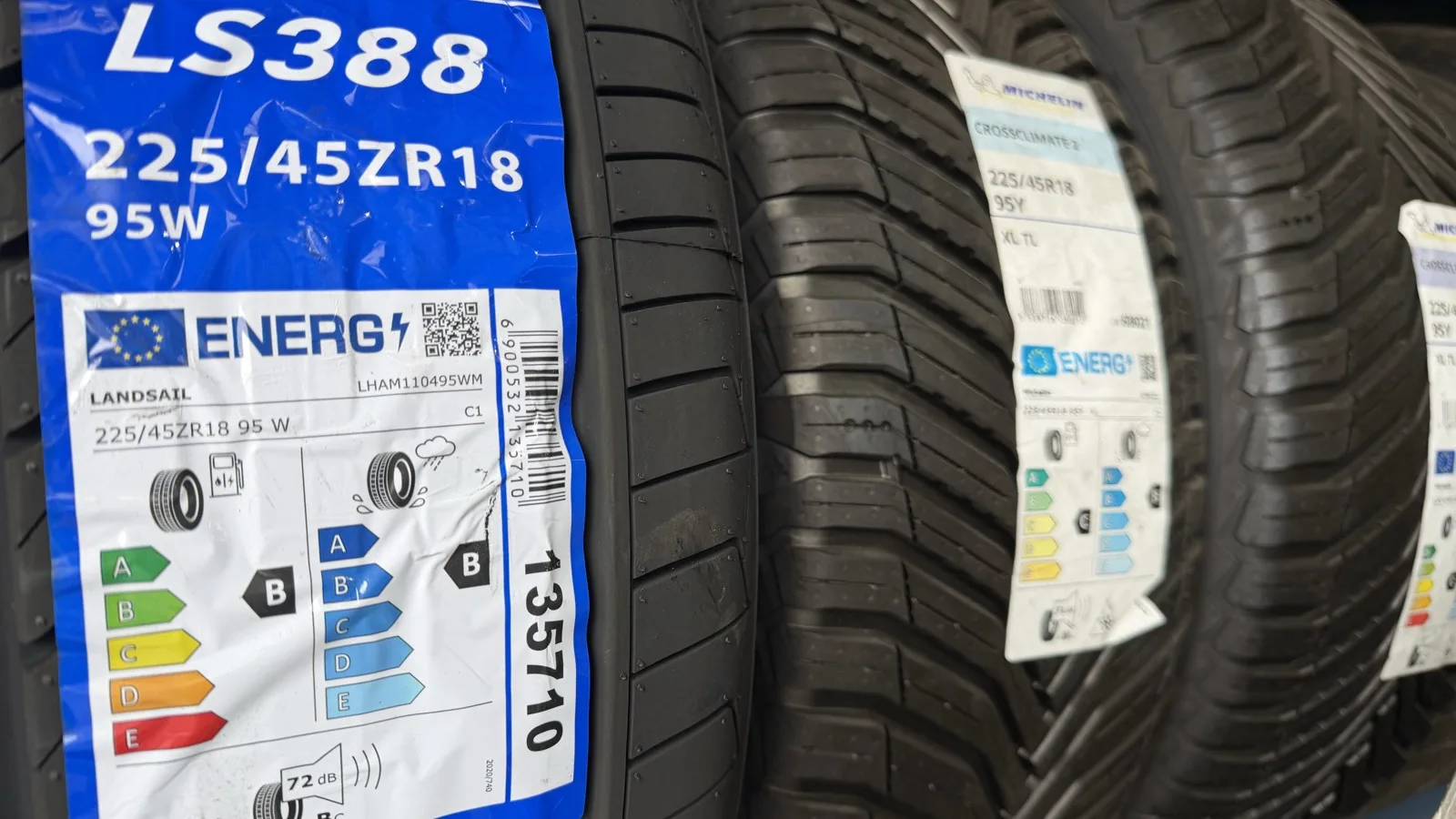
Do not use the big number on the tyre sidewall. That is the most the tyre can hold, not what your car needs. How to read tyre size shows what the rest of the sidewall means.
Why bother? A tyre that is 20% low wears faster on both edges, uses more fuel and runs hotter. Hot, soft tyres are how blowouts start. Most soft tyres look normal, so the eye will not catch it. A gauge will. How to check your tyres adds the other four checks worth doing at the same time.
One tyre keeps dropping? That is usually a slow puncture, not bad luck. Topping it up every week only hides it. Send a photo on WhatsApp to 07943 185471 or call 0300 124 6981. We repair it at your door to BS AU 159 for £39.95 if it is in the repairable area.
The size is on the sidewall of the tyre, or send us a photo of it. It lands with the fitter on shift. No call-out charge, and the fitting is already in the price.
You are through to YourNewTyres. What size are the tyres?
The size is printed on the sidewall, like 205/55 R16. Send that and where you are, and I will come back with a fitted price and the next slot.
A photo of the sidewall does the job if you would rather not type it out.
Opens WhatsApp with your message ready to send
Covered here: where do you find the right tyre pressure for your car; should front and rear tyre pressures be the same; how do you check and set your tyre pressure; what happens if your tyre pressure is too low or too high; why does one tyre keep losing pressure.
Look in three places. The first is the easiest. Open the driver's door and look at the frame where the door shuts. Most cars have a sticker there with a small table of numbers. Some put it on the edge of the door itself.
No luck? Open the fuel flap. Many cars, especially French and German ones, print it inside. Still nothing? It is in the handbook, under wheels and tyres. Some newer cars also show it on the dashboard screen in the tyre menu.
The sticker gives more than one figure. It lists pressures by tyre size, by front and rear, and by how loaded the car is. Pick the line for the tyre size on your car. You can read the size on the sidewall, like 205/55 R16. If the car came with two wheel sizes, the numbers can be different for each, so match the size first.
Not always. Many cars run a little more in the front, because the engine sits there. Some run more in the rear, especially estates and cars with the engine behind. Your sticker tells you which.
Then there is load. The sticker usually has a normal figure and a fully loaded figure. Normal is one or two people and a bit of shopping. Fully loaded is five people, a full boot, a roof box or a caravan on the back. The loaded figure is higher, often by 0.2 to 0.5 bar. Set it before a big trip, then drop back after.
Towing is its own case. Check the handbook, because some cars want extra in the rear tyres when the tow bar is in use. If in doubt, the normal load figure is right for everyday driving. Tyre pressure in cold weather covers why the numbers drop in winter.
Check them cold. Tyres heat up as you drive and the air inside expands. A warm tyre reads higher than it should, so you end up setting it too low. Before you drive, or after a mile or two, is best.
Unscrew the valve cap. Press the gauge on straight and firm, so it does not hiss. Read the number. Garage air machines let you set a target and fill until it beeps. They are handy, but some read a little off, so a cheap gauge of your own is worth having for a second opinion.
Do all four. Then do the spare if you have one, because a flat spare is no spare. Space saver spares often need a much higher pressure, so check the number on the wheel or in the handbook. Last job: refit the caps. They keep dirt out of the valve. If the warning light was on, some cars need a reset from the menu.
Too low is the common one, and the risky one. The tyre flexes more, so it heats up. It wears on both outer edges. It takes more effort to roll, so you burn more fuel or battery. The steering feels heavy and slow. Run it low for long enough and the sidewall can fail. That is a blowout.
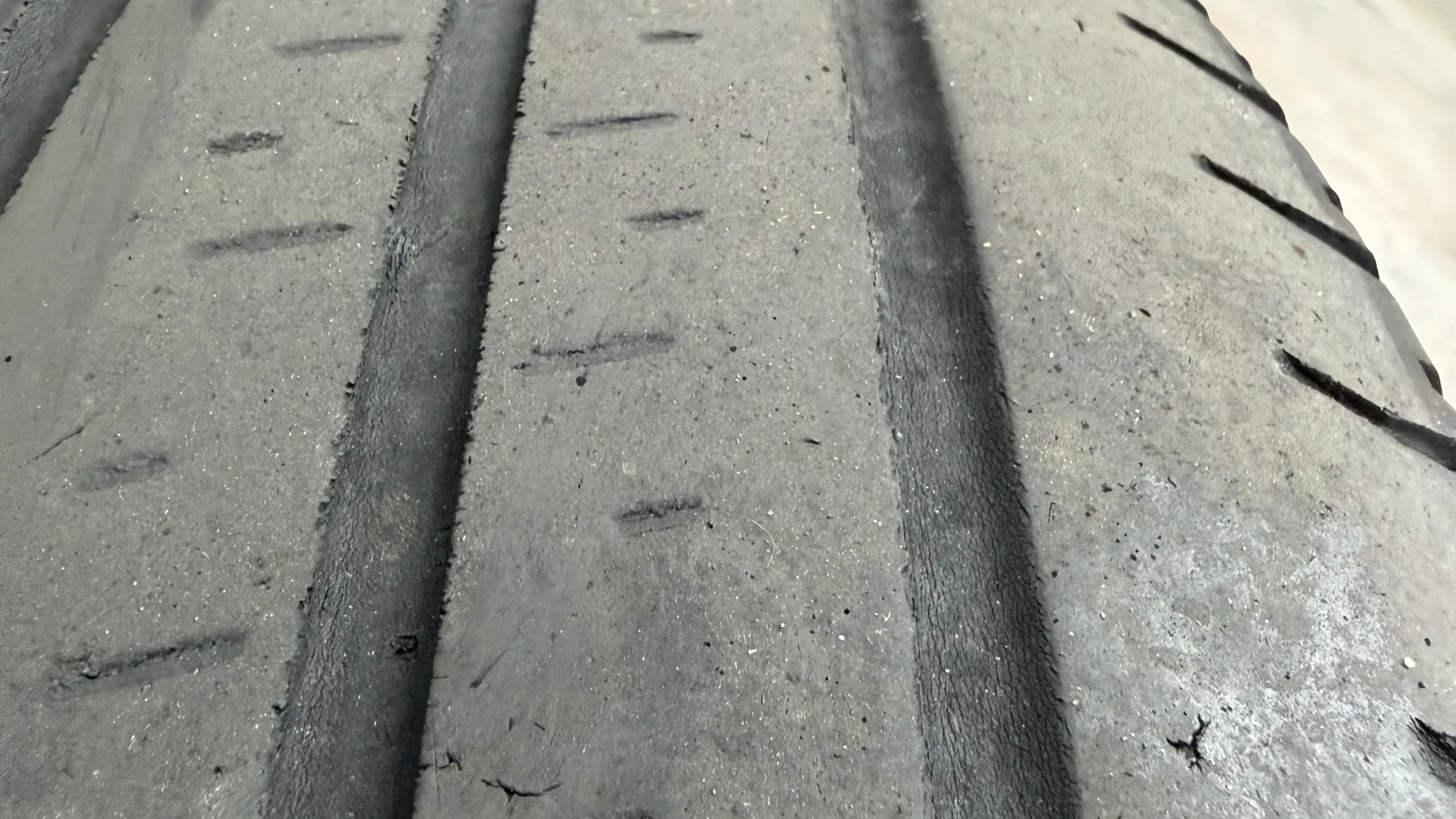
Too high is less common. The tyre bulges in the middle, so less rubber touches the road. Grip drops, especially in the wet. The ride gets harsh and the centre of the tread wears first.
Both show up in the wear pattern. Worn edges point to low pressure. A worn centre points to high pressure. Wear on one edge only is usually tracking, not pressure. Uneven tyre wear shows each pattern and what it means.
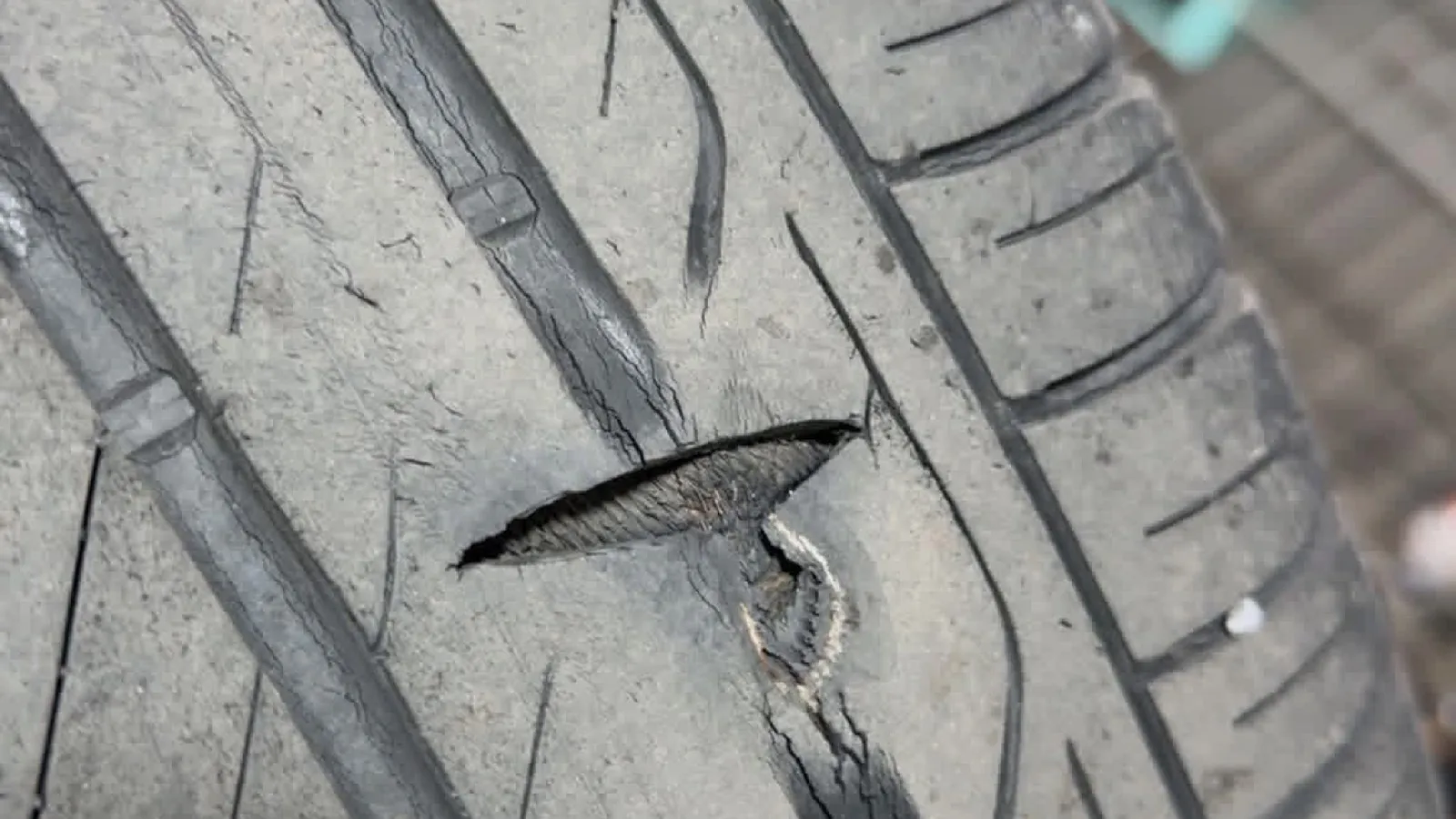
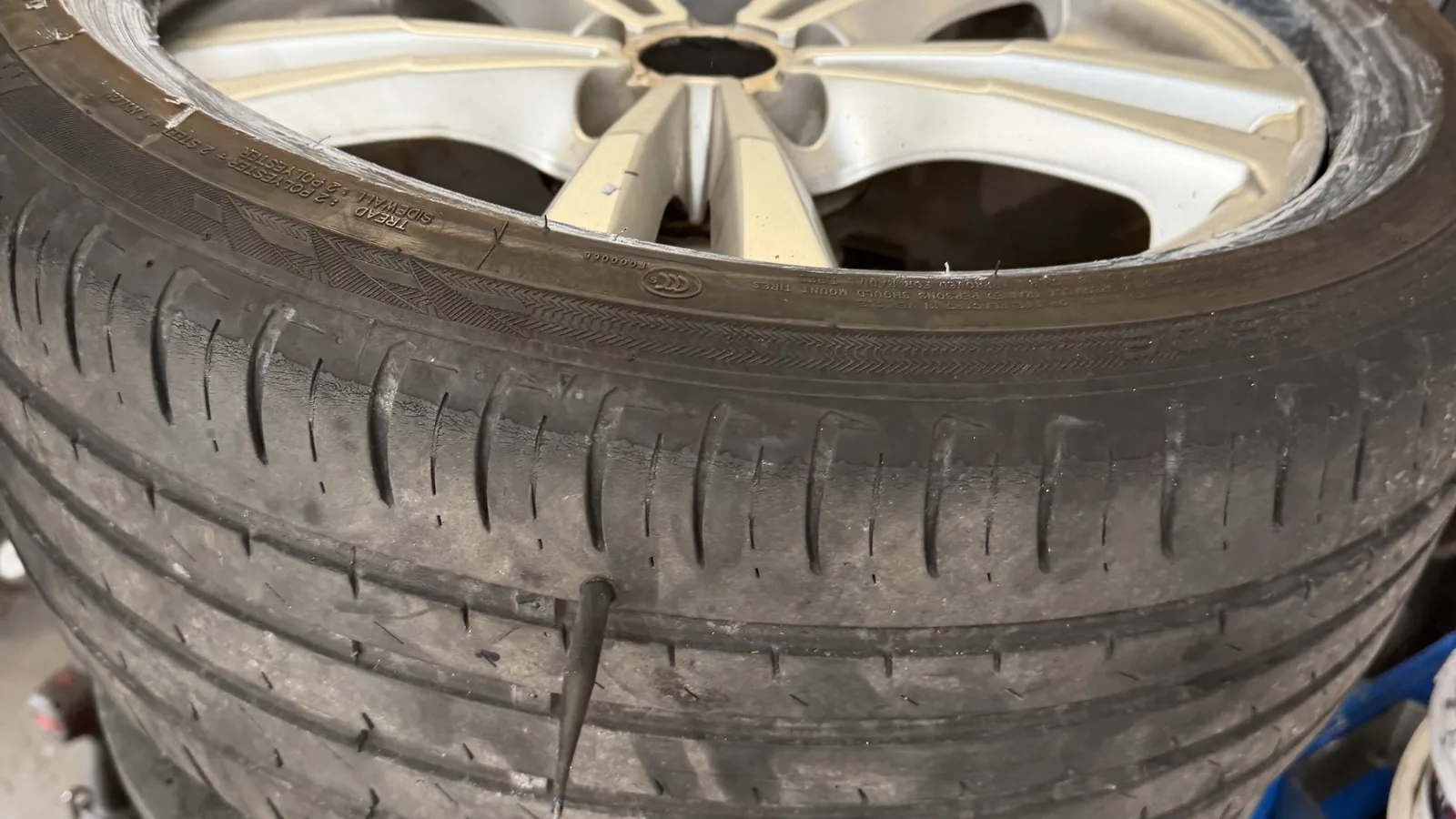
If one tyre needs air every week and the others do not, something is letting it out. Nine times out of ten it is a nail or screw in the tread. Other causes are a leaking valve, a bent or corroded rim, or the bead where the tyre meets the wheel.
Do not keep topping it up. A tyre that drives soft between top ups is getting damaged inside, where you cannot see it. The longer it goes on, the less chance it can be repaired.
We come to you and take the tyre off the rim to look inside. If the hole is in the central three quarters of the tread and up to 6mm, we repair it to BS AU 159 for £39.95. If it is outside that area, or the tyre is damaged inside, we tell you and quote a new one. Slow puncture covers the signs, and puncture repairs covers the repair.
The questions that usually come next.
 Tyre guidesRead the full guide.Read the guide →
 TPMS warning lightWhat the tyre light is telling you.Read the guide →
 Cold weather tyre pressureWhy the light comes on in the frost.Read the guide →
 Slow puncture: causes and signsThe tyre that keeps going down.Read the guide →
 How to check your tyresRead the full guide.Read the guide →
 Uneven tyre wearRead the pattern and find the cause.Read the guide →
Your sticker may use one and the air machine the other. One bar is about 14.5 psi.
Low for most family cars. Common on some small city cars at normal load. Check your sticker before you use it.
A very common front figure for small and mid sized hatchbacks with one or two people on board.
Typical for many family cars. Often the front figure on a car with a diesel engine up front.
Upper end for everyday driving. Often the fully loaded figure, or the normal figure on a heavier car.
Usually a loaded figure on a big estate, van or SUV. Rarely right for a small car at normal load.
The kind of figure you see on a space saver spare. Never put this in a normal tyre.
Small things that save fuel, tread and a roadside stop.
Check all four and the spare. Also before a long trip or a holiday with a full boot.
Before you drive, or after a mile or two. Warm tyres read high and fool you.
Use the door sticker. The number on the sidewall is the maximum, not your target.
Full car or towing? Use the loaded figure. Go back to normal when the trip is over.
Pressure drops as the air cools. The first frost often turns the warning light on.
It is leaking. Get it looked at inside. Topping it up hides the damage.
What happens after you message, wherever the car is parked.
One tyre going down, a warning light, or a tyre that looks soft. Add the size or registration and where the car is parked right now.
The fitter checks all four tyres, then takes the soft one off the rim and looks inside for the nail, the valve or a rim leak.
Inside the repair area and up to 6mm? We repair it to BS AU 159. If not, you get a fitted price for a new tyre first.
All four set cold to the figure on your door plate, valves checked and caps back on. The warning light is reset where the car allows.
4.4★★★★★average rating on Google
Got us out of an unfortunate place of a Luton van blowout, super quick helpful and fairly priced!
Stranded in a car park with no spare! Called and they came within the hour, changed the tyre and was on my way 20 minutes later. Great service, delighted they made it so easy.
Brilliant service, same day, quick and easy. Was really rushed for time and they moved things around to ensure they got to me to get it fixed. Would defo recommend
Send a photo and the size on WhatsApp. We find the leak at your home or work and repair or replace it, 24 hours a day.
Every hour you leave a flat tyre on a car is an hour you cannot use it. The van is on shift now, send the size.
The numbers, the units and the tyre that keeps going soft.
Your car should run at the pressure the car maker sets, which is printed inside the driver's door frame, inside the fuel flap and in the handbook. Most cars sit between 30 and 36 psi, around 2.1 to 2.5 bar. The exact number depends on the car, the tyre size and the load.
Do not copy a friend's number or a figure off a forum. Two cars that look alike can need different pressures, and the same car can need different pressures for two wheel sizes. The sticker lists each one, so match your tyre size first. It is printed on the sidewall. How to read tyre size shows where. Then pick front or rear, and normal or loaded.
Then keep it there. Check once a month, cold, with a gauge you trust. If one tyre keeps drifting down, it is leaking. Call 0300 124 6981 or send a photo on WhatsApp and we come to you. See slow puncture for the signs. A leak found early is often a simple repair rather than a new tyre. Left for weeks, the same leak can cost you the whole tyre.
35 psi is a normal pressure for many cars, but it is only right if your car's sticker says so. For some cars it is spot on. For a small city car it may be a little high. For a heavy SUV it may be low. The number on your door frame is the one to use.
There is no single good pressure for every car. The maker picks the figure for the weight of the car, the size of the tyre and how it should handle. That is why the sticker has a small table rather than one number. Look for your tyre size in the table, then the front and rear figures. Tyre sizes lists the common sizes we fit, if you want to check yours.
If your car's figure is 33 psi and you run 35, it will ride a little firmer and wear a little more in the centre. Not a disaster, but not ideal either. Running well under is the one to avoid. Uneven tyre wear shows what each mistake does to the tread. Not sure? Call 0300 124 6981 and a fitter will tell you.
Anything more than a few psi under your car's figure is too low. At around 20% under, most cars with a warning system will light up. A tyre at 20 psi or less on a normal car is badly soft. Do not drive far on it, and never at motorway speed.
A soft tyre flexes, heats up and wears on both edges. It also steers slowly and stops longer. Drive on it far enough and the sidewall breaks down inside, which can end in a blowout. You may not feel it happening, because a soft tyre often feels almost normal at low speed. If a tyre is visibly flat, stop somewhere safe and do not drive on. Flat tyre: what to do covers the first ten minutes.
A tyre that was driven on while flat usually cannot be repaired, because the sidewall is damaged. That is why stopping early saves money. We come to you, so there is no need to limp to a garage. Call 0300 124 6981, day or night. See emergency tyre fitting if you are stuck at the roadside right now. Get the car somewhere safe first, away from traffic, then message us the location.
No. The pressure moulded on the tyre sidewall is the maximum the tyre can safely hold, not the pressure your car needs. It is often 44 to 51 psi, far too high for normal driving. Always use the figure on your car's door frame, fuel flap or handbook.
It is an easy mistake. The number on the tyre is right in front of you and the sticker is hidden in the door. But pump a family car to its tyre's maximum and the ride goes hard, the grip drops and the centre of the tread wears out early. The car feels skittish in the wet, which is the last thing you want on a rainy motorway. Reading your tyre size explains the rest of the sidewall.
We set pressures to the door plate after every job, so you start right. Then a monthly check keeps it there. How to check your tyres shows the full five minute routine. If you are ever unsure, call 0300 124 6981 and ask. It takes a fitter ten seconds to tell you the right number for your car.
Check tyre pressure cold. That means before you drive, or after no more than a mile or two. Driving warms the tyres and the air inside expands, so a warm tyre can read several psi higher. Set it warm and it will be too low once it cools. Cold is the only reading that matches your sticker.
If you have to check warm, say at a motorway services, do not let air out to reach the figure. Top up any tyre that is clearly under, then check again cold the next morning. Weather does the same thing in reverse. On a cold morning pressures drop, roughly 0.1 bar for every 10C. Tyre pressure in cold weather explains why the warning light loves the first frost.
A gauge of your own is worth having. Garage air lines vary and some are not checked often. Keep a gauge in the glovebox and you can check on the drive in two minutes. If the light is still on after you set all four, read TPMS warning light, or call 0300 124 6981 for help.
Check your tyre pressure at least once a month and before any long trip. Tyres lose a little air naturally, around 1 psi a month, and more in cold weather. A monthly check with a gauge catches a slow leak before it ruins the tyre.
Make it a habit. The first Sunday of the month, or every other fuel stop. It takes two minutes for all four. Do the spare while you are there, because many spares sit flat for years without anyone knowing. Many drivers only find out when they need it, at night, in the rain. The five minute tyre check adds tread, sidewalls, wear and age.
A warning light is a backup, not a replacement for checking. Most systems only light up when a tyre is well under, around 20% low. You can lose fuel and tread long before that. Your correct tyre pressure is on the door sticker. Keep to it and the tyres last longer, the car uses less fuel and it stops shorter in the rain. Questions? Call 0300 124 6981 and a fitter will help.
Multiply bar by 14.5 to get psi. So 2.0 bar is 29 psi, 2.2 bar is 32 psi, 2.4 bar is 35 psi and 2.5 bar is 36 psi. To go the other way, divide psi by 14.5. Most gauges and air machines show both, or let you switch between them.
The sticker may show bar, psi or both, and sometimes kPa as well. 100 kPa is 1 bar. Pick one unit and stick to it, so you do not mix them up at the air machine. If the machine only does psi and your sticker only does bar, the table higher up has the common numbers. Cold weather tyre pressure uses both units, if you want to see them in action.
Small differences do not matter much. Being 1 psi out is fine. Being 5 psi out is not. If the numbers do not add up, or one tyre will not hold what you put in, something is wrong. Call 0300 124 6981 and we will check it. See puncture repairs for what happens if we find a leak.
One tyre that keeps losing air almost always has a leak. The usual cause is a nail or screw in the tread. Other causes are a worn valve, corrosion where the tyre seals on the rim, or a crack in the wheel. It will not fix itself, and it gets worse.
Each time it drives soft, the inside of the tyre gets rubbed and heated. After a while the damage makes it unrepairable. So the cheapest move is to get it looked at early. Do not rely on a can of foam either. Many repairers cannot fix a tyre full of sealant. Nail in your tyre explains what to do if you can see the culprit.
We take the tyre off the rim at your home or work and look inside. If it is repairable, we repair it to BS AU 159 for £39.95. If not, you get a fitted price for a new one before we do anything. Call 0300 124 6981 or read can a punctured tyre be repaired. Either way, you know what it costs before any work starts.
Yes. Air shrinks as it cools, so tyre pressure drops on cold days, by about 0.1 bar or 1 to 2 psi for every 10C fall. That is why the warning light often comes on during the first frosty morning of autumn, even when nothing is leaking.
Top the tyres up to the car's figure, checked cold, and the light will usually go off after a short drive. Do not set them high to allow for it. Just check more often in winter, when the swings are bigger. If one tyre is much lower than the others, it is not the weather. It is a leak. Tyre pressure in cold weather goes into more detail.
Winter is also when tread depth matters most, with wet roads and short days. The winter driving checklist covers the rest of the car. If the light will not clear after you set all four, the sensor may be at fault. Call 0300 124 6981 and we can check it at your door. Sensor batteries do run out, and a dead one keeps the light on whatever the pressure.
Only if the car is loaded. Most car stickers give a higher figure for a full car, a packed boot or towing. For a long motorway trip with one or two people and a bag each, the normal figure is right. Check it cold before you set off.
Heavy loads squash the tyre more, so it flexes and heats up. The loaded figure stops that. It is often 0.2 to 0.5 bar higher, and sometimes only on the rear. Set it before the trip, then drop back to normal when you unload. Tyres for long motorway runs covers what else helps on a big trip.
Before a long run, check the tread too. At under 3mm, wet grip on the motorway drops off. If the tyres are close to the limit, get them done first. We fit at home the night before if that suits. Call 0300 124 6981 or see mobile tyre fitting. We come to your drive, 24 hours a day, 365 days a year. New tyres before a long trip beat a worn one on a wet motorway.
Nitrogen leaks out a little more slowly than normal air, but normal air is already about 78% nitrogen. For an everyday car the difference is small. A monthly check with normal air does the same job, and the right pressure matters far more than the gas.
You can top up a nitrogen filled tyre with normal air. It is safe. You just lose some of the purity. What matters is that each tyre is at the right number. Nitrogen vs air covers the pros and cons in full, including when it is worth paying for. For racing and aircraft it makes sense. For the school run, a gauge and a monthly check matter far more. Some garages charge for nitrogen, so ask what you are paying for.
If a tyre keeps losing pressure, nitrogen will not fix it. That is a leak, and it needs finding. We come to you, take the tyre off and look inside. Call 0300 124 6981 or read slow puncture for the signs. A repair to BS AU 159 is £39.95 when the damage is in the repairable area.
Yes. We come to your home, work or a safe spot at the roadside, find the leak and repair or replace the tyre there. A repair to BS AU 159 is £39.95 when the damage is in the repairable area. We cover the North West and North Wales, 24 hours a day.
The fitter checks all four tyres, takes the soft one off the rim and inspects it inside. You get a straight answer before any work starts. If a new tyre is needed, you get a fitted price first. There is no call out charge. You pay by a secure payment link sent to your phone. Puncture repairs explains the standard we work to.
Pressures are set to your door plate before we leave, and the warning light is reset where the car allows it. We are AA and RAC approved and cover 2,700+ areas. Check where we cover or call 0300 124 6981. If you are at work, ask and we can send a photo of the finished job. Most drivers carry on with their day while it gets done.