Welcome to

Mobile tyre fitting · North West & North Wales · We fit around you

Approved by the AA and RAC. No call-out charge. Around 32 minutes on average, 24 hours a day.
info@yournewtyres.co.ukTell us your name and tyre size — we will reply on WhatsApp with a price and an ETA.
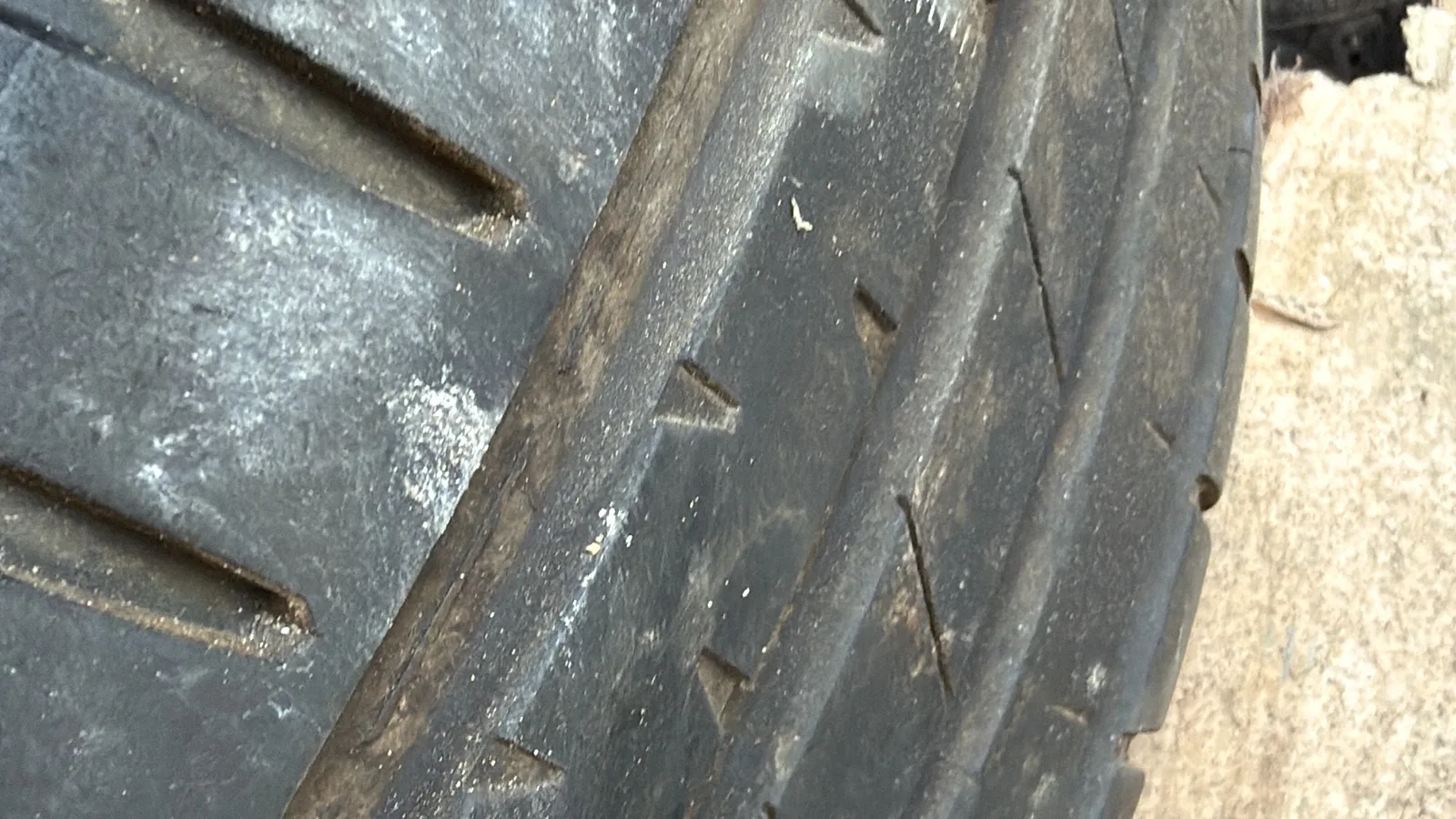
Uneven tyre wear is caused by the wrong tyre pressure, wheels out of alignment, worn suspension, unbalanced wheels or hard driving. The pattern points to the cause. Both edges worn means low pressure. A worn centre means too much. One edge worn means the tracking or camber is out.
Match the wear to the cause:
Fix the cause before the new tyre goes on, or it wears the same way. Wheel alignment and tracking explains the settings.
Why does it matter? A tyre worn on one edge can be legal in the middle and bald at the side. The bald part is often on the inner edge, facing the car, where you never look. It grips less in the rain and it can wear down to the cords without you knowing. How to check your tyres shows how to see the inner edge.
Found odd wear? Send a photo of the tread across its full width on WhatsApp to 07943 185471, or call 0300 124 6981. A fitter will read the pattern, tell you the likely cause, and fit a new tyre where the car is if it needs one. More help is in our tyre guides.
The size is on the sidewall of the tyre, or send us a photo of it. It lands with the fitter on shift. No call-out charge, and the fitting is already in the price.
You are through to YourNewTyres. What size are the tyres?
The size is printed on the sidewall, like 205/55 R16. Send that and where you are, and I will come back with a fitted price and the next slot.
A photo of the sidewall does the job if you would rather not type it out.
Opens WhatsApp with your message ready to send
Covered here: why are both edges of my tyre worn; why is the centre of my tyre worn; why is one edge of my tyre worn, inside or outside; what do feathering, cupping and flat spots mean; is uneven tyre wear dangerous or an mot failure; how do you fix uneven tyre wear.
Wear on both outer edges, with more tread left in the middle, almost always means the tyre has been running soft. A tyre without enough air sags. The middle lifts slightly and the shoulders carry the load.
It happens slowly. A tyre can lose a little pressure every week, and you will not feel it in the steering. Heavy loads make it worse. A car that is often full of people or kit squashes the tyre in the same way. Hard, fast cornering can wear the outer shoulders too.
The fix is simple and cheap. Check the pressures once a month with the tyres cold, and use the figure in the handbook or on the door plate. Many cars list a higher figure for a full load. If one tyre is always lower than the others, it has a leak. What tyre pressure should my car be shows where to find your figure, and can you drive with a slow puncture covers the leak.
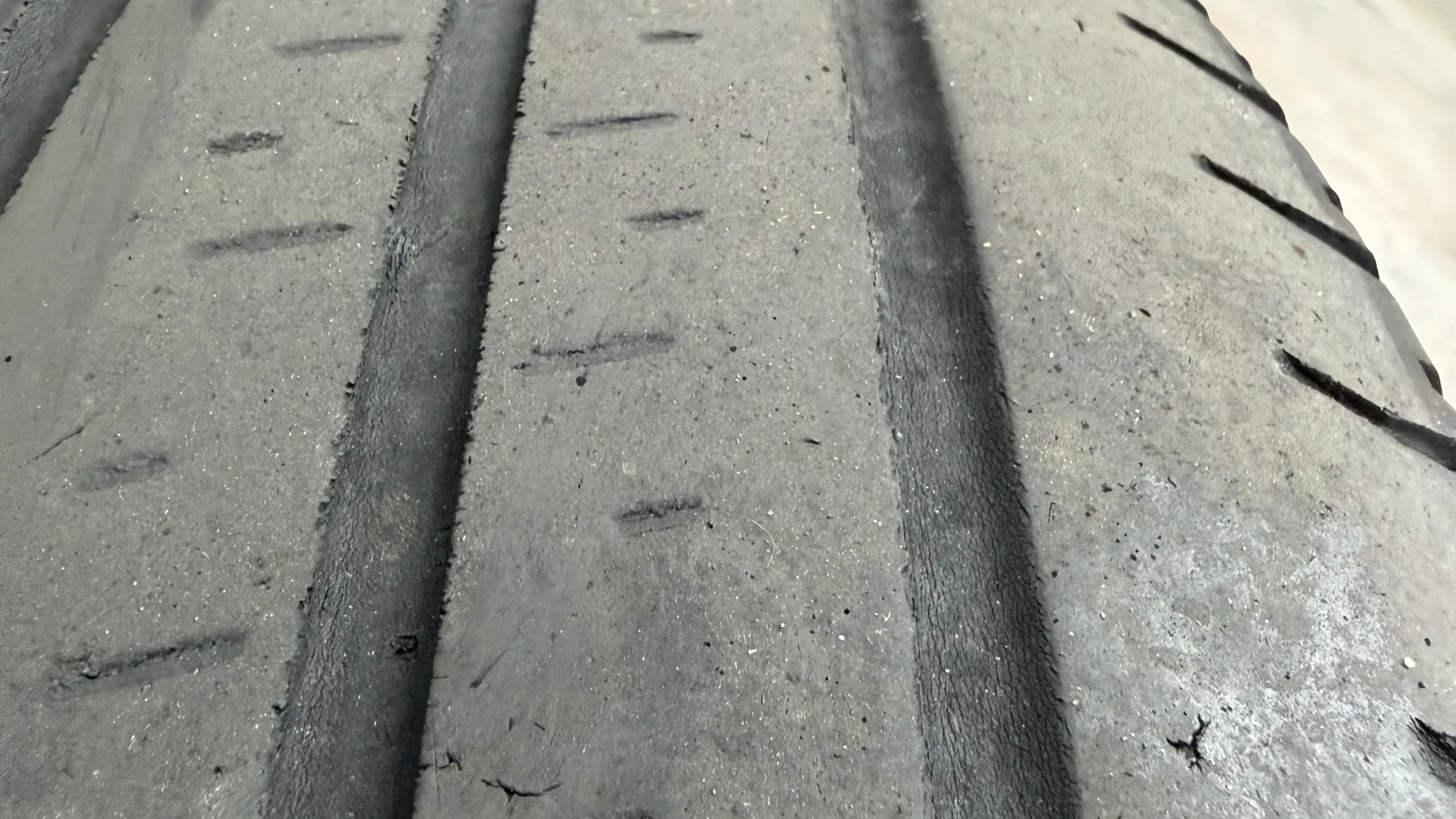
A strip worn down the middle, with deeper tread at the edges, usually means too much pressure. An overinflated tyre bulges slightly in the centre, so only the middle of the tread really touches the road.
It is less common than low pressure, but it happens. The usual cause is pumping the tyres to the full load figure and then leaving them there when the car is empty. Another is a guess at the petrol station, or a gauge that reads low. Some powerful rear wheel drive cars also wear the centre of the rear tyres from hard acceleration.
An overinflated tyre does not just wear oddly. It has a smaller patch on the road, so it grips less, and it rides harder over bumps. Set the pressure to the normal figure for how the car is loaded. Use your own gauge and check it with the tyres cold. How to check your tyres walks through the routine.
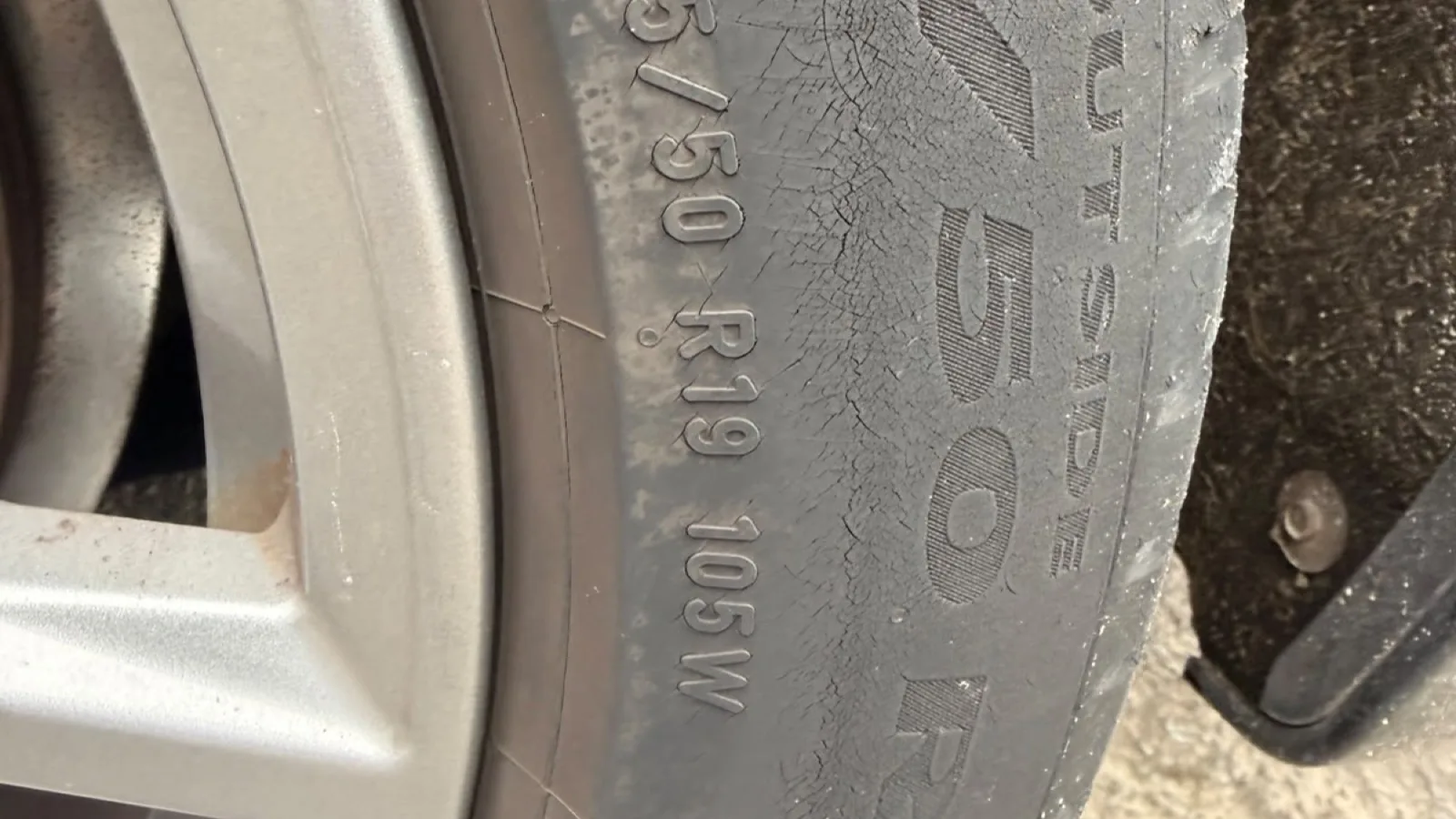
One edge worn much more than the other is the classic sign of a wheel out of alignment. The wheel is either tilted in or out at the top, called camber, or pointing slightly in or out, called toe. Either way, the tyre scrubs along the road at an angle.
A kerb strike or a big pothole is enough to move it. Worn steering or suspension parts can let it drift too. Some cars also have a little camber set from the factory, which wears the inner edge a bit faster. Lowered cars often wear the inner edge badly.
Inner edge wear is the dangerous one, because it is out of sight. Turn the steering to full lock and look at the inside of the front tyres, or run your hand around the inner edge with the car parked. If it feels much thinner than the outside, get it checked. Wheel alignment covers the check, and pothole damage to tyres covers what a hard hit can do.
Feathering is when each tread block is worn at an angle, smooth on one side and sharp on the other. Run your hand across the tread one way, then the other. If it feels different, that is feathering, and it usually means the toe setting is out.
Cupping, or scalloping, is a pattern of dips around the tyre, like scoops taken out of the tread. It often makes a rhythmic hum. The usual cause is worn shock absorbers that let the wheel bounce, or a wheel that is badly out of balance. Worn suspension joints can cause it too.
A single flat patch usually comes from a skid, where the brakes locked and the tyre slid along one spot. Cars left standing for months can get flat spots too, though these often ease once the tyre warms up. A flat patch you can see will not go away. What is wheel balancing explains the balance side, and noisy tyres covers the hum.

It can be both. The legal limit is 1.6mm across the central three quarters of the tread, all the way round. A tyre worn below that in the middle band fails the MOT and can cost up to £2,500 and 3 points.
Edge wear is sneaky here. The worn shoulder may sit outside the central band, so the tread depth in the middle looks legal. But if the edge wears through to the cords, the tyre fails anyway, because exposed cords are illegal. And long before that, a bald edge grips less in the wet and in corners.
Cupped and feathered tyres are noisy and grip less evenly, but they are often still legal. The bigger worry is what caused them. Worn shock absorbers and loose steering parts are MOT items in their own right. Failed MOT on tyres covers the tyre checks, and UK tyre law sets out the rules.
You cannot fix the tyre itself. Once rubber is gone, it is gone. What you fix is the cause, so the next tyre wears evenly.
Start with pressure, because it is free and it is the most common cause. Then look at alignment if one edge is worn or the car pulls. If you see cupping or feel the car bounce over bumps, have the shock absorbers and suspension checked. A shake at motorway speed points to balance.
Then deal with the tyre. If it still has good tread and the wear is mild, it can stay on once the cause is fixed. If one edge is near the limit, replace it, and fit the pair if the other tyre on that axle is worn too. Do not swap a badly worn tyre to another corner to hide it. Should I replace 2 or 4 tyres helps you decide how many. New car tyres wearing fast covers early wear on newer cars.

The questions that usually come next.
 Tracking explainedToe, camber and the wear they cause.Read the guide →
 Wheel alignmentTracking that stops the edges wearing.Read the guide →
 New car tyres wearing fastWhy the first set goes early.Read the guide →
 Balancing explainedWhy the weights matter.Read the guide →
 How to check your tyresRead the full guide.Read the guide →
 Correct tyre pressureWhere to find it and how to set it.Read the guide →
Look across the full width of the tyre, inner edge included.
Running soft. The shoulders carry the load. Check pressures monthly, cold, to the door plate figure.
Too much pressure for the load. Only the middle touches the road. Set it back to the normal figure.
Tracking or camber out, often after a kerb or pothole. Easy to miss, because it faces the car.
Tracking out, or fast, hard cornering. Check the alignment before a new tyre goes on the car.
Worn shock absorbers or an unbalanced wheel. Often comes with a rhythmic hum on the move.
A skid with locked brakes, or a car stood for months. A visible flat spot will not wear out.
Two minutes a month, with the car parked on level ground.
Turn the steering all the way to see the inner edge of each front tyre.
Feel both ways. A saw tooth edge on the blocks means feathering.
Look at inner and outer shoulders side by side. They should match.
Left against right on each axle. One side wearing faster points to tracking.
Off centre when driving straight, or a pull to one side, means alignment.
A new rhythmic hum that rises with speed can mean cupped tyres.
What happens after you message, wherever the car is parked.
Send a clear photo across the full width of the worn tyre, inner edge included. A fitter reads the pattern and tells you the likely cause.
We tell you what needs fixing first, so the new tyre does not go the same way. Then you get a fitted price for the tyre itself.
Home, work or the roadside across the North West and North Wales, 24 hours a day. The old tyre leaves with us for proper recycling.
While we are there, we look over the other three tyres, set every pressure and balance the new wheel on the van before we go.
4.4★★★★★average rating on Google
Got us out of an unfortunate place of a Luton van blowout, super quick helpful and fairly priced!
Stranded in a car park with no spare! Called and they came within the hour, changed the tyre and was on my way 20 minutes later. Great service, delighted they made it so easy.
Brilliant service, same day, quick and easy. Was really rushed for time and they moved things around to ensure they got to me to get it fixed. Would defo recommend
Send a photo of the tread. We tell you what caused it and send a fitted price for a new tyre, any hour, with no call out charge.
Every hour you leave a flat tyre on a car is an hour you cannot use it. The van is on shift now, send the size.
What drivers ask when one tyre looks different.
The main causes of uneven tyre wear are the wrong tyre pressure, wheel alignment out of line, worn suspension, unbalanced wheels and hard driving. Each leaves its own pattern. Low pressure wears both edges, high pressure wears the centre, and bad alignment wears one edge.
Pressure is the most common cause and the easiest to fix. A tyre that is a little soft for months wears both shoulders down. Alignment comes next, usually after a kerb strike or a pothole. Suspension wear shows as cups and scallops. Balance problems often come with a shake through the steering at speed. Driving style matters too. Fast corners and hard braking scrub rubber off the shoulders. Wheel alignment and tracking explains the angles involved.
Find the cause before you buy a new tyre, or the new one will wear the same way. Send a photo of the tread to 07943 185471 or call 0300 124 6981. A fitter will tell you what the pattern suggests. If the tyre needs replacing, we fit it at home or work. When to replace tyres covers the other signs a tyre is done.
Wear on the inside edge of a tyre usually means the wheel alignment is out. The wheel is tilted in at the top or pointing slightly out, so the inner shoulder takes most of the load. A kerb strike, a pothole, worn suspension parts or a lowered car are common causes.
Inner edge wear is the most dangerous kind, because you cannot see it from outside the car. The tyre can look fine on a walk round while the inner edge is bald or showing cords. Turn the steering to full lock and look at the inside of each front tyre, or run your hand around the edge. A torch helps on a dark evening. How to check your tyres explains how.
Get the alignment checked before new tyres go on. Otherwise the new ones wear the same way, often faster than you expect. Wheel alignment covers the service. If the tyre is past saving, call 0300 124 6981 and we will fit a new one where the car is parked, day or night. Fit the pair if the other tyre on that axle is also worn.
Wear on the outside edge usually means the tracking is out, with the wheel tilted out at the top or pointing slightly in. It can also come from hard, fast cornering, which rolls the tyre onto its outer shoulder. Low pressure makes outer edge wear worse.
If both front tyres are worn on the outside and you drive briskly on twisty roads, driving style may be the cause. If only one tyre is worn that way, or the car pulls to one side, it points to alignment. A knock from a kerb is often enough to move it. So is a pothole you hit harder than you meant to. Wheel alignment and tracking explains the toe and camber settings.
Check the pressures first, because it is quick and free. Then get the alignment checked if the wear keeps going. If the tyre is close to the limit, replace it before winter, when wet grip matters most. Pothole damage to tyres covers the other damage a hard hit can do. Call 0300 124 6981 for a fitted price on a new tyre.
On most cars, front tyres wear faster than the rear because they do more work. On a front wheel drive car the fronts steer, pull the car along and do most of the braking. It is normal for them to wear out first, sometimes twice as fast as the rears.
What is not normal is one front tyre wearing much faster than the other, or the fronts wearing on one edge. That points to alignment or a worn part, not just the job the tyres do. Compare the left and right fronts. They should look about the same, with the same depth and the same shape across the tread. How long do tyres last explains the normal wear rates.
When the fronts are done, the new pair usually goes on the back, and the part worn rears move to the front. That keeps the best grip at the rear, where it keeps the car stable in the wet. Should I replace 2 or 4 tyres covers why. Call 0300 124 6981 to book the swap and the new pair. It adds only a few minutes to the job.
Yes. A wheel that is out of balance bounces slightly as it spins. Over thousands of miles, that bouncing can wear the tread in patches or cups around the tyre. You may also feel a shake through the steering wheel or the seat, usually at motorway speeds.
Balance weights can fall off after a pothole or a kerb, or a tyre can wear unevenly and upset the balance. The fix is quick. The wheel is spun on a balancing machine and small weights are added to even it out. Every tyre we fit is balanced on the van as standard. It takes a few minutes and it is part of the price. What is wheel balancing explains how it works.
If the tyre is already cupped, balancing will stop it getting worse, but it will not remove the wear. A badly cupped tyre stays noisy and may need replacing. If the shake started after a pothole, check the rim for a bend too. Wheel balancing covers the service. Call 0300 124 6981 if you feel a new shake at speed.
Yes. Worn shock absorbers let the wheel bounce instead of staying pressed to the road. Each bounce scuffs the tread, and over time that leaves cups or scallops around the tyre. You might also notice the car floats or bounces over bumps and leans more in corners.
Cupped wear usually makes a rhythmic hum or rumble that rises with speed. It can sound like a wheel bearing, which confuses people. Run your hand around the tread. If it rises and dips in patches, that is cupping. You may also see the car float over dips or keep bouncing after a speed bump. Push down hard on one corner of the parked car. If it bounces more than once or twice, the damper may be tired. Noisy tyres covers the other causes of a hum.
Shock absorbers are an MOT item, so a badly worn one can fail the test. Get them checked if the tyres cup, and replace the tyres once the cause is fixed. New tyres on worn dampers will cup again. Failed MOT on tyres explains the tyre side of the test. Call 0300 124 6981 when you need the new tyres fitted.
It can be. A tyre fails the MOT if the tread is below 1.6mm anywhere across the central three quarters, or if cords are showing anywhere. Edge wear can sit outside that central band, but a shoulder worn through to the cords fails, and so does a tyre with a deep cut or bulge.
Uneven wear often hides a second MOT problem. Worn shock absorbers, steering joints or suspension bushes can all cause it, and they are tested in their own right. So a tyre with odd wear is worth a proper look before the test. Fixing both at once saves a retest. Failed MOT on tyres lists what the tester checks on the tyres.
On the road, the law goes further than the MOT. A tyre below the limit or with exposed cords can mean up to £2,500 and 3 points. UK tyre law has the details, including the fine per tyre. If you have failed, we can fit the new tyre at home before the retest, or at the test centre car park if that is easier. Call 0300 124 6981.
You cannot fix the tyre, because the worn rubber cannot be put back. What you can fix is the cause: the pressure, the alignment, the balance or the suspension. Once that is sorted, a mildly worn tyre can often stay on, and new tyres will wear evenly.
Work through it in order. Pressure first, because it is free and takes five minutes. Then alignment if one edge is worn or the car pulls. Then suspension if you see cups or the car bounces. Balance if there is a shake at speed. Most drivers only need one of these fixed. Wheel alignment and wheel balancing cover those checks.
If one edge is near the limit, the tyre has to go, even if the rest of the tread looks healthy. Fitting new tyres without fixing the cause wastes money, so we always tell you what we think caused it. Some drivers swap tyres around to even out wear, but only mild, even wear. Is tyre rotation worth it explains when it helps. Call 0300 124 6981 for a fitted price on the new tyre.
One tyre wearing differently to the rest usually points to something at that corner of the car: alignment knocked out by a kerb or pothole, a worn suspension part, a bent wheel, or a slow leak that keeps that tyre soft. The other three tyres are fine because the fault is only there.
Check the pressure in that tyre over a week. If it drops faster than the others, there is a leak, and the low pressure is wearing the edges. Can you drive with a slow puncture covers the signs. If the pressure holds, look at the wear pattern. One edge points to alignment. Cups point to suspension or balance. A flat patch points to a skid.
Also think back. A hard hit on a kerb or a deep pothole in the last few months is a common cause. A bent wheel can make the tyre wobble and wear in patches. Pothole damage to tyres shows what to look for. Send a photo to 07943 185471 or call 0300 124 6981 and we will take a look and tell you straight.
Yes, and it is the most common cause. A tyre that is too soft wears on both outer edges, because it sags and the shoulders carry the load. A tyre that is too hard wears in the centre, because it bulges and only the middle touches the road.
Most drivers run their tyres too soft rather than too hard, simply because they forget to check. Tyres lose a little pressure every month, and they drop more in cold weather. Check once a month with the tyres cold, and use the figure in the handbook or on the door plate. Cold weather tyre pressure explains why tyres drop in winter.
Remember to change the pressure with the load. Many cars list a higher figure for a full car or towing. Pump them up for the holiday and then forget, and the centres wear. Let them down to the normal figure once the car is back to its usual load. What tyre pressure should my car be shows both figures. Call 0300 124 6981 if a tyre will not hold its pressure.
Park on level ground and turn the steering to full lock, so you can see the whole front tyre including the inner edge. Look across the tread from edge to edge and compare the shoulders. Then run your hand across the tread both ways to feel for a saw tooth edge.
Compare the left and right tyres on each axle. They should look about the same. Measure the tread in three places across the tyre, inner, middle and outer. A tread gauge is cheap, or use the wear bars in the grooves as a guide. If the inner reading is much lower than the outer, you have found the problem. Tyre wear indicators shows where they are.
Do it once a month when you check the pressures. Catching uneven wear early means fixing a cheap cause, not buying an expensive tyre. It also means the other tyres last as long as they should. How to check your tyres has the full five minute routine. Not sure what you are looking at? Send a photo to 07943 185471 or call 0300 124 6981.
Yes. When we fit a new tyre, the fitter looks at the old one and the wheel, and tells you what the wear pattern suggests. We fit at your home, work or the roadside across the North West and North Wales, 24 hours a day, with no call out charge.
Send a photo of the worn tyre and the size or registration. We reply with a fitted price and a time. On the day, the new tyre is fitted, balanced on the van and set to the right pressure. If something else needs attention, such as alignment, we tell you before we leave, with a clear reason why. The old tyre goes away with us for recycling. Mobile tyre fitting explains how the job runs.
Payment is by a secure link sent to your phone, and we can send a photo of the finished job if you ask. On two or more tyres you can pay monthly at 0%, subject to status. NHS staff and key workers can ask about up to 30% off. Call 0300 124 6981 to book.