Welcome to

Mobile tyre fitting · North West & North Wales · We fit around you

Approved by the AA and RAC. No call-out charge. Around 32 minutes on average, 24 hours a day.
info@yournewtyres.co.ukTell us your name and tyre size — we will reply on WhatsApp with a price and an ETA.
The most common tyre myths are that 1.6mm of tread means your tyres are fine, that you should pump them to the number on the sidewall, that new tyres always go on the front, and that plenty of tread means plenty of life. Others: every puncture needs a new tyre, and nitrogen is a must.
Most myths start with a grain of truth. 1.6mm is the legal limit, so people treat it as the target. The sidewall has a pressure on it, so people pump to it. The trouble is what gets lost on the way. UK tyre law sets the minimum, not the safe point.
Believing the wrong one can cost you twice. Once in money, when you replace a tyre that could have been repaired, or buy something you did not need. And once in grip, when a tyre that looks fine is not. How to check your tyres is the five minute habit that beats most of them.
Heard something and not sure if it is true? Send us the question and a photo of the tyre on WhatsApp to 07943 185471, or call 0300 124 6981. A fitter gives you a straight answer. If something does need doing, we do it at your home, work or the roadside.
The size is on the sidewall of the tyre, or send us a photo of it. It lands with the fitter on shift. No call-out charge, and the fitting is already in the price.
You are through to YourNewTyres. What size are the tyres?
The size is printed on the sidewall, like 205/55 R16. Send that and where you are, and I will come back with a fitted price and the next slot.
A photo of the sidewall does the job if you would rather not type it out.
Opens WhatsApp with your message ready to send
Covered here: myth: 1.6mm of tread means your tyres are fine; myth: pump your tyres to the number on the sidewall; myth: new tyres always go on the front; myth: plenty of tread means plenty of life; myth: a puncture always means a new tyre; myth: mobile fitting is not as good as a garage.
1.6mm is the legal line in the UK, across the central three quarters of the tread, all the way round. Go under it and you risk up to £2,500 and 3 points per tyre. So it matters. But it is the minimum, not the goal.
Tread is there to clear water. As it wears, it clears less, and the tyre grips less in the wet. Stopping distances grow long before the tyre reaches the legal line. That is why many tyre makers suggest changing well before 1.6mm, and why a worn tyre feels fine in the dry and scary in the rain.
So do not wait for the MOT or the wear bars. Check your depth every month or so, and start planning new tyres as it gets low. Buying a little early costs you almost nothing, because you were going to buy them anyway. Tyre wear indicators shows how to read the bars, and aquaplaning explained shows what low tread does in standing water.
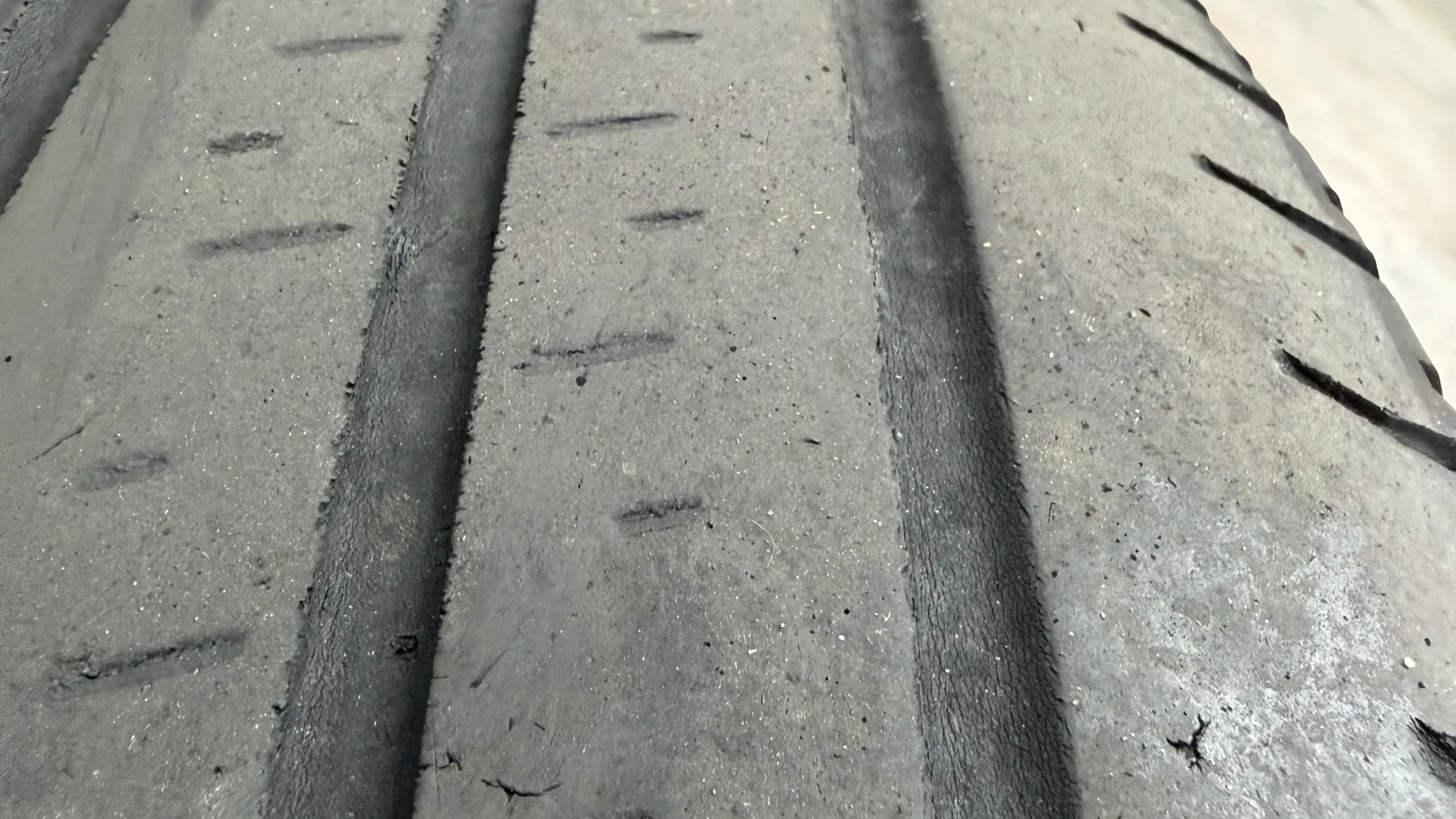
That number is the most the tyre can safely hold. It is not the pressure your car needs. Pump to it and the tyre runs hard. The middle of the tread takes all the load, grip drops and the ride gets harsh.
The right pressure is set by the car maker. You will find it on a sticker inside the driver door, in the fuel flap or in the handbook. There is often one figure for normal use and a higher one for a full load or a long motorway trip.
Check it when the tyres are cold, before a drive, with a gauge you trust. Air in a warm tyre reads higher. And do not trust looks. A tyre can be well down before it looks flat. Correct tyre pressure walks you through where to find it, and cold weather tyre pressure explains why it drops on frosty mornings.
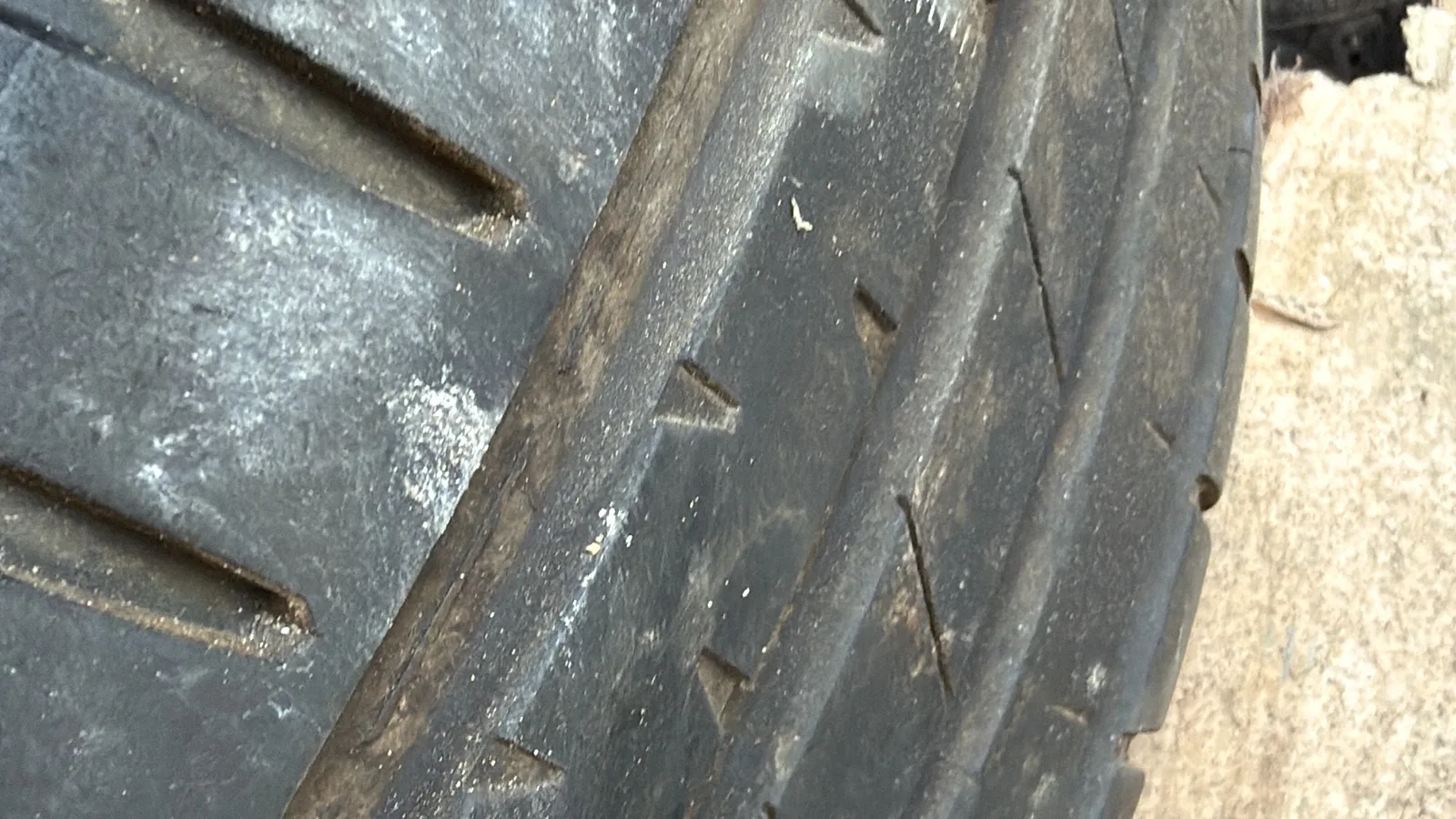
It feels right. The front tyres steer, and on most cars they drive the car too. But most tyre makers advise the opposite. If you only buy two new tyres, put the better pair on the rear axle.
The reason is the wet. If the front tyres lose grip, the car runs wide, and most drivers slow down and recover. If the rear tyres lose grip, the back of the car slides out. That is a spin, and it is much harder to catch.
So on a front wheel drive car, the usual advice is to move the part worn tyres to the front and put the new ones on the back. Some cars have different sizes front and rear, so that cannot be done. And your handbook comes first if it says something different. We ask about your car and follow the right rule for it. Replace two tyres or four covers pairs in more detail.
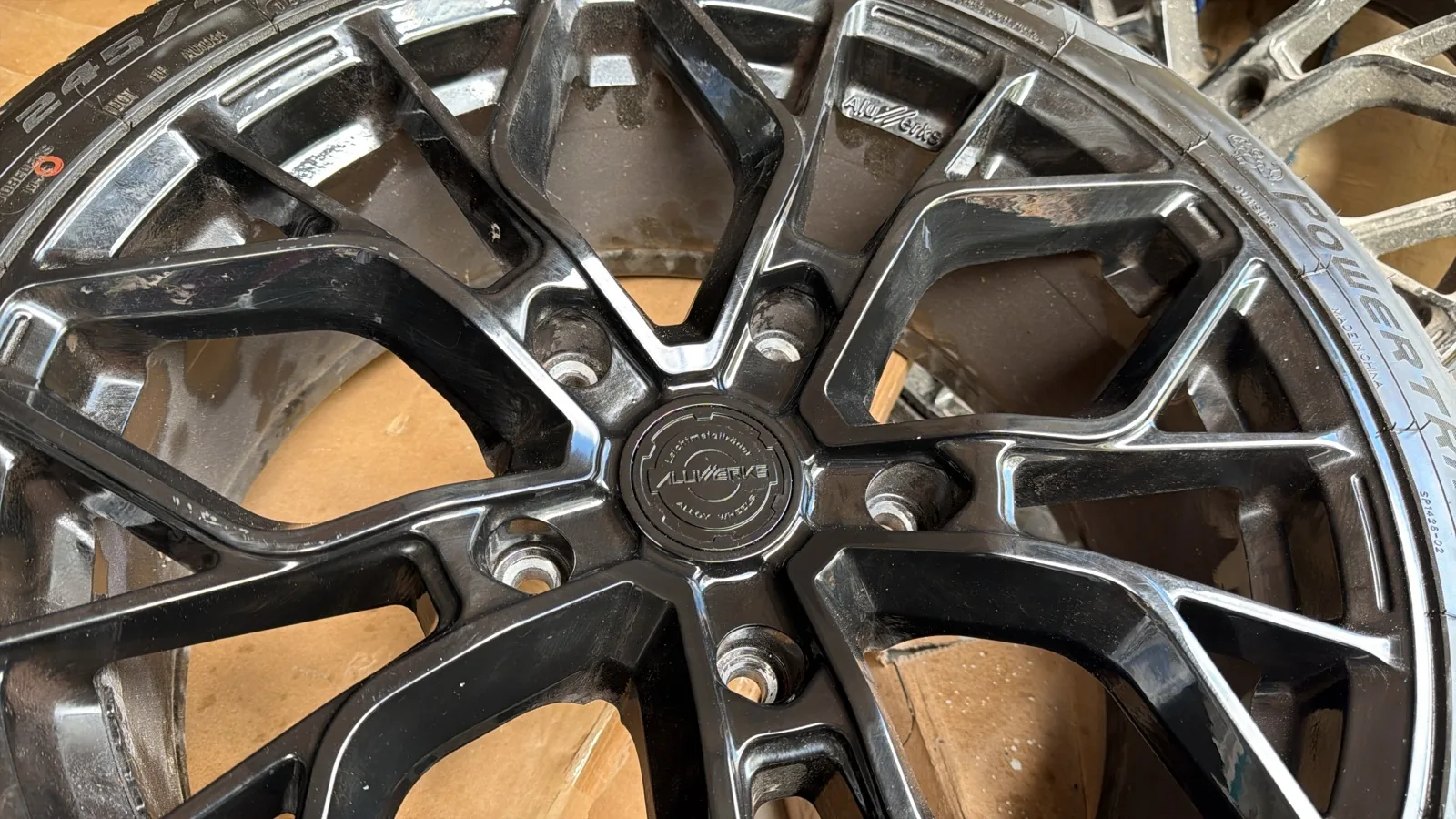
Tyres age as well as wear. The rubber dries out and hardens with time, sun and ozone in the air, even if the car hardly moves. Hard rubber grips less, and in time it cracks.
So a tyre with deep tread can still be past it. It is common on low mileage cars, caravans, motorhomes and spare wheels. The tread says new. The rubber says old.
Check the date code. Find DOT on the sidewall. The last four digits are the week and year it was made, so 2319 means week 23 of 2019. Then look for cracks, especially in the grooves and on the sidewall near the rim. Fine surface lines are ageing. Cracks you can see into mean it is time. Cracked or perished tyres shows the difference, and how to store tyres helps a spare set last.
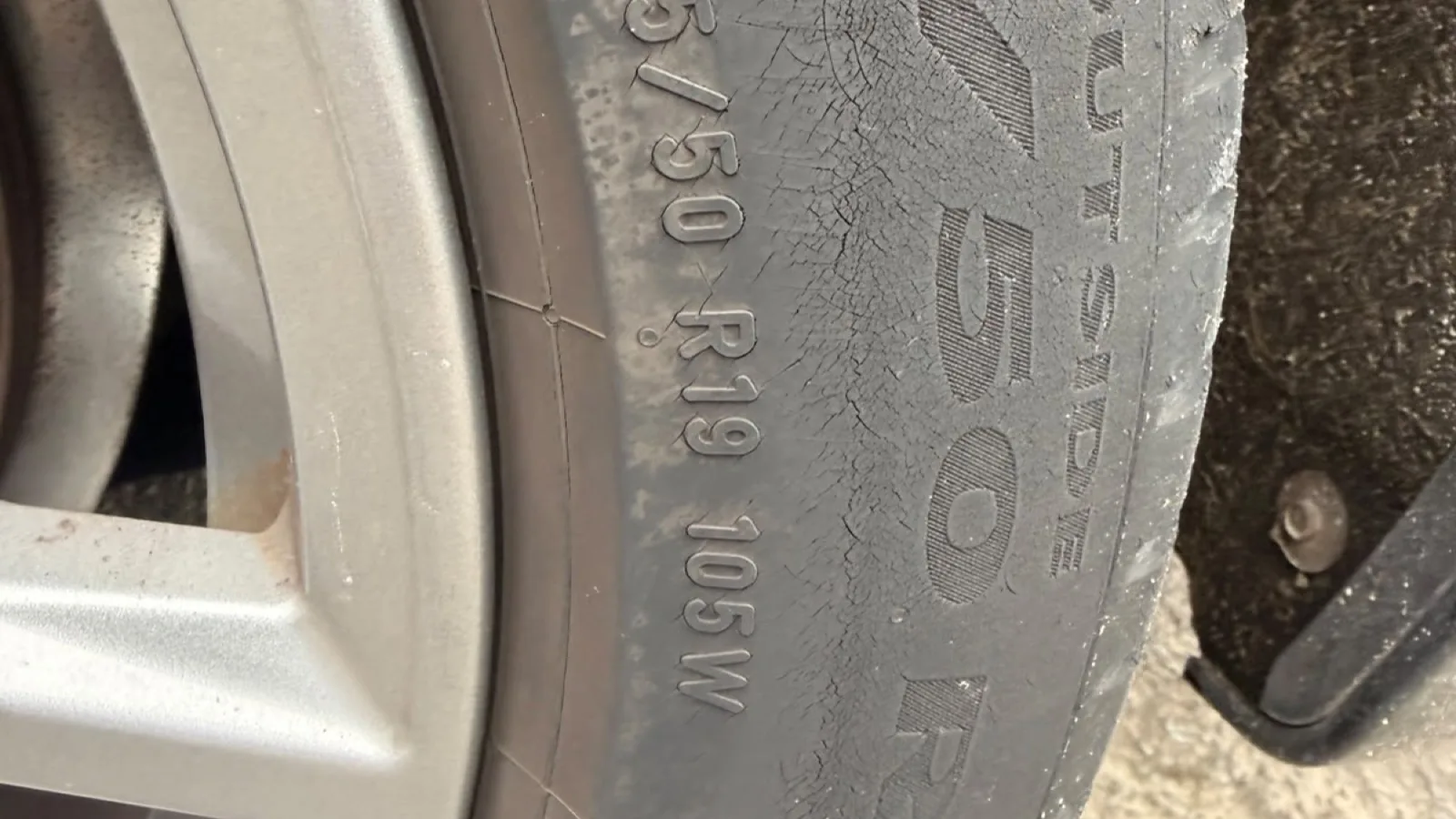
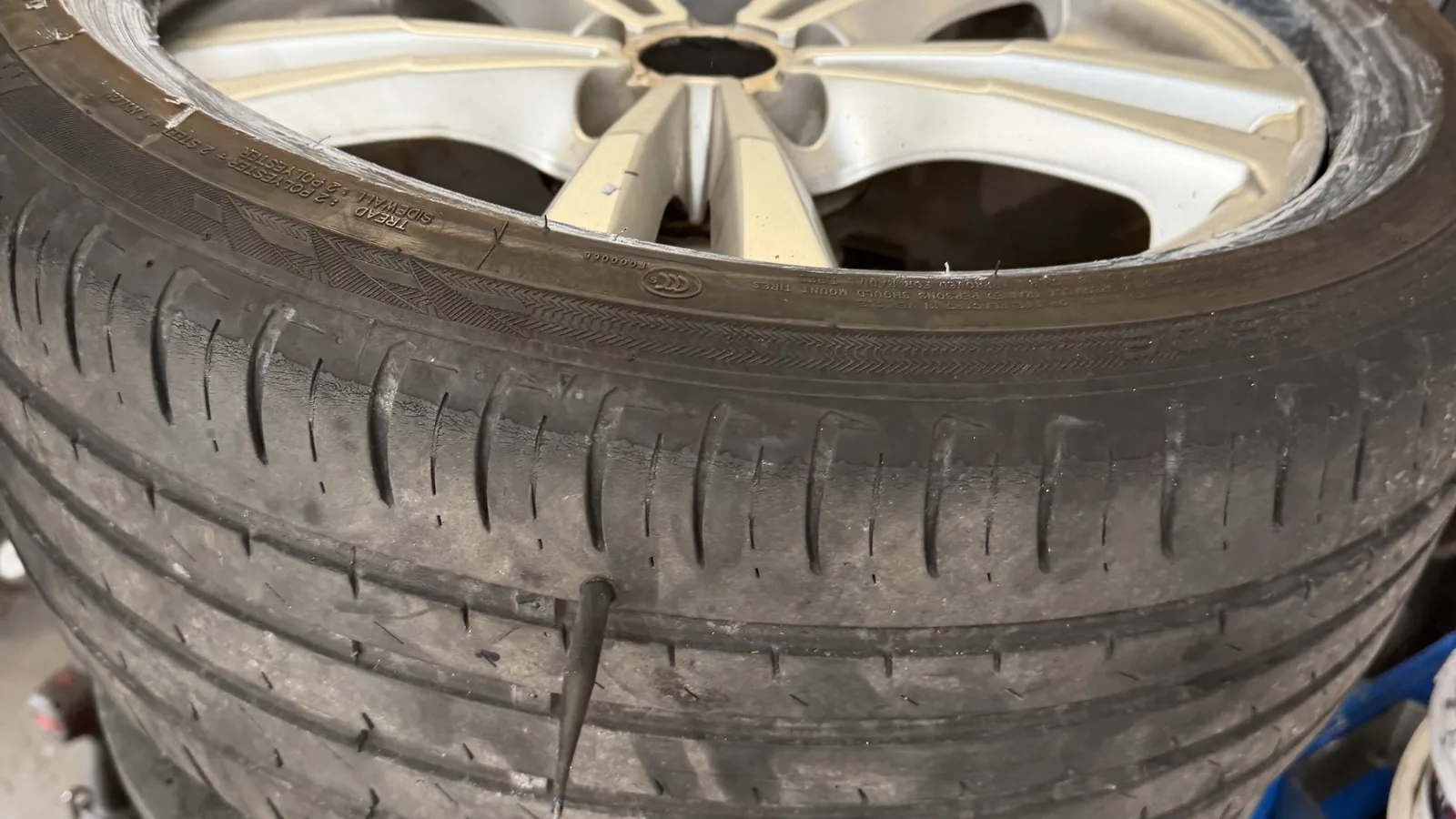
Not true. A nail or screw in the middle of the tread can usually be repaired, as long as the hole is up to 6mm, sits in the central three quarters of the tread, and the tyre is sound inside. That is the British Standard, BS AU 159.
Our repair is £39.95, done at the car. The tyre comes off the rim, gets checked inside, and a plug and patch goes in from the inside. Done properly, it lasts the life of the tyre.
The myth works the other way too. A string plug pushed in from outside, with the tyre still on the wheel, is not a proper repair. Nobody has checked the inside. And a tyre driven flat, or holed near the edge or in the sidewall, cannot be repaired at all. We tell you which you have before any money changes hands. Can a punctured tyre be repaired has every rule.
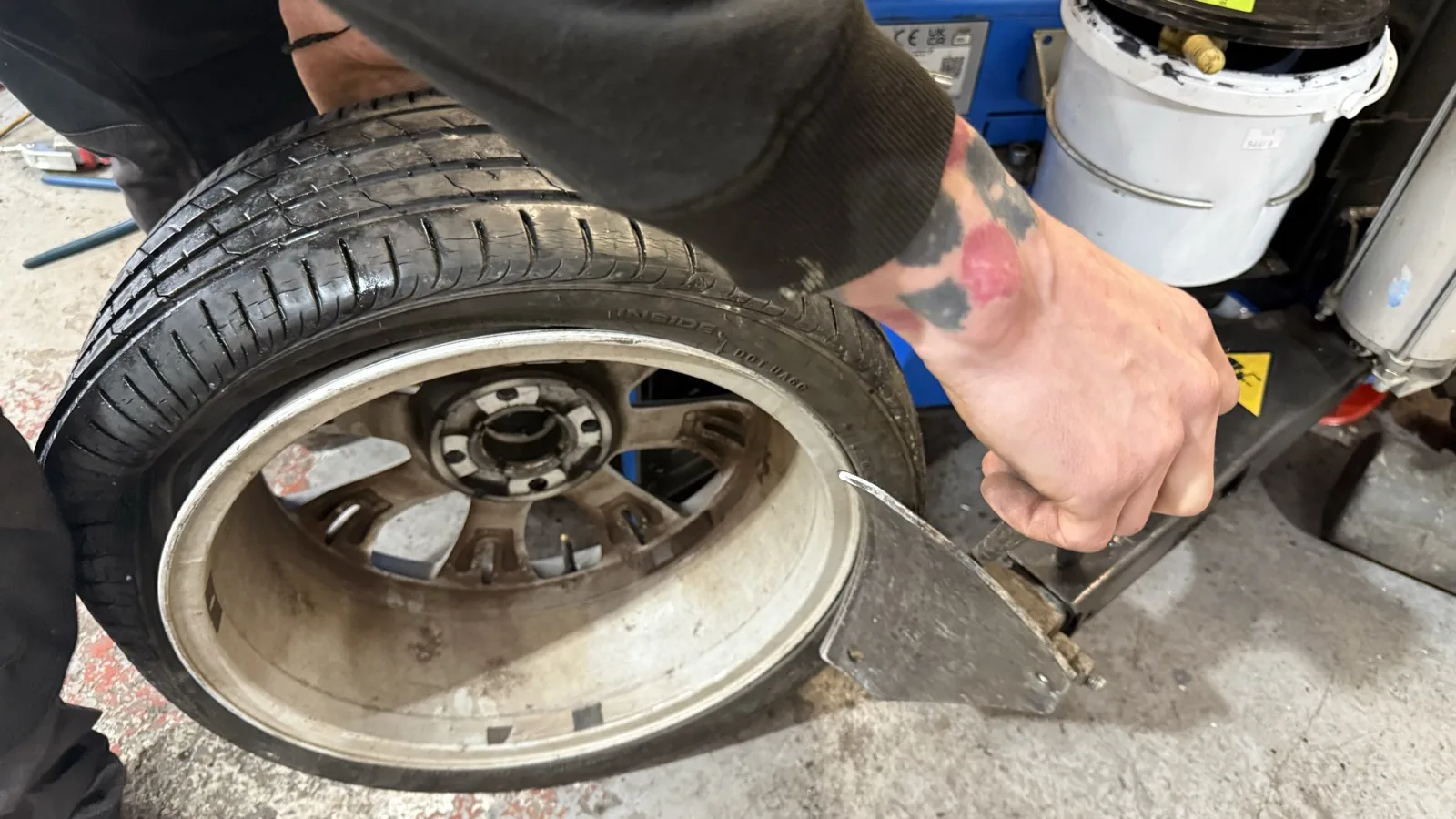
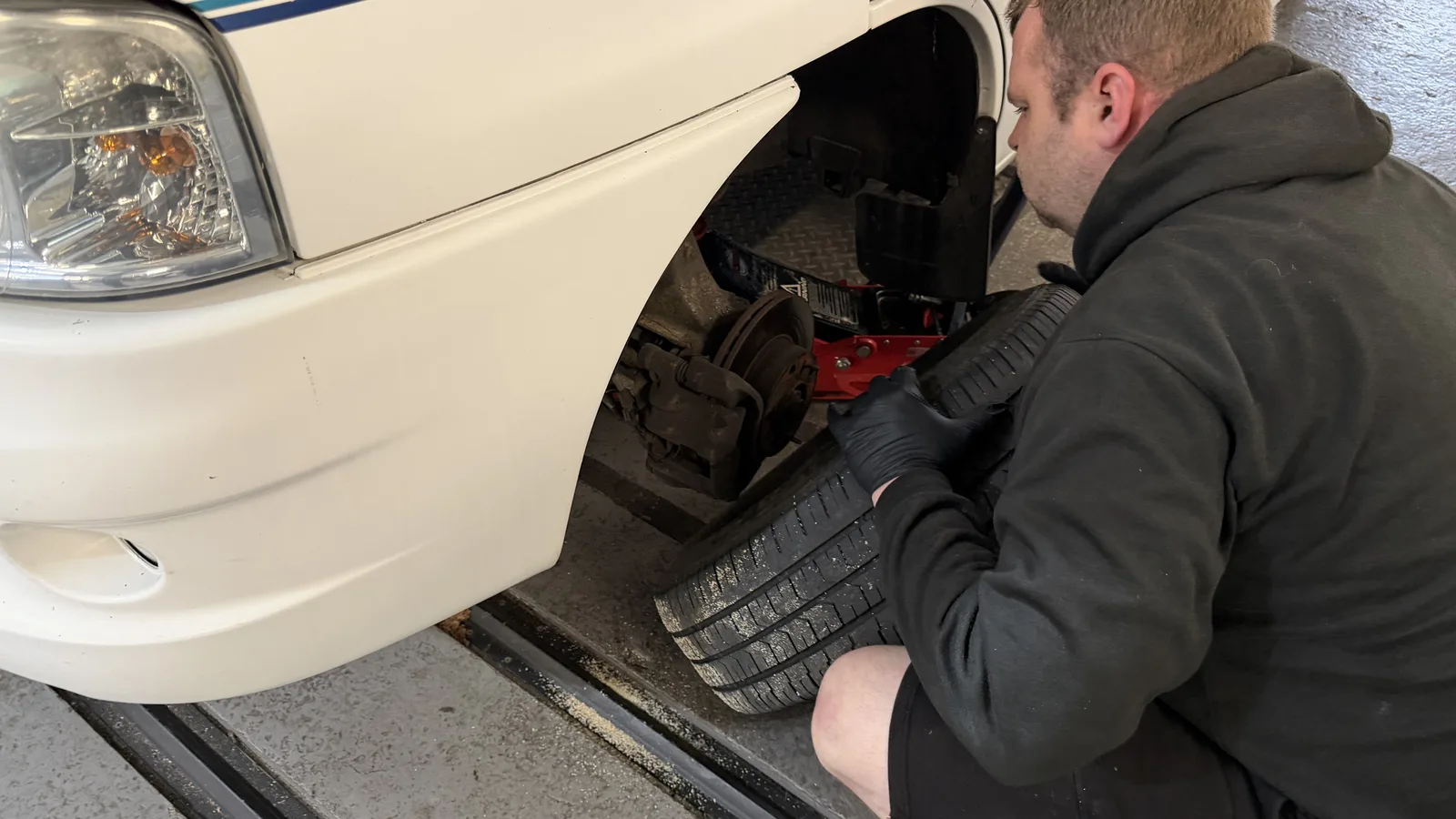
The job is the same. The tyre comes off on a tyre machine, the new one goes on, the wheel is balanced on a balancer, and the nuts are torqued to the car maker's figure. The machines just live in a van instead of a building.
We are AA and RAC approved, and the fitters work to the same standard at the kerb as in a workshop. What changes is you. No drive to a garage, no waiting room, no lift home, and no driving on a damaged tyre to get there.
There is no call out charge either, because fitting is priced into the tyre. The only jobs that genuinely need a garage are ones like wheel alignment that need a ramp and a rig. Tyres, repairs and balancing are all done where the car is. How mobile tyre fitting works shows every step, from message to drive away.
The questions that usually come next.
 UK tyre law1.6mm, the fines and the points.Read the guide →
 Correct tyre pressureWhere to find it and how to set it.Read the guide →
 Replace two tyres or four?When a pair is fine and when it is not.Read the guide →
 Cracked or perished tyresWhen cracking is cosmetic and when it is not.Read the guide →
 Can a puncture be repaired?The repair rules, in plain English.Read the guide →
 Part worn tyresThe rules and the risks.Read the guide →
The ones we hear at least once a week.
Normal air is already about 78% nitrogen. Keeping the pressure right matters far more than what is in the tyre.
Only in the right size for the car. The wrong size can upset the handling and the speedo, and fail an MOT.
The tyre light only comes on when a tyre is well down. A monthly gauge check catches it long before.
Little tread left and an unknown past. Per mile, a new budget tyre is often the better deal.
Not always. Match the pair on each axle. If the others have good tread, two can be enough.
Soft tyres do not grip better on snow or ice. They handle worse. Keep the normal pressure.
None of them take long. All of them beat guessing.
Use a gauge or the wear bars every month. Plan new tyres well before 1.6mm.
Set pressures to the car maker figure, with the tyres cold. Not the sidewall number.
Four digits after DOT. Older tyres need a close look for cracks, even with good tread.
Buying two? The newer tyres usually go on the rear axle, unless the handbook says otherwise.
A nail in the middle of the tread is often a £39.95 repair, not a new tyre.
Pressure, tread and age. A spare that is flat or cracked is no spare at all.
What happens after you message, wherever the car is parked.
Heard something and not sure? Send the question with a photo of the tyre. A fitter replies with a straight answer, not a sales line.
Fine for now, a repair, or a new tyre. If it is fine, we say so. If it needs doing, you get a fitted price and a time.
Home, work or the roadside across the North West and North Wales, 24 hours a day and 365 days a year. About 20 to 40 minutes per tyre.
Balanced, torqued and set to the door pillar pressure, with the better pair on the right axle. You drive off knowing it was done right.
4.4★★★★★average rating on Google
Brilliant service, same day, quick and easy. Was really rushed for time and they moved things around to ensure they got to me to get it fixed. Would defo recommend
Got us out of an unfortunate place of a Luton van blowout, super quick helpful and fairly priced!
Stranded in a car park with no spare! Called and they came within the hour, changed the tyre and was on my way 20 minutes later. Great service, delighted they made it so easy.
Send us the question and a photo of the tyre. A fitter tells you the fact, and fixes it at your door if it needs fixing.
A fitter is out on the road as you read this. Send the size now and the next free slot is yours, at the same price whatever the hour.
The myths drivers ask us to settle.
The ones we hear most are that 1.6mm of tread is fine, that you pump tyres to the sidewall number, that new tyres go on the front, that deep tread means a young tyre, and that any puncture means a new tyre. Nitrogen, wider tyres and part worns come close behind.
Each one has a grain of truth, which is why it sticks. Most get passed on by a friend, a parent or a forum post. 1.6mm is the law. The sidewall number is a real limit. The front tyres do steer. But the full story changes what you should do, and getting it wrong costs grip, money or both. How to check your tyres covers the checks that cut through most of them.
If you are ever unsure, ask someone who fits tyres for a living. Send a photo of the tyre and your question on WhatsApp to 07943 185471, or call 0300 124 6981. You get a straight answer, and if the tyre is fine, we will say so. Our tyre guides go into each topic in more depth.
It is legal, but it is not where grip is at its best. 1.6mm across the central three quarters of the tread is the UK minimum. As tread wears, it clears less water, so wet grip drops and stopping distances grow. Many tyre makers suggest changing well before the legal line.
In the dry you may not feel much difference. In heavy rain, on a motorway, you can. The car takes longer to stop and can feel light through the steering. Most drivers only notice when it is too late to change anything. That is where a worn tyre is most likely to skim on water instead of gripping the road. Aquaplaning explained shows why tread depth matters so much in the wet.
Below 1.6mm the tyre is illegal, and it can mean up to £2,500 and 3 points per tyre. So check often, and plan ahead. A cheap tread gauge from any car shop is enough, or use the wear bars in the grooves. When to replace tyres lists the signs. If yours are getting low, call 0300 124 6981 and we fit new ones at your home or work before the next wet spell.
No. The pressure on the sidewall is the most the tyre can safely hold, not the pressure your car needs. The right figure is set by the car maker and is on a sticker inside the driver door, in the fuel flap or in the handbook. Use that, with the tyres cold.
Too much air makes the tyre run on the middle of its tread. Grip drops, the ride gets harsh and the centre wears out early. Too little air wears the edges and makes the tyre run hot. Both cost you tyres, and too little air costs fuel as well. The door pillar figure is where the tyre works best, for grip, wear and fuel. Correct tyre pressure shows exactly where to look.
Many cars list two figures, one for normal use and one for a full load. Use the higher one when the car is packed for a holiday or towing. Check monthly, before long trips, and when the weather turns cold. Cold weather tyre pressure explains why it drops in winter. Call 0300 124 6981 with any questions.
Most tyre makers advise putting the better pair of tyres on the rear axle. If the rear tyres lose grip in the wet, the back of the car can slide out, and that is harder to control than the front running wide. Your handbook comes first if it says something different.
On a front wheel drive car, that usually means moving the part worn tyres to the front and fitting the new pair at the back. It can feel wrong, because the front tyres do the steering. But the rear tyres keep the car stable, and a spin is the harder slide to recover from. The fronts will wear faster, so you check them more often and swap them sooner. Replace two tyres or four explains when a pair is enough.
Some cars have different sizes front and rear, so swapping is not possible. And some tyres are directional, which limits where they can go. Directional vs asymmetric tyres explains that. We check all of it when we fit, and follow the right rule for your car. Call 0300 124 6981.
There is no single legal age limit for car tyres in the UK, but age does matter. Rubber hardens and cracks over time, even when the tyre is not used. Many tyre makers advise having older tyres checked every year. Cracks you can see into, or rubber gone hard, mean it is time.
Find the date code by looking for DOT on the sidewall. The last four digits are the week and year it was made. 2319 means week 23 of 2019. Check the spare too, because it can be the oldest tyre on the car. Sun, heat and long spells parked all speed up ageing. A car kept in a garage and driven often ages its tyres more slowly. Cracked or perished tyres shows what to look for.
Low mileage cars, caravans and motorhomes are where old tyres hide, because the tread never wears down. If you are not sure, send us a photo of the date code and the worst looking part of the tyre. Caravan tyres covers vans that sit for months. Or call 0300 124 6981.
For everyday driving, not really. Normal air is already about 78% nitrogen. Nitrogen may hold pressure a little more steadily, but checking and setting your pressures with a gauge matters far more than what gas is inside the tyre. Do not pay extra expecting a big change.
A tyre filled with nitrogen still loses some pressure over time, and it still needs checking. It can also lose air through a puncture just like any other tyre. Some racing and aircraft uses make sense, but a family car on UK roads is a different world. If you top it up with normal air, that is fine. It will not harm anything. Nitrogen vs air goes into the detail.
The habit that actually helps is a monthly check with a gauge, when the tyres are cold, set to the figure on the door pillar. That saves fuel, saves tread and keeps the grip where it should be. It takes five minutes and costs nothing if you use a garage air line. Correct tyre pressure shows how. Call 0300 124 6981 if a tyre keeps losing air.
Usually not. A part worn tyre costs less up front, but it has less tread left, so it does not last as long. You also do not know its past. It may have been run flat, hit a kerb or been badly repaired. Per mile, a new budget tyre is often better value.
Part worn tyres are legal to sell if they meet the rules, including a minimum tread depth and a proper inspection. But the rules cannot tell you everything that happened to the tyre. Damage inside a tyre is often invisible from outside, and old repairs can hide under the tread. Age is another unknown, so check the date code on any tyre you are offered. Part worn tyres covers the rules and the risks.
A new tyre comes with full tread, a recent date code and no history. It is also covered by the label, so you know its wet grip grade. The value brands from the big makers keep the price down without the unknowns. The best budget tyre brands lists them. Call 0300 124 6981 and we will quote a new budget tyre, fitted at your door.
No, not on most cars. The rule is to match the tyres on each axle: same size, same type and ideally the same model. If one tyre is damaged and its partner still has good tread, one tyre can be enough. If the partner is worn, replace the pair.
Some four wheel drive cars are fussier, because tyres of very different sizes or wear can strain the drive system. On those, the car maker may say to keep all four closely matched. It is a real cost if ignored, so it is worth checking. Most normal front or rear wheel drive cars do not have this issue. Check the handbook, or ask us with the registration. Replace two tyres or four covers when four is the right call.
When you do replace a pair, the better tyres usually go on the rear axle, as covered above. Mixing brands front and rear is fine. Mixing brands across one axle is best avoided, because the two sides can grip differently in the wet. Mixing tyres explains what is legal. Call 0300 124 6981 for a fitted price.
Only if the size is right for the car. A wider tyre can give more dry grip, but it can also aquaplane sooner in standing water, rub on the arches, upset the handling and throw out the speedo. Fitting a size the car was not built for can also fail an MOT.
Stick to the sizes listed for your car. Many cars have more than one approved size, depending on the wheel. Changing wheel size is fine when the tyre size changes with it and the pair is on the approved list. Guesswork is where it goes wrong, and it is easy to avoid by checking first. The registration tells us which sizes fit. Reading your tyre size explains what the numbers mean.
If you want more grip, a better tyre in the right size usually beats a wider one in the wrong size. It also costs less, because wider tyres are often dearer. Compare the wet grip grade on the label. Tyre labels explained shows how. Or call 0300 124 6981 and we will suggest options for your car.
No. The warning light only comes on when a tyre is well below where it should be. By then it has been running low for a while. A monthly check with a gauge catches a slow leak long before the light does, and keeps all four tyres at the right pressure, not just the worst one.
Some systems also need resetting after pressures are changed, or they warn at odd times, like on cold mornings. The light is a safety net, not a replacement for a gauge. It will not tell you if all four are a little low, which is common after a cold snap. Only a gauge tells you that. The TPMS warning light explains what it can and cannot tell you.
If the light comes on, stop when safe and check with a gauge. If one tyre keeps dropping, it may be a slow puncture. A nail or a leaking valve are the usual causes. Slow puncture signs shows what to look for. Call 0300 124 6981 and we will check and repair it at the car if the tyre passes.
No. It is an old myth. On a normal car, lower pressure does not give more grip on snow or ice. It makes the tyre squirm, the steering vague and the braking worse, and it can damage the tyre. Keep the pressure the car maker gives.
What helps on snow and ice is tread depth, the right tyre and gentle driving. Leave a far bigger gap, pull away in a higher gear and brake early and softly. Smooth hands and feet matter more than anything you do to the tyre. Stay home if you can when it is truly bad. All season tyres with the snowflake mark, or winter tyres, grip much better in the cold than summer tyres. Summer, winter and all season tyres compares them.
Cold weather already drops the pressure, so check it more often in winter, not less. Letting more out on top of that makes a bad situation worse. The winter driving checklist covers the rest. If your tyres are low on tread before the cold sets in, call 0300 124 6981 and we fit new ones at your home or work.
Not quite, but they are not the danger some people think either. Every new tyre sold here meets the same safety rules. Premium tyres usually grip better in the wet and last longer. Budget tyres cost less. For short, local driving, a good budget tyre is often a sensible choice.
The best budget tyres come from the value brands of big makers, and the label lets you compare wet grip fairly. A budget tyre with a good wet grade can beat a pricier one with a poor grade. Price and badge are not the whole story, so read the label. Look at that grade before the price. The best budget tyre brands covers who makes what.
On a high mileage car, a mid range or premium tyre can cost less per mile, because it lasts longer. On a car that does a few thousand miles a year, that sum often goes the other way. Budget vs premium tyres lays out the trade off. Call 0300 124 6981 and we will quote more than one option, fitted, so you can see the real gap.