Welcome to

Mobile tyre fitting · North West & North Wales · We fit around you

Approved by the AA and RAC. No call-out charge. Around 32 minutes on average, 24 hours a day.
info@yournewtyres.co.ukTell us your name and tyre size — we will reply on WhatsApp with a price and an ETA.
A tyre label rates three things. Fuel efficiency runs from A to E and shows how easily the tyre rolls. Wet grip runs from A to E and shows how short it stops on a wet road. Noise is shown in decibels with a class of A, B or C. Wet grip matters most.
Read it in this order:
That is the whole label. It is the same on a budget tyre and a premium one, so it is a fair way to compare.
Why wet grip first? Because this is the UK. The roads are wet most weeks of the year. A tyre that stops shorter in the rain is the one that keeps you out of the back of the car in front. Our premium tyres usually score well here, but some cheaper tyres do too.
Do not want to read labels at all? Send the registration on WhatsApp to 07943 185471 or call 0300 124 6981. We send back the tyres that fit your car with their label grades side by side, each with a fitted price. You pick. We fit it at home, work or the roadside.
The size is on the sidewall of the tyre, or send us a photo of it. It lands with the fitter on shift. No call-out charge, and the fitting is already in the price.
You are through to YourNewTyres. What size are the tyres?
The size is printed on the sidewall, like 205/55 R16. Send that and where you are, and I will come back with a fitted price and the next slot.
A photo of the sidewall does the job if you would rather not type it out.
Opens WhatsApp with your message ready to send
Covered here: what are the three ratings on a tyre label; which tyre label rating matters most; what do the snowflake, ice mark and qr code on a tyre label mean; what does a tyre label not tell you; how do you use the label to pick the right tyre.
Every new car tyre comes with the same label. It has three grades on it. They are tested the same way for every brand.
Fuel efficiency is the petrol pump symbol. It measures rolling resistance. That is how much energy the tyre soaks up as it turns. A rolls easiest. E takes the most effort. On an electric car it shows up as range, not fuel. Wet grip is the rain cloud symbol. It measures how fast the tyre stops a car on a wet test track. A is the best. E is the worst.
Noise is the speaker symbol. It gives a number in decibels, like 68dB or 72dB, and a class of A, B or C. Lower is quieter. Every 3dB is a real step, so a 68dB tyre sounds clearly calmer than a 71dB one. You will notice it most on a smooth motorway. Noisy tyres covers the other reasons a car can hum.
Wet grip. Full stop. It is the only grade on the label that is about stopping the car. Fuel and noise are about cost and comfort. Wet grip is about not crashing.
Think about where you drive. The North West and North Wales get a lot of rain. The M6, the M62 and the A55 are wet for weeks at a time. Standing water sits on B roads after a storm. That is when a good wet grade earns its keep.
So here is the simple rule we use. Pick the best wet grip grade your money allows. Then use fuel and noise to split two tyres with the same wet grade. A cheap tyre with a B for wet grip is a safer buy than a dear one with a D. Best budget tyre brands shows which value names tend to score well.
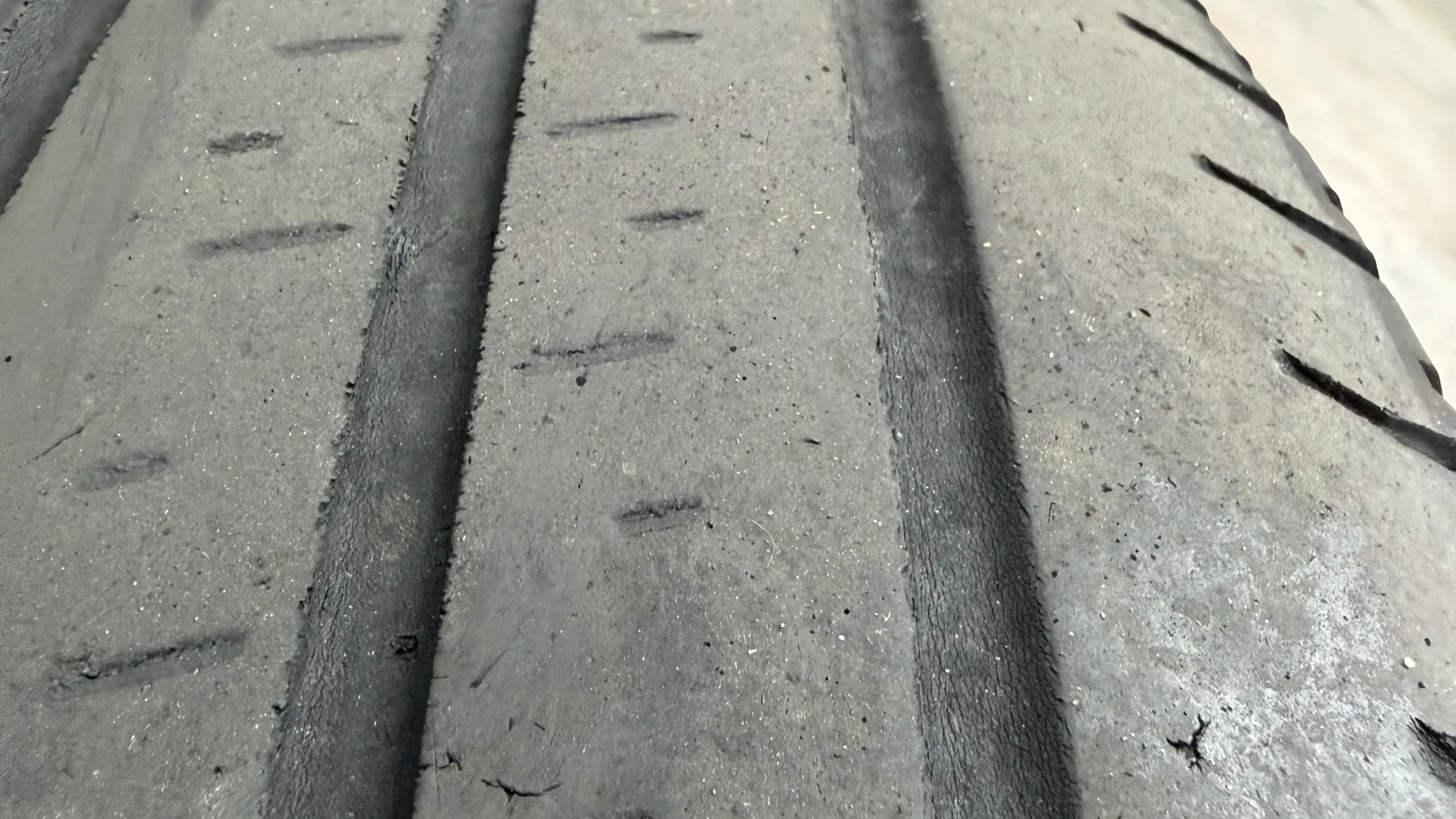
Look below the three grades. Some labels carry one or two extra symbols.
A mountain with a snowflake inside it is the 3PMSF mark. It means the tyre passed a snow test. You find it on winter tyres and on most good all season tyres. An ice symbol is rarer. It is for tyres built for packed ice, mostly sold in the far north of Europe. For UK roads, the snowflake is the one worth knowing. Do you need winter tyres in the UK explains who needs it.
The QR code in the corner links to a product record held in a European database. Scan it with your phone and you see the label for that exact tyre and size. It is a handy way to check a label online matches the tyre in front of you.
The label is useful. It is not the whole story. It says nothing about four things.
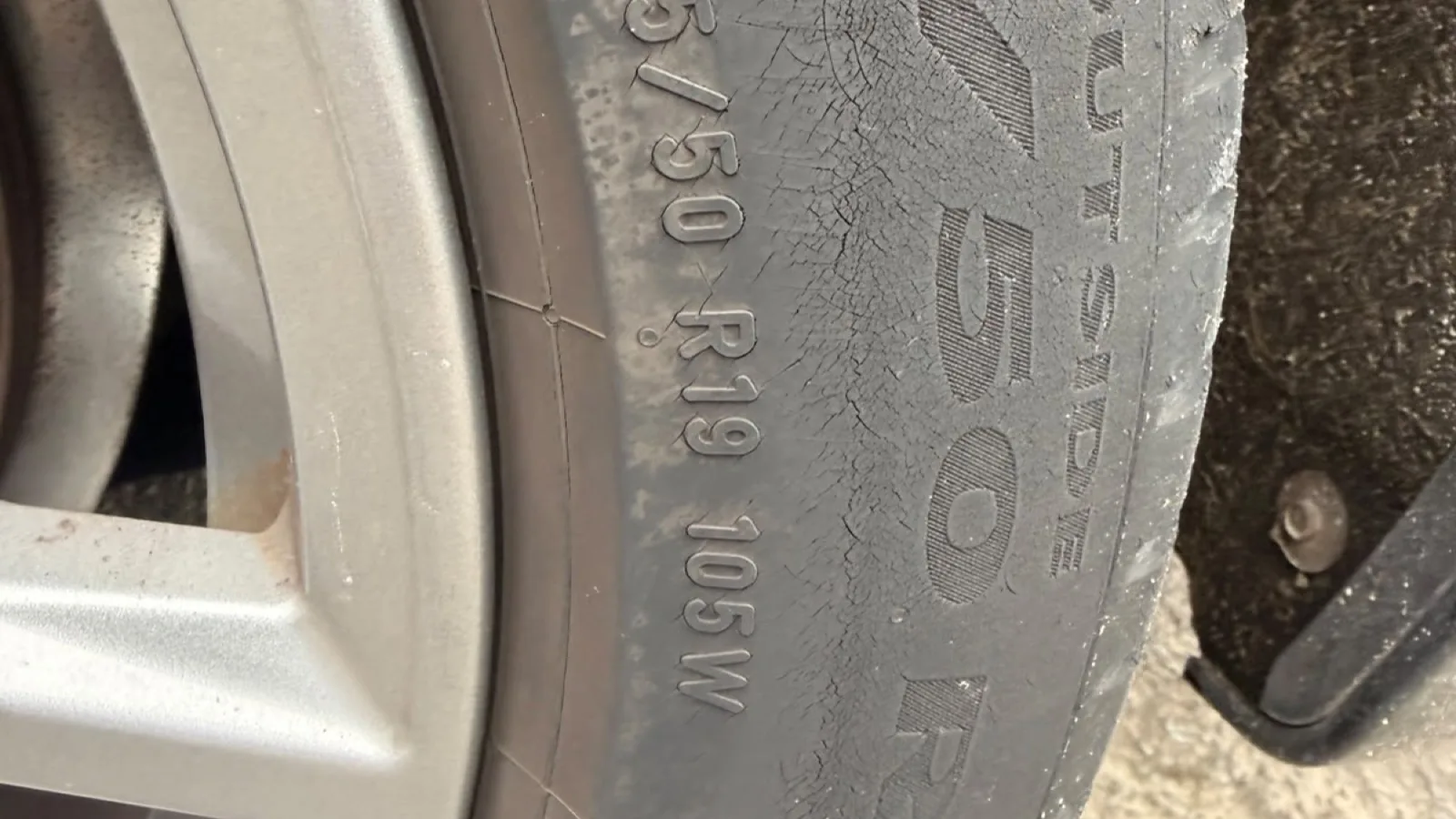
It does not tell you how long the tyre will last. Two tyres with the same grades can wear out thousands of miles apart. It does not rate dry grip or how the car feels in a bend. It does not rate grip as the tyre wears down, which is when grip matters most. And it does not tell you the age of the tyre in front of you. That is in the DOT code on the sidewall. How to read tyre size shows where to find it.
So treat the label as the first filter, not the final word. Use it to cut a long list down to three. Then think about your miles and your car. Budget vs premium tyres covers the part the label cannot.
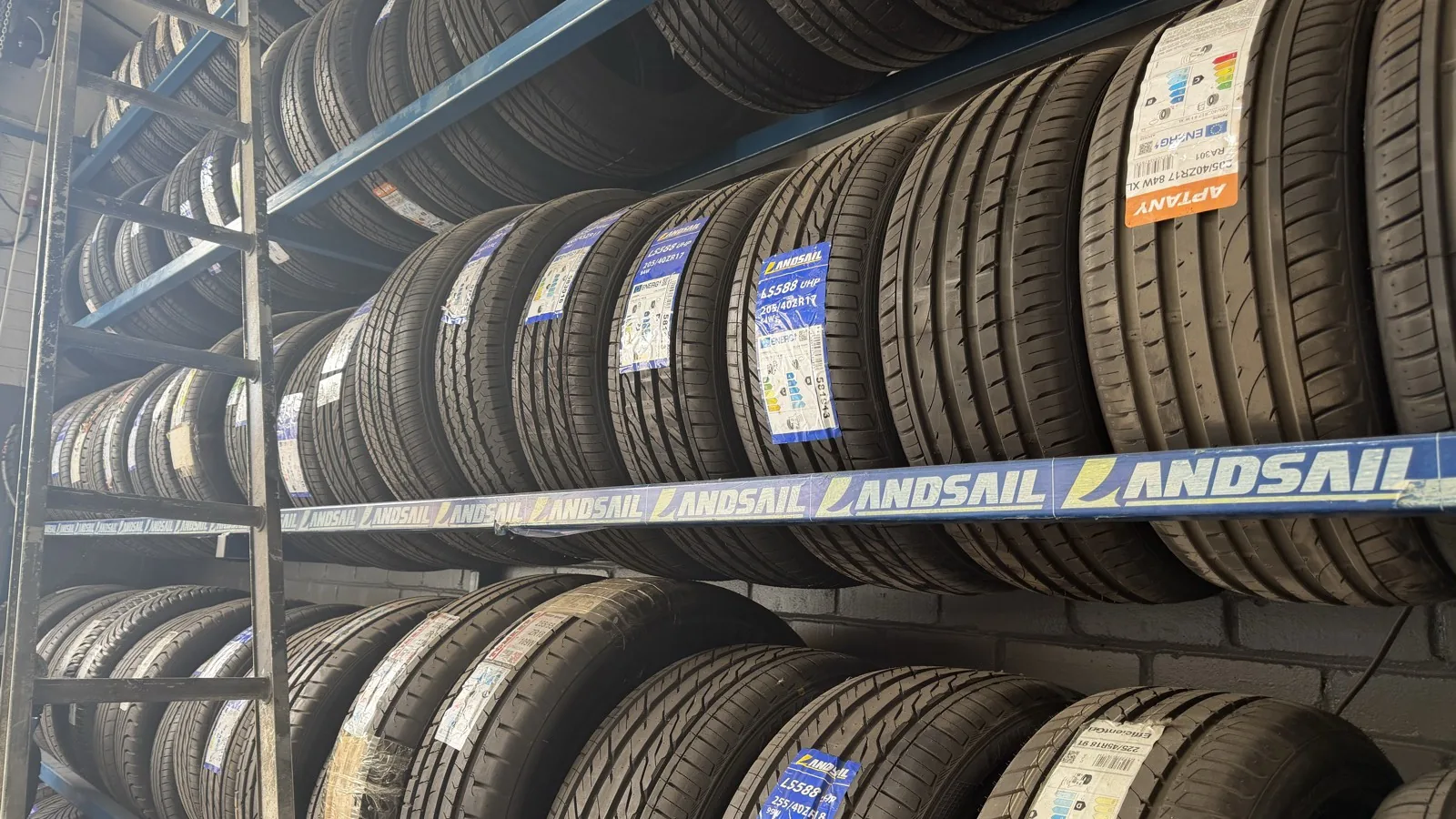
Start with the size. Every tyre on the list must fit your car and match its load and speed code. Then line up the labels.
Step one, wet grip. Cross off anything with a poor grade if a better one is close in price. Step two, your miles. Big motorway miles? A good fuel grade saves you money every week. Short town trips? Fuel matters less. Step three, noise. If you drive an electric car or do long runs, a quieter tyre is worth a look. Fuel saving tyres goes deeper on the fuel grade.
That is it. Three grades, three steps. Or skip the homework. Send the registration and we send back two or three tyres that fit, with the grades shown next to each fitted price.
The questions that usually come next.
 Tyre guidesRead the full guide.Read the guide →
 Best budget tyre brandsWhere the cheap tyres are good.Read the guide →
 Budget vs premium tyresRead the full guide.Read the guide →
 Fuel saving tyresRead the full guide.Read the guide →
 Reading your tyre sizeWhat the numbers on the sidewall mean.Read the guide →
 EV tyres explainedWeight, torque and wear.Read the guide →
Tap a card for the plain English version.
How short the tyre stops on a wet road. A is shortest. The grade that keeps you safe in UK rain, so read it first.
How easily the tyre rolls. A uses the least fuel, or the least battery on an electric car. Matters most on big miles.
How loud the tyre is outside the car, with a class of A, B or C. Lower is quieter. Every 3dB is a real step.
Do these on any tyre you are offered, cheap or dear.
Take the best wet grade you can afford. A or B is great. Be wary of D or E on a daily car.
High mileage? A good fuel grade saves money every week. Low mileage? Do not pay extra for it.
Compare the decibel number. Two or three dB lower is a calmer motorway drive.
The 3PMSF mark means extra grip in snow. Handy if you drive over the hills in winter.
The label only counts if the tyre fits. Size, load and speed code must match your car.
The label does not show age. The last four digits after DOT on the sidewall are the week and year.
What happens after you message, wherever the car is parked.
We look up your size and the load and speed code your car needs. Then we pull the tyres that fit, from budget to premium.
You get two or three options, each with its wet grip, fuel and noise grades and a fitted price. Choosing takes a minute, not an evening.
Home, work or the roadside across the North West and North Wales, 24 hours a day. Around 32 minutes on average in the core area.
About 20 to 40 minutes per tyre. Balanced on the van, pressures set to the door plate, every nut torqued by hand, and the old tyre taken away.
4.4★★★★★average rating on Google
Stranded in a car park with no spare! Called and they came within the hour, changed the tyre and was on my way 20 minutes later. Great service, delighted they made it so easy.
Brilliant service, same day, quick and easy. Was really rushed for time and they moved things around to ensure they got to me to get it fixed. Would defo recommend
Got us out of an unfortunate place of a Luton van blowout, super quick helpful and fairly priced!
Send your registration. We reply with the tyres that fit, their grades side by side and a fitted price for each, any hour of the day.
A fitter is out on the road as you read this. Send the size now and the next free slot is yours, at the same price whatever the hour.
What drivers ask us about the grades, the symbols and the numbers.
A tyre label shows three ratings. Fuel efficiency from A to E shows how easily the tyre rolls. Wet grip from A to E shows how short it stops in the wet. Noise is a decibel number with a class of A, B or C. Some labels add a snowflake or ice symbol for winter grip.
Every new car tyre carries the same label, tested the same way, so you can put a budget tyre next to a premium one and compare them fairly. That is the whole point of it. It stops a brand name doing the talking. The grades do it instead, and they cannot be bought. Best budget tyre brands shows how the value names compare on the label.
Want someone to read them for you? Send the registration on WhatsApp or call 0300 124 6981. We send the tyres that fit your car, with their grades and a fitted price next to each one. No call out charge is added, because fitting is priced into the tyre. See mobile tyre fitting for how the job works. It is the same on a drive, a works car park or a safe spot at the roadside.
Wet grip is the most important rating on a tyre label. It is the only one about stopping the car. Fuel and noise are about cost and comfort. On UK roads, which are wet for much of the year, a good wet grip grade is the one that can keep you out of a crash.
So read wet grip first and let it narrow the list. Then use fuel and noise to choose between tyres with the same wet grade. A mid priced tyre with a B for wet grip usually beats a pricier one with a D. Budget vs premium tyres explains when paying more makes sense. It mostly comes down to your miles and the size of the car.
Wet grip also fades as tread wears down. The label grade is for a new tyre. Past 3mm, stopping distances in the rain get longer, whatever the grade. When to replace tyres covers that part. If yours are getting low, call 0300 124 6981 and we fit new ones at your home or work. A good grade on a bald tyre is no help at all, so tread comes first.
A or B is a good wet grip rating. C is fair and common on value tyres. D and E stop noticeably longer on a wet road, so we would only choose them if nothing better fits the car. For a daily driver on UK roads, aim for B or better where the budget allows it.
The gap between grades is real. Each step down the scale adds stopping distance in the wet. You will not feel it on a dry day. You feel it the one time a car stops dead in front of you in the rain on the A55. That is the moment a better grade pays for itself. Premium tyres tend to sit at A or B, but plenty of mid range tyres do too.
Not sure what your current tyres score? The grade is not moulded on the tyre, but we can look it up from the make and pattern. Send a photo of the sidewall to 07943 185471. Then see mid range tyres if you want a good wet grade without paying top price.
Yes, a C rated tyre is a fair, safe tyre for normal driving. It sits in the middle of the scale. It will stop a little longer in the wet than an A or B tyre, and it may use a little more fuel. For low mileage town driving, a C grade is often fine.
Where we would push for better is on a heavy car, on a car that does big motorway miles, or on a car that carries children most days. There, stepping up from C to B for wet grip is money well spent. Ask us to price both side by side and you will see the real gap in pounds, not guesses. Budget brands includes many tyres that reach B. You do not always have to pay premium prices for a good wet grade.
C for fuel is a different story. That only means the tyre rolls with a bit more effort. On a car doing 5,000 miles a year, it barely shows. Fuel saving tyres shows when the fuel grade is worth chasing. Want both options priced? Call 0300 124 6981. We will tell you honestly if the cheaper tyre is the smarter buy for the way you drive, and we fit whichever you choose at your door.
The noise rating is how loud the tyre is outside the car, measured in decibels and shown with a class of A, B or C. A lower number is a quieter tyre. Around 67 to 69dB is quiet for a car tyre. The low 70s is more normal, and you will hear it more on a motorway.
Decibels do not add up in a straight line. A 3dB rise is roughly double the sound energy. So a 68dB tyre and a 71dB tyre can sound quite different on a long run. It matters most on quiet cars, like electric and hybrid cars, where there is no engine to cover it. Electric car tyres covers that in more detail. Noise is also about the people outside. A quieter tyre is kinder to the street you live on.
A new noise in your car is not always the tyres, though. It can be a wheel bearing, uneven wear or a worn tyre. Noisy tyres helps you tell them apart. If you want a quieter tyre, call 0300 124 6981 and ask us to sort the options by noise. We list the decibel figure next to each fitted price, so the quiet one is easy to spot.
The snowflake inside a mountain is the 3PMSF mark. It means the tyre has passed a standard snow grip test. Winter tyres and most good all season tyres carry it. If you see it on the label, the tyre is built to keep grip in snow and cold, not just in the wet.
It is different from M+S, which is moulded on many tyres. M+S is a maker's own claim with no set test behind it. The snowflake is the one to trust. It matters if you cross the hills in winter, like the Pennines or the roads into Snowdonia. All season tyres carry it and work all year. You get the snow grip without swapping tyres twice a year or storing a second set in the garage.
Most UK drivers do not need a full winter tyre. Do you need winter tyres in the UK helps you decide. If the snowflake is on your wish list, send the registration and we will show you which tyres in your size carry it, fitted at your door. Or call 0300 124 6981 and a fitter will talk you through whether it is worth it for your roads.
The QR code links to the official product record for that exact tyre and size in a European database. Scan it with your phone camera and you can see the full label online. It is a quick way to check that a label printed on a website matches the real tyre.
It is useful if you are comparing prices online and something looks too good. Scan the code and check the grades, the size and the load rating match. A mismatch is worth a question before you buy. Labels are set per size, so the same tyre in two sizes can carry different grades. How to read tyre size helps you check the size and the code after it, so you know you are comparing the right one.
Buying through us? You do not need to scan anything. We check the size, load and speed rating before we quote, and send the grades with the price. Call 0300 124 6981 or see tyre sizes for the sizes we fit most often. The van carries the common sizes, so a lot of jobs are done the same visit. Rare sizes we order in and give you an honest time.
No. A tyre label does not rate tread life. It also leaves out dry grip, handling and how grip holds up as the tyre wears. Two tyres with the same label can last very different mileages, so use the label to compare safety and cost, not lifespan.
Tyre life comes down to the rubber, the tread design, the car and how it is driven. Pressures and tracking matter a lot too. A tyre run soft or out of line wears fast whatever its grades. How long do tyres last covers the miles and years you can expect. It also covers the age limit, because rubber hardens with time even on a car that rarely moves.
If you do big miles, tell us when you ask for a price. We will suggest a tyre that tends to last well for that kind of driving, not just one with a nice label. Then keep it lasting with a monthly check. How to check your tyres shows the five minute routine. Catch low pressure or edge wear early and even a modest tyre can go a long way. Spot a problem? Call 0300 124 6981 and we come to you.
For wet grip, often yes, if you drive a lot or carry family. An A for wet grip stops shortest in the rain. For fuel, only if you do big miles, because the saving builds slowly. On a low mileage car, a B or C tyre is usually the better value.
The trick is to pay for the grade that matches your driving. Commuting 20,000 miles a year on the M62? A and B grades pay you back. Popping to the shops twice a week? You are paying for savings you will never see. Tyre prices in 2026 explains what else moves the price. Size is the big one. A small city car tyre and a large SUV tyre are worlds apart, whatever the grade.
Want the numbers side by side? Call 0300 124 6981 and we will price an A rated tyre and a solid mid range one for your size. On two or more tyres you can pay monthly at 0%, subject to status, so a better grade does not have to hit you all at once. NHS staff and key workers can also ask about up to 30% off. Either way, the tyre is fitted at your home or work.
The tyre maker tests its own tyres, using set test methods that are the same for every brand. They must keep the evidence behind each grade, and market checks can test tyres bought from shops to make sure the label is true. It is not perfect, but it is a fair and useful guide.
That is why a label grade is worth more than an advert. It follows the same rules for every maker, big or small. Where two labels look the same, the maker's reputation and independent testing can break the tie. Tyre brands explained covers how the big groups differ. Many value brands are owned by the big makers, so a cheaper name can still come from a serious factory.
We only fit tyres from known makers with a proper label and a recent date code. If you have been offered a tyre with no label, or a label that does not match the size, we would skip it. Read are part worn tyres legal before buying any used tyre, because used tyres have no label at all. Unsure about a tyre already on your car? Send a photo of the sidewall to 07943 185471 and a fitter will tell you straight.
Yes. Tyres made for electric cars carry the same label, and on an EV the fuel grade shows up as range. Winter and all season tyres carry it too, with the snowflake symbol added. The grades are tested the same way, so you can compare any of them side by side.
On an electric car the label is extra handy. A good fuel grade helps range. A low noise number matters because the car is so quiet. Many EV tyres also add foam inside to cut road noise. Do electric cars need special tyres goes through what to look for, including the load rating. Electric cars are heavy, so the load index matters as much as any grade.
On a winter tyre, expect a slightly lower wet grade or fuel grade than a summer tyre. That is the trade for grip in the cold. Winter tyres shows the sizes we fit. Send the registration or call 0300 124 6981 and we will show you the options with their grades. We can fit winter tyres in autumn and swap them back in spring, at home, so there is no garage trip twice a year.
Yes. Send the registration and we send back two or three tyres that fit your car, with the wet grip, fuel and noise grades next to each fitted price. You pick. We fit it at home, work or the roadside across the North West and North Wales, 24 hours a day.
There is no call out charge, because the fitting is priced into the tyre. Each tyre takes about 20 to 40 minutes and is balanced on the van before we go. You pay by a secure payment link sent to your phone. Mobile tyre fitting explains the job start to finish. You do not need to wait in, as long as we can reach the car and you leave the locking nut key out.
We cover 2,700+ areas and reach most drivers in our core area in around 32 minutes on average. We are AA and RAC approved. Check where we cover, or call 0300 124 6981. Ask and we can send a photo of the finished job, which helps if the car is at work and you are not. Most drivers simply carry on with their day while the tyre gets done outside.