Welcome to

Mobile tyre fitting · North West & North Wales · We fit around you

Approved by the AA and RAC. No call-out charge. Around 32 minutes on average, 24 hours a day.
info@yournewtyres.co.ukTell us your name and tyre size — we will reply on WhatsApp with a price and an ETA.
Grip the wheel firmly and keep the car straight. Do not brake hard. Ease off the accelerator, put your hazards on and let the car slow down on its own. Then steer gently onto the hard shoulder or into an emergency area. Get out on the left side, stand behind the barrier and call for help. Never drive on a blown tyre.
Your gut will tell you to stamp on the brake. Do not. A blown tyre already drags the car to one side. Hard braking adds to that pull and can spin the car. Hold it straight, lift off, and let the drag of the dead tyre slow you down. Gentle brakes only once you are well under control. The emergency fitting part comes later.
Once you are stopped, the danger is the traffic, not the tyre. Get everyone out on the side away from the lanes and up behind the barrier. Do not try to change the wheel on the hard shoulder. If you cannot get out safely, stay in with seatbelts on and call 999. Flat tyre: what to do covers the calmer, off motorway version.
Then the fix. A recovery truck gets the car off the motorway to somewhere safe. From there, send the location and tyre size to 07943 185471, or call 0300 124 6981. We bring the tyre to the car and fit it there, so you are not stuck waiting for a garage to open.
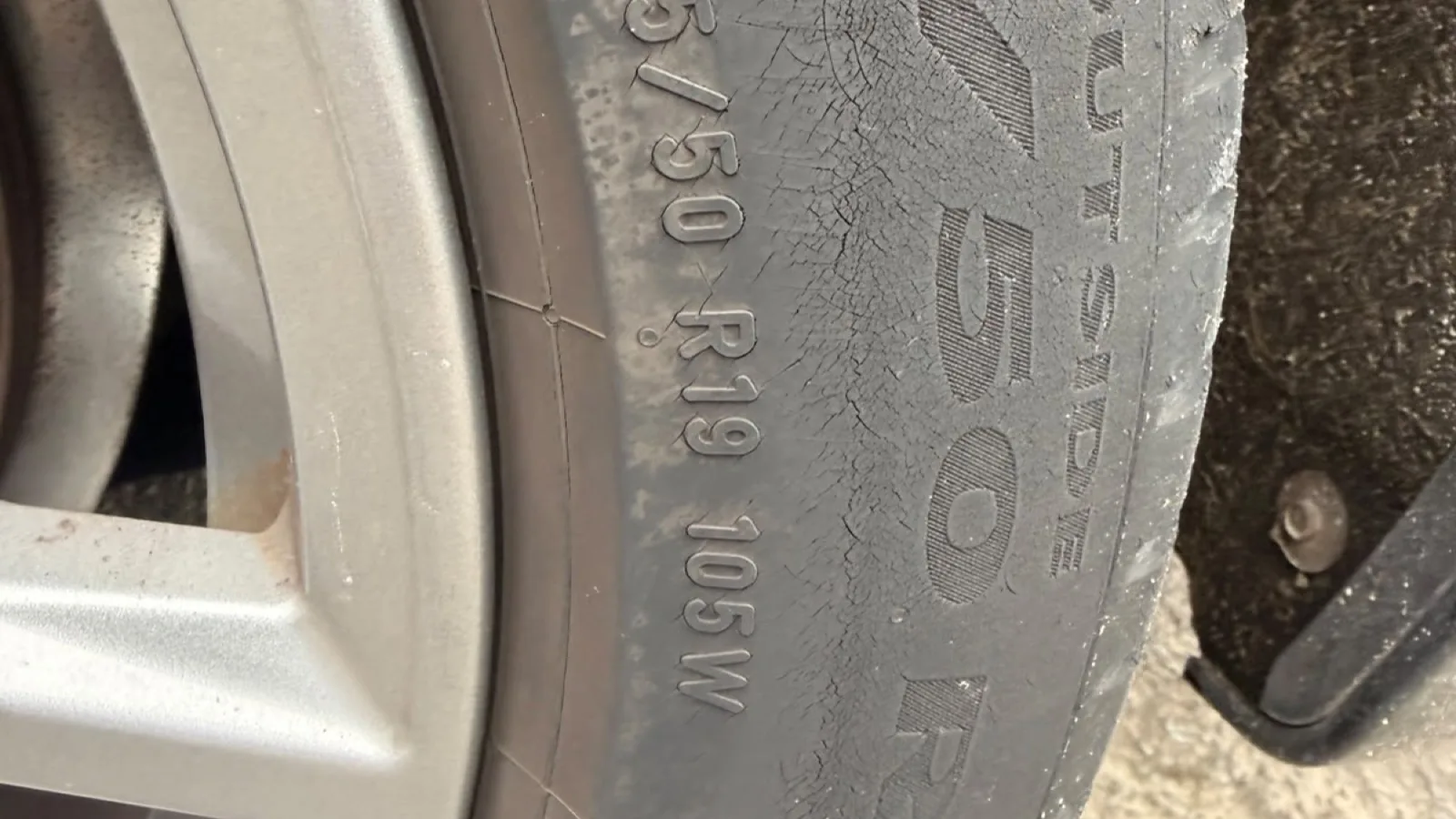
The size is on the sidewall of the tyre, or send us a photo of it. It lands with the fitter on shift. No call-out charge, and the fitting is already in the price.
You are through to YourNewTyres. What size are the tyres?
The size is printed on the sidewall, like 205/55 R16. Send that and where you are, and I will come back with a fitted price and the next slot.
A photo of the sidewall does the job if you would rather not type it out.
Opens WhatsApp with your message ready to send
Covered here: the first ten seconds after a blowout; front or rear blowout: what it feels like; getting to the hard shoulder or an emergency area; once you have stopped: what to do and what not to do; getting going again after a blowout; why tyres blow out, and how to cut the risk.
You will hear a bang, or a loud flapping. The car will lurch and pull. This is the moment that matters most, and it is simple.
Both hands on the wheel. Hold it firmly and keep the car pointing straight down your lane. Do not yank the steering. Do not brake. Lift your foot off the accelerator slowly and let the car lose speed by itself. The blown tyre acts like a drag, so the car slows faster than you expect.
Put the hazard lights on so drivers behind know something is wrong. Check your mirrors. Only once the car is calm and the speed is well down, use the brakes gently. Most blowout crashes happen because of what the driver does in these seconds, not because of the tyre. Stay smooth and you stay in control.
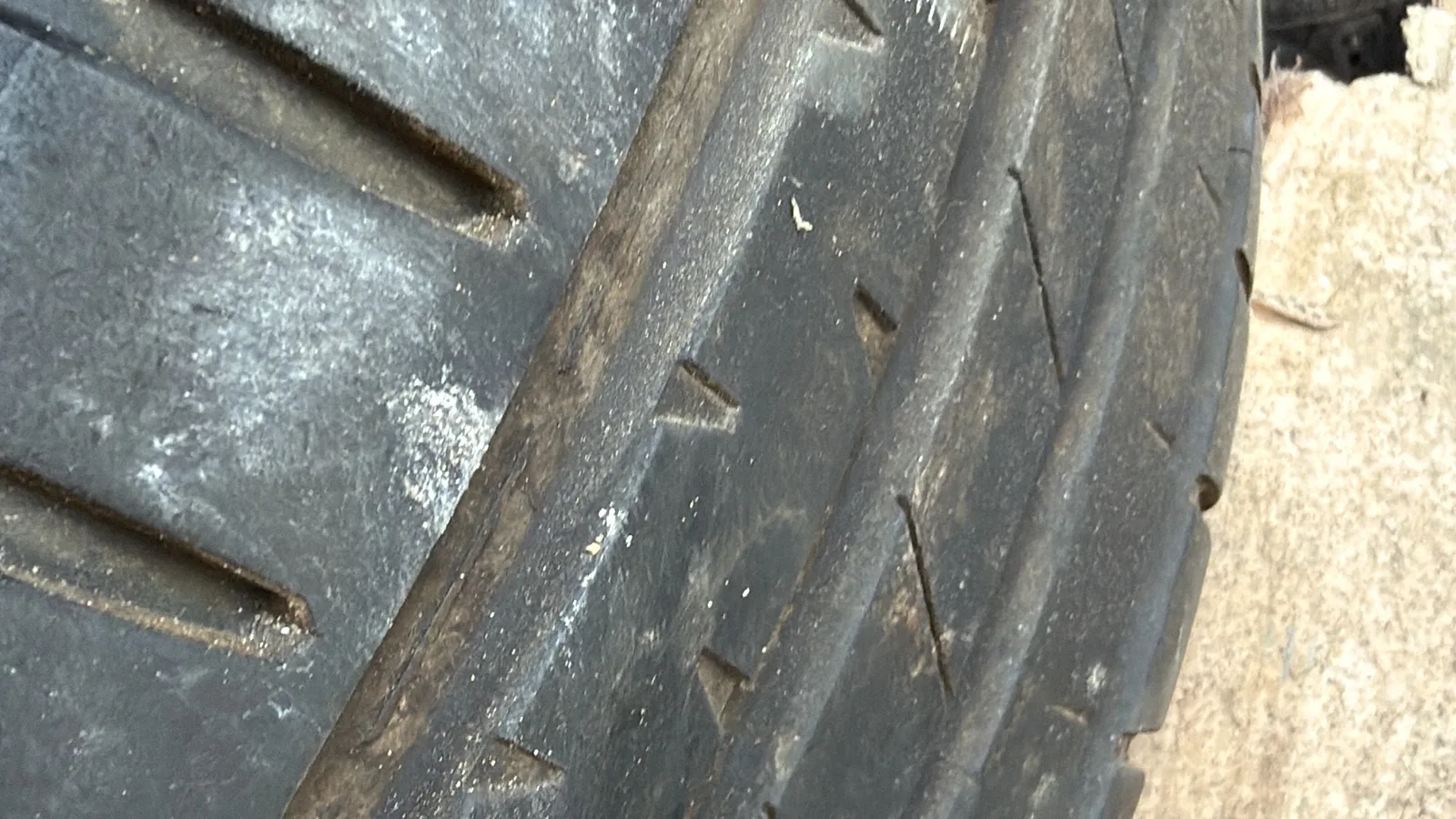
A front tyre blowout is felt through the steering. The car pulls hard toward the side of the burst tyre, and the wheel tugs in your hands. Hold it straight with steady pressure, and steer gently against the pull.
A rear tyre blowout feels different. The steering stays lighter, but the back of the car sways or wanders, like driving on ice. It can feel scarier, because it is harder to tell which way it will go. The drill is the same. Hold straight, lift off smoothly, no hard braking and no sudden steering.
Let the car settle before you move across the lanes. In both cases the car is still driveable for the few hundred metres you need to reach safety, as long as you stay gentle. What it cannot do is carry on your journey. That tyre is done, and pushing on can wreck the wheel and take away your steering altogether.

Once the car is under control and slowing, signal left and move over one lane at a time. Take it gently. Aim for the hard shoulder, or the next emergency area if the motorway has no hard shoulder.
Emergency areas are marked with orange signs and have an emergency phone. If one is close, it is worth nursing the car to it at low speed. Stop as far left as you can, with the wheels turned slightly toward the verge.
If you cannot reach the hard shoulder or an emergency area, and the car stops in a live lane, stay in the car with your seatbelt on and hazards flashing. Call 999 straight away. Do not get out into moving traffic. The overhead signs can close the lane once the control room knows you are there. If you can safely leave the motorway at a junction just ahead, that is safer still.
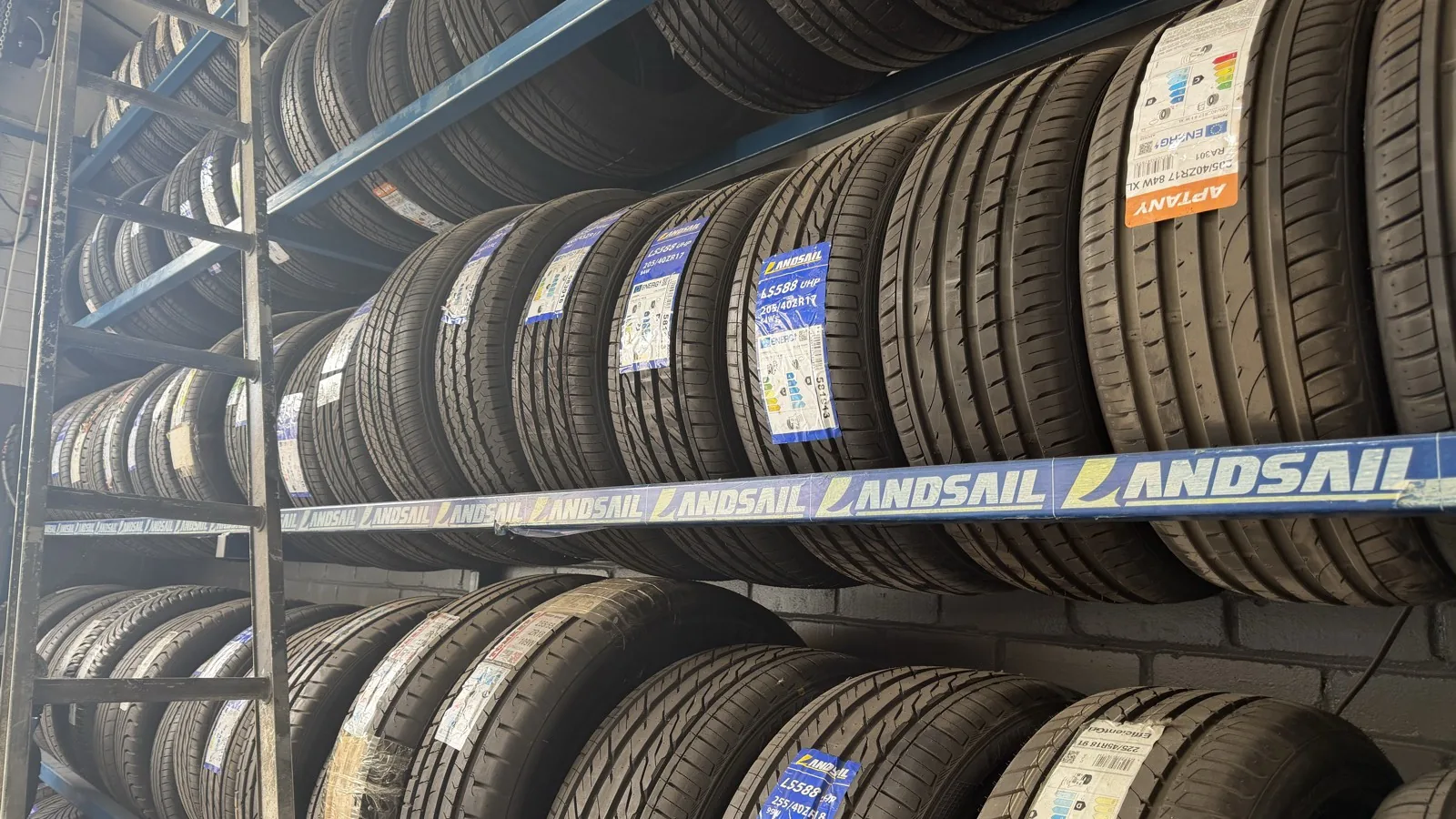
Get everyone out on the left side, away from the traffic. Move behind the barrier and up the bank if you can. Leave pets in the car unless it is an emergency. Keep children close.
Then call for help from behind the barrier. Your recovery provider, or the emergency phone in an emergency area. Do not stand between the car and the traffic, and do not try to change the wheel. The hard shoulder is one of the most dangerous places on the road, and a jack on a live motorway is not worth it.
Do not try to drive on the blown tyre either, even slowly to the next junction if the tyre has gone. That is how wheels get ruined and cars end up in the barrier. Wait for recovery to move the car. Once it is somewhere safe, the tyre is the easy part. See can tyres be fitted at home for what a fitter needs.
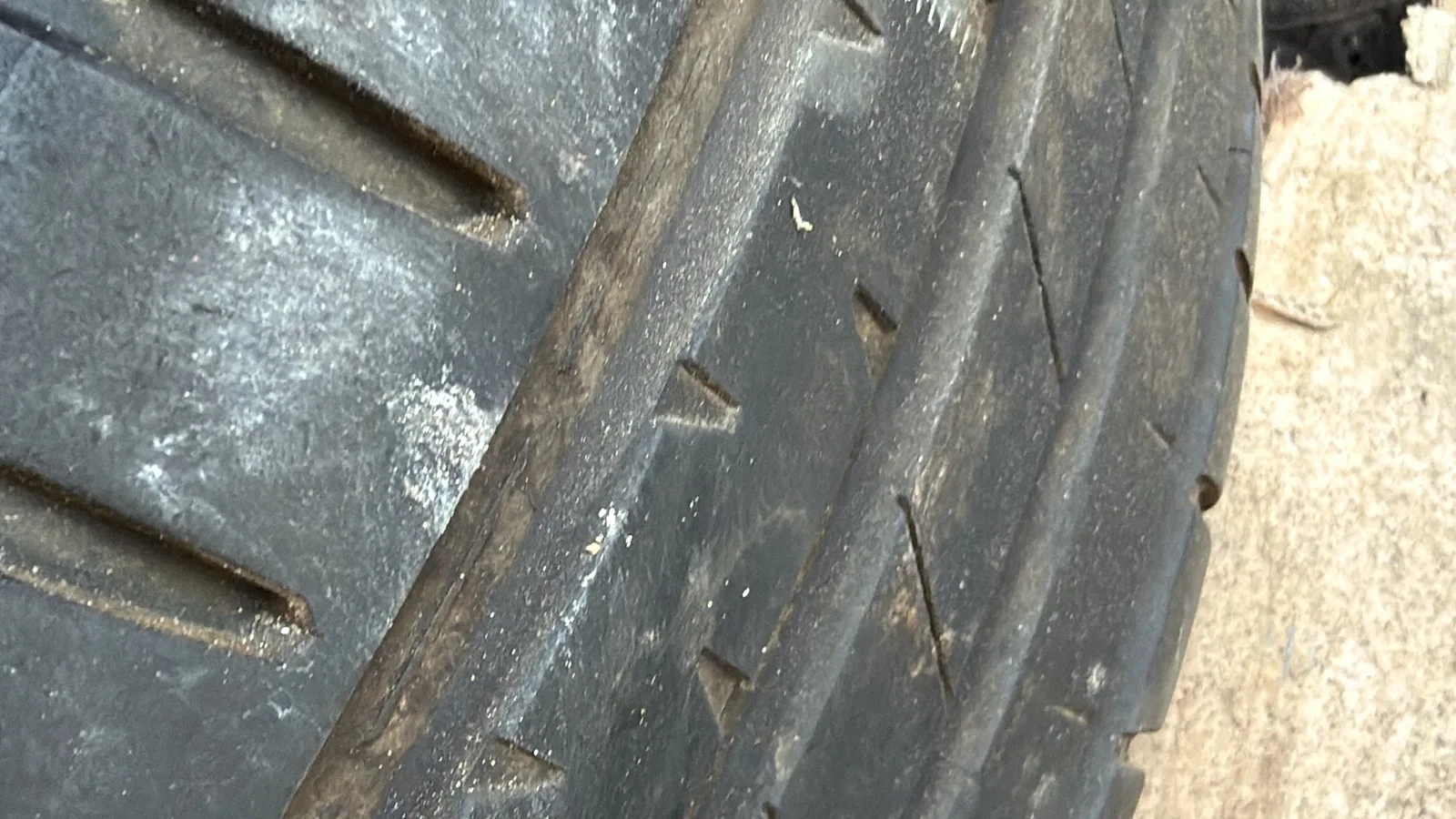
Here is the honest version. No mobile fitter should be working on a live motorway hard shoulder. Recovery moves the car first, to a services, a lay by off the main road, or home.
That is where we come in. Send the location and the tyre size, or the registration. We send a fitted price and a time, and bring the tyre to the car. No towing it to a garage and waiting for opening time. A blown tyre cannot be repaired, so it is always a new tyre.
We also check the wheel, because a blowout can bend or crack a rim, and we check the other tyre on the same axle. The new tyre must match it in size and type, and if the other one is worn or damaged, we tell you. We work 24 hours a day, 365 days a year. See emergency tyre fitting for how a night call works.
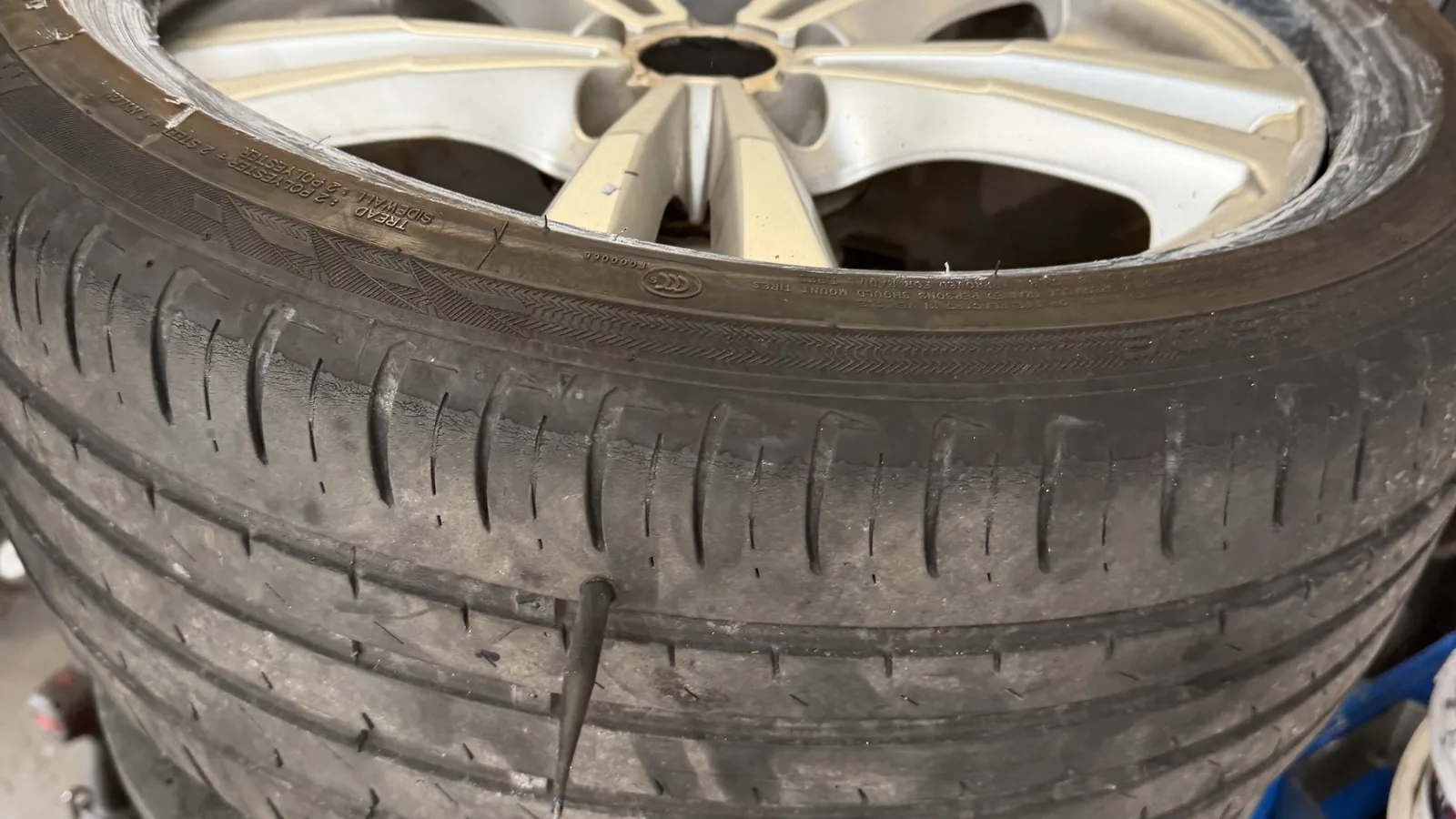
Most blowouts are not bad luck. The biggest cause is a tyre running too soft. Low pressure makes the sidewall flex, it heats up on a long fast run, and eventually it fails.
The other causes are old or cracked tyres, damage from a pothole or kerb that left a bulge, carrying too much weight, and a slow puncture that was ignored. You can knock most of those out in ten minutes. Check pressures every month and before long trips, cold, using the figure for a loaded car if you are packed for a holiday.
Look for bulges, cuts and cracks on both sidewalls. Replace tyres before they wear down to the limit. Never ignore a tyre that keeps losing air. And if you hit a pothole hard, look at the tyre that evening. A bulge means that tyre is weak and should be changed before it goes on the motorway. See pothole damage for what to look for.
The questions that usually come next.
 Emergency tyre fittingStuck now? A fitter on shift, day or night.Read the guide →
 Flat tyre: what to doThe first ten minutes, step by step.Read the guide →
 Flat tyre and no spareWhat actually gets you moving again.Read the guide →
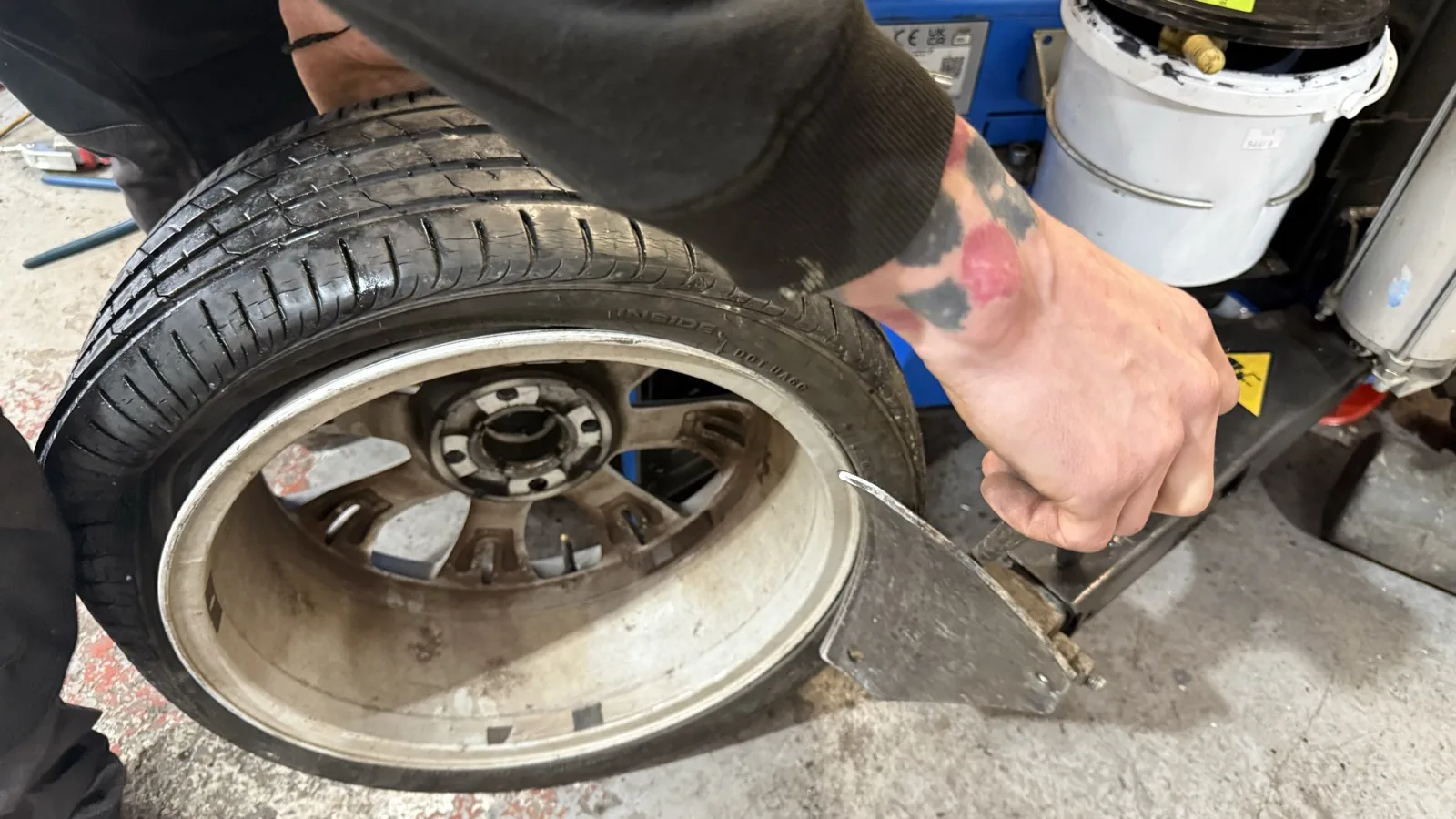 Pothole damageBulges, cracks and bent rims.Read the guide →
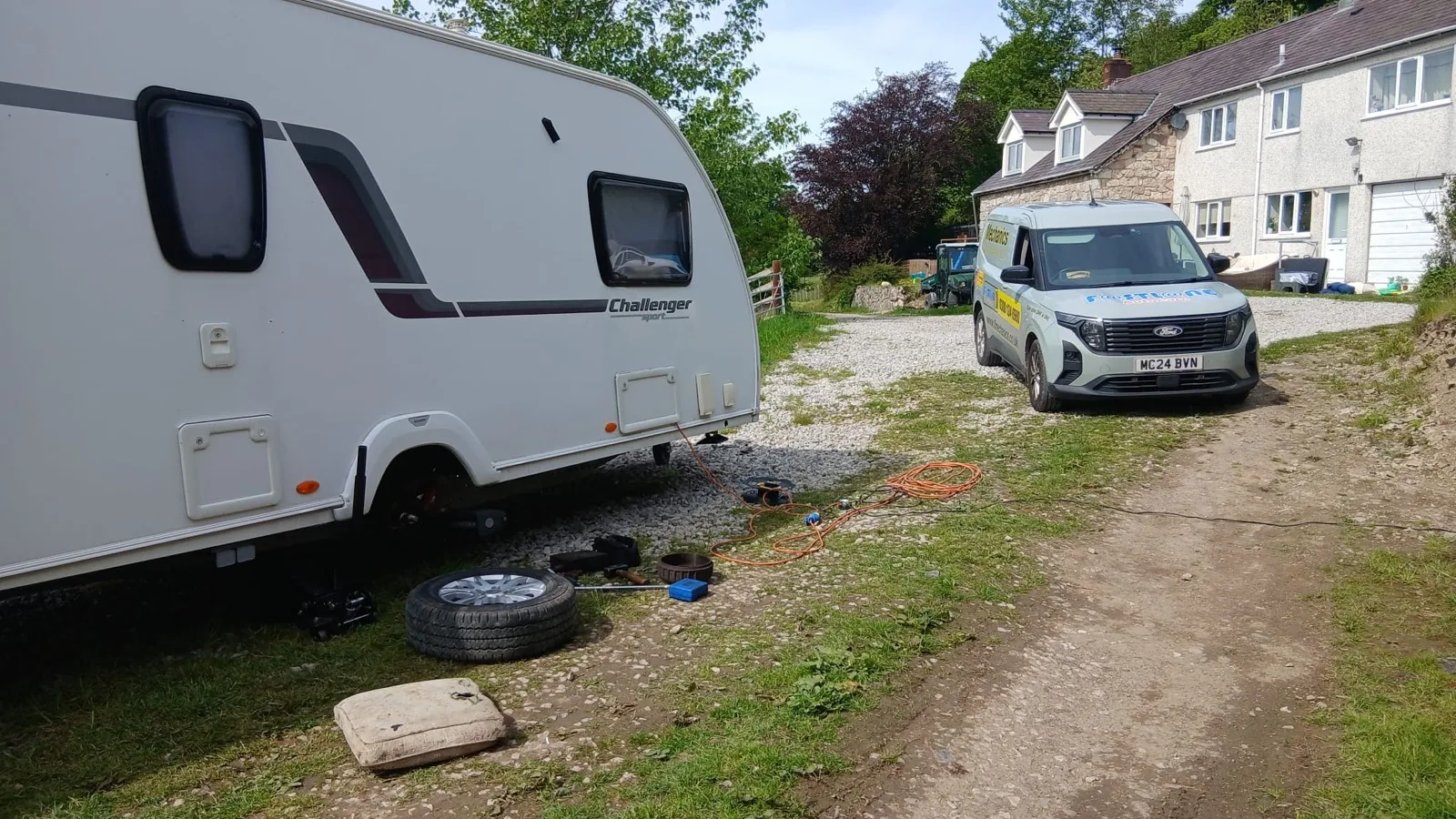 Cracked or perished tyresWhen cracking is cosmetic and when it is not.Read the guide →
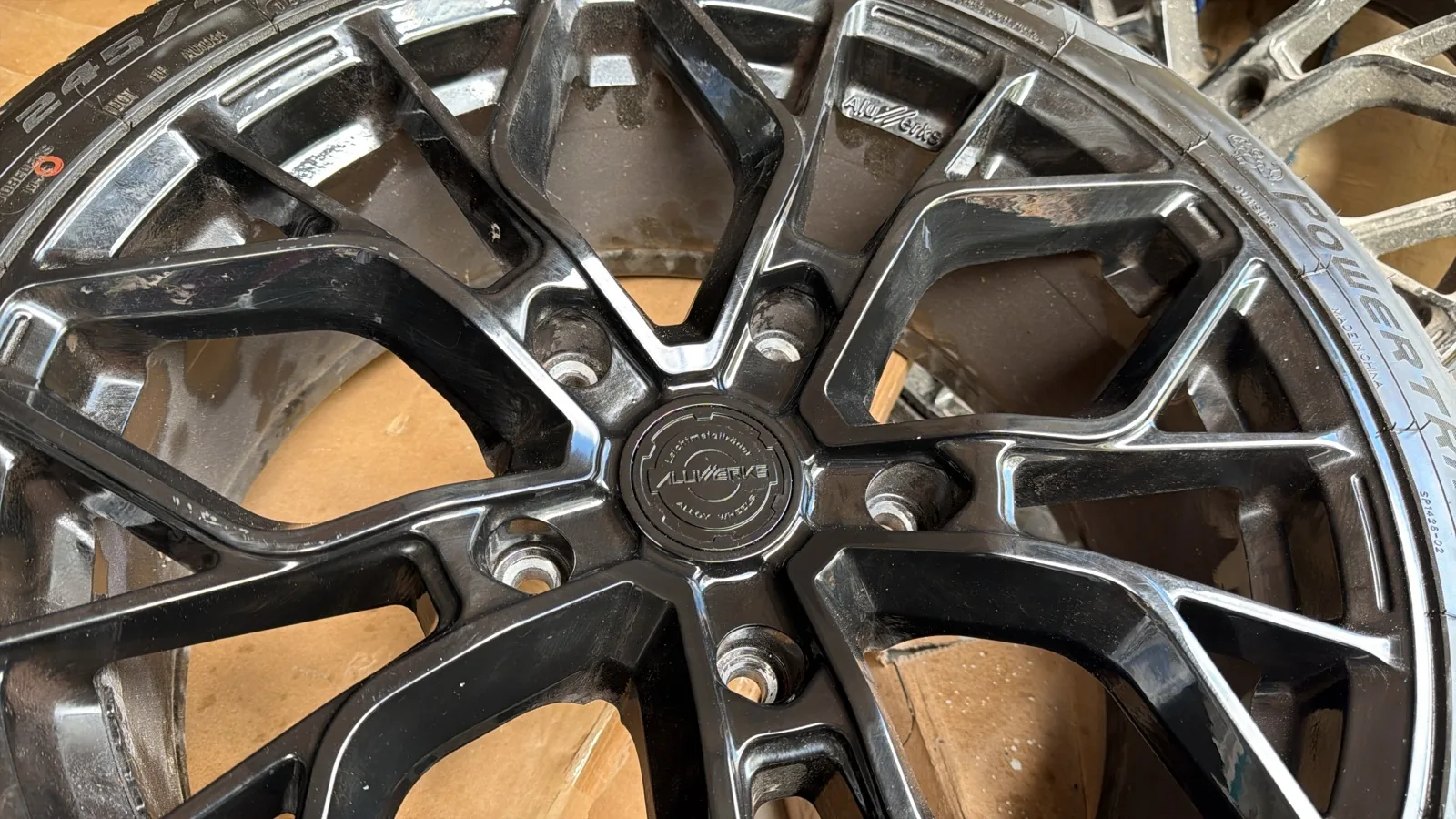 Correct tyre pressureWhere to find it and how to set it.Read the guide →
Nearly all of them show up on a two minute walk round the car.
The number one cause. Low pressure lets the sidewall flex and overheat on a long, fast run.
A full car, a roof box and a tow bar all push the tyre harder. Use the loaded pressure figure.
A hard hit can break the cords inside and leave a bulge. That tyre is weak and can fail at speed.
Old tyres crack and lose strength, even with good tread. Check the date on the sidewall.
Topping up every week means the tyre keeps running low. The damage builds until it gives up.
Hot days and long motorway runs heat the tyre. A weak tyre reaches its limit fastest in summer.
Ten minutes on the drive before the motorway.
Check before you set off, not after a drive. Use the loaded figure if the car is full.
Both sidewalls, all four tyres. A bulge or lump means that tyre stays off the motorway.
Deep cracks or hard, faded rubber mean an old tyre. Read the date on the sidewall.
At least 1.6mm is the law. More is better on a wet motorway. Use the wear bars.
Do not overload the car or the roof. Weight is heat, and heat is what breaks a weak tyre.
What happens after you message, wherever the car is parked.
A nail, a crack, a bulge or a tyre that keeps going down. A line of detail plus the size helps us bring the right tyre first time.
Every quote is fitted. The cost of coming to you is built into the tyre price, so the figure we send is the figure you pay at the car.
A driveway, a works car park or a safe spot at the roadside, in any of 2,700+ areas across the North West and North Wales.
The job is done to the same standard as a tyre bay: balanced, valve checked, pressures set and the wheel nuts torqued before the fitter drives away.
4.4★★★★★average rating on Google
Got us out of an unfortunate place of a Luton van blowout, super quick helpful and fairly priced!
Stranded in a car park with no spare! Called and they came within the hour, changed the tyre and was on my way 20 minutes later. Great service, delighted they made it so easy.
Brilliant service, same day, quick and easy. Was really rushed for time and they moved things around to ensure they got to me to get it fixed. Would defo recommend
You do not have to know. Send a photo of the tyre on WhatsApp and a fitter tells you straight whether it is a repair, a replacement or nothing at all.
A fitter is out on the road as you read this. Send the size now and the next free slot is yours, at the same price whatever the hour.
The things worth knowing before a fitter arrives.
Not hard, and not straight away. Braking hard after a blowout adds to the pull the burst tyre is already causing, and it can spin the car or send it across lanes. Hold the wheel straight, ease off the accelerator and let the car slow by itself. Use the brakes gently once it is calm.
The dead tyre drags the car down faster than you would expect, so you do not need the brakes to lose most of your speed. Keep your hands firm on the wheel and your inputs smooth. Hazards on, mirrors checked, then move across one lane at a time. Emergency tyre fitting covers what happens once you are safe.
Modern cars with anti lock brakes are more forgiving, but the rule still stands. Gentle is safe, sudden is not. After the event, have the other tyres and the wheel checked, because a blowout can hide damage. We check them when we fit the new tyre. See wheel alignment if the car pulls afterwards, or call 0300 124 6981. A calm ten seconds is what gets you home.
No. A blown tyre has no air and no strength left. Driving on it shreds what is left of the tyre, can bend or crack the wheel, and makes the car hard to steer and stop. Drive only the few hundred metres needed to get off the live lanes and stop somewhere safe.
It can be tempting to limp to the next junction. Do not, unless you are already on the slip road with nowhere safe to stop. The wheel rim can dig into the road, and a rim that fails at speed is far worse than a tyre. Flat tyre: what to do covers the same rule off the motorway.
Once recovery has moved the car somewhere safe, we fit the new tyre where it stands. We carry the common sizes on the van and work round the clock. Send the location and size on WhatsApp, or call 0300 124 6981. See where we cover across the North West and North Wales. You wait somewhere safe. We bring the tyre. The car drives away on four good wheels, not on a rim.
A front tyre blowout pulls the car hard toward the side of the burst tyre, and you feel it through the steering. Grip the wheel firmly, steer gently against the pull to keep the car straight, and ease off the accelerator. Do not brake hard. Let the car slow, then move to safety.
A front blowout is loud and sudden, and the pull can be strong at speed. That is why both hands on the wheel matters. Once the car is slow and straight, signal and move left one lane at a time. The wheel on that side may be damaged too, so do not drive further than you must. Pothole damage explains how to spot a bent rim afterwards.
When we fit the replacement, we check the wheel for cracks and bends, and look at the other front tyre. They must match in size and type, so if the other one is worn, we will tell you and price a pair. See two tyres or four, or call 0300 124 6981. We fit the pair in one visit if that is what you choose.
A rear tyre blowout makes the back of the car sway or wander, often with less feel through the steering. Hold the wheel straight, lift off the accelerator smoothly and avoid sudden steering or hard braking. Let the car settle and slow before moving across to the hard shoulder.
Rear blowouts can feel less dramatic at first, then the car starts to weave. Stay smooth. Small, calm corrections work. Big ones make the sway worse. This is also why tyre makers advise fitting the best tyres on the back: rear grip keeps the car stable. Mixing tyres explains which axle new tyres should go on.
Once you are stopped and safe behind the barrier, call your recovery provider. When the car is off the motorway, we come and fit the new tyre. See emergency tyre fitting, or call 0300 124 6981 any hour. We check the wheel and the other rear tyre while we are there, and tell you straight if either needs work. The new tyre goes on in about 20 to 40 minutes, and you are back on the road the same night.
Try to reach the next emergency area, or leave at the next junction, if you can do it safely at low speed. If the car stops in a live lane, stay in the car with your seatbelt on and hazards on, and call 999 straight away. Do not get out into moving traffic.
Emergency areas are marked with orange signs and have an emergency phone. Once you are in one, get out on the left and wait behind the barrier. The control room can close lanes behind a stopped car once they know it is there, which is why calling 999 quickly matters. Flat tyre: what to do has the off motorway steps.
Recovery will move the car off the motorway. From there, we bring the tyre to you, whether that is the services, a lay by off the main road or home. Send the location and size, or call 0300 124 6981. See emergency tyre fitting for how we work at night. Nobody should stand next to a live lane waiting for help. Your safety comes first. The tyre can wait an hour.
You should not. The hard shoulder is one of the most dangerous places on the road, and changing a wheel puts you right next to fast traffic. Get everyone out on the left, behind the barrier, and call for help. Let recovery move the car before any tyre work happens.
That goes for fitters too. We do not work on a live motorway hard shoulder, because it is not safe for you or for us. Once the car is off the motorway, at a services, a junction lay by or home, we can do the job properly. How to change a wheel covers doing it yourself somewhere safe.
Many cars have no spare now anyway, just a sealant can, and a can will not fix a blowout. So the fastest route is recovery off the motorway, then us. We fit the new tyre where the car is and check the wheel while we are there. Call 0300 124 6981, or see flat tyre and no spare. It is the quickest safe way home. No jack, no risk, no drama on the hard shoulder.
No. A blowout tears the tyre open, often through the sidewall, and the structure inside is destroyed. There is nothing left to repair. It has to be replaced. Puncture repairs are only for small holes in the tread of a tyre that is otherwise sound, and a blown tyre never qualifies.
The wheel may need attention too. A blowout, or driving even a short way on one, can bend or crack a rim. We check it when we fit the new tyre and tell you if it is safe to use. Alloy wheel refurbishment covers what can be done with a damaged alloy.
The new tyre must match the other one on the axle in size and type. If that tyre is worn or was damaged in the same event, we will price a pair. We carry common sizes on the van. See puncture repairs for what can be repaired, or call 0300 124 6981. A photo of the damage helps us bring the right tyre first time. Then it is one visit, not two. No second trip, no waiting on an order.
The main cause is under inflation. A soft tyre flexes too much, and on a long, fast motorway run it builds heat until it fails. Other causes are old or cracked tyres, damage from potholes or kerbs, overloading and ignored slow punctures. Motorways add speed and heat, which finds the weak tyre.
Most of those causes can be spotted on the drive. A tyre that looks low, a bulge on the sidewall, deep cracks or a tyre you keep pumping up are all warnings. Cracked or perished tyres explains how age weakens a tyre that still has plenty of tread.
Summer holidays are a classic time for it: a loaded car, a roof box, hot roads and hours at motorway speed. Set the pressures for the load before you go. Correct tyre pressure shows where to find the right figure, or call 0300 124 6981 and we will check your tyres before the trip. Ten minutes before you set off is worth it. It is the cheapest insurance you will ever buy for a long drive. Tell us the trip and we will set them right.
Check your tyre pressures every month and before long trips, with the tyres cold. Look for bulges, cuts and deep cracks. Replace tyres before they wear to the legal limit. Do not overload the car, and never ignore a tyre that keeps losing air. That covers most blowouts.
After a hard pothole hit, look at that tyre the same day. A bulge means broken cords inside, and that tyre should not go on a motorway. Old tyres deserve a closer look too, even with good tread. Tyre wear indicators shows how to check tread depth in seconds.
If anything looks wrong, send us a photo. We tell you if it is fine or needs changing, and fit the new tyre at home or work before your trip. Better on your drive than on the hard shoulder. See mobile tyre fitting, or call 0300 124 6981. We would much rather fit a tyre on your drive on a Tuesday than at a services at midnight. So would you. Book a check before the next long run and you know where you stand.
It can. A blowout itself can crack or bend a rim, and driving on the flat tyre, even a short way, makes wheel damage much more likely. The rim ends up carrying the car with nothing to cushion it. That is why you should stop as soon as it is safe, not limp on to the next junction.
Signs of wheel damage include a visible bend or crack, chunks missing from the rim edge, or a new tyre that will not hold air. A bent wheel also shows up as a shake at speed. Wheel balancing explains why a wheel that is out of true shakes.
We check every wheel when we fit a tyre after a blowout. If the wheel is safe, we fit to it. If it is not, we tell you before we go any further. See alloy wheel refurbishment, or call 0300 124 6981 and send a photo of the rim first. Better to know now than find out at seventy on the motorway. If the rim is fine, you save the cost of a new one, and we will tell you so.
Usually a loud bang, then a flapping or thumping noise as the tyre breaks up. The car lurches and pulls to one side if it is a front tyre, or sways at the back if it is a rear. Sometimes a warning comes first: a vibration, a hiss or the tyre pressure light on the dash.
Those early signs matter. A new vibration, a change in handling or a hissing noise on the motorway means move left and get off as soon as it is safe, before the tyre fails. The TPMS warning light explains what the tyre symbol on your dash is telling you.
If it happens, the drill is always the same. Hold the wheel, no hard braking, hazards on, slow down and get to safety. Then call for help. We fit the new tyre once the car is off the motorway. See emergency tyre fitting, or call 0300 124 6981. The earlier you act on a warning sign, the less likely you are to hear the bang at all. Save our number now and it is one less thing to find in a panic.
Yes, once the car is off the live motorway. Recovery moves it to a services, a lay by off the main road or home, and we come to it there with the tyre. We work 24 hours a day, 365 days a year, across the North West and North Wales, and reach most drivers in our core area in around 32 minutes.
Send the location and the tyre size or registration on WhatsApp to 07943 185471. We send a fitted price and a time back. No call out charge, because fitting is built into the tyre price. Where we cover lists the 2,700+ areas we reach, from the M6 and M62 to the North Wales coast.
We check the wheel and the other tyre on the axle while we are there, and tell you honestly what we find. Then you drive on. Save 0300 124 6981 in your phone now, so it is there if you ever need it. See emergency tyre fitting. It could save you hours on a cold night. One call, one visit, and you are on your way.