Welcome to

Mobile tyre fitting · North West & North Wales · We fit around you

Approved by the AA and RAC. No call-out charge. Around 32 minutes on average, 24 hours a day.
info@yournewtyres.co.ukTell us your name and tyre size — we will reply on WhatsApp with a price and an ETA.
TPMS sensor replacement cost depends on four things: the sensor you choose, whether it needs coding to your car, whether the tyre is already coming off, and how many wheels need one. Sensors are priced per wheel. We send you one fitted price for your car before we set off, so there is no surprise at the end.
You pumped the tyres up. The light is still on. Annoying, and it will fail your MOT. On most cars that means a sensor inside one wheel has a flat battery. The battery is sealed in, so the whole sensor gets replaced. Our TPMS sensor service is how we sort it at the car.
Before you pay for anything, check the pressures cold with a proper gauge. A light that comes on in the first frost is often just a low tyre. The TPMS warning light guide tells you what each type of warning means.
Still on with the pressures right? Send us the registration. We check which system your car uses and send one fitted price for the sensor. Or call 0300 124 6981. The van comes to home, work or the roadside.
The size is on the sidewall of the tyre, or send us a photo of it. It lands with the fitter on shift. No call-out charge, and the fitting is already in the price.
You are through to YourNewTyres. What size are the tyres?
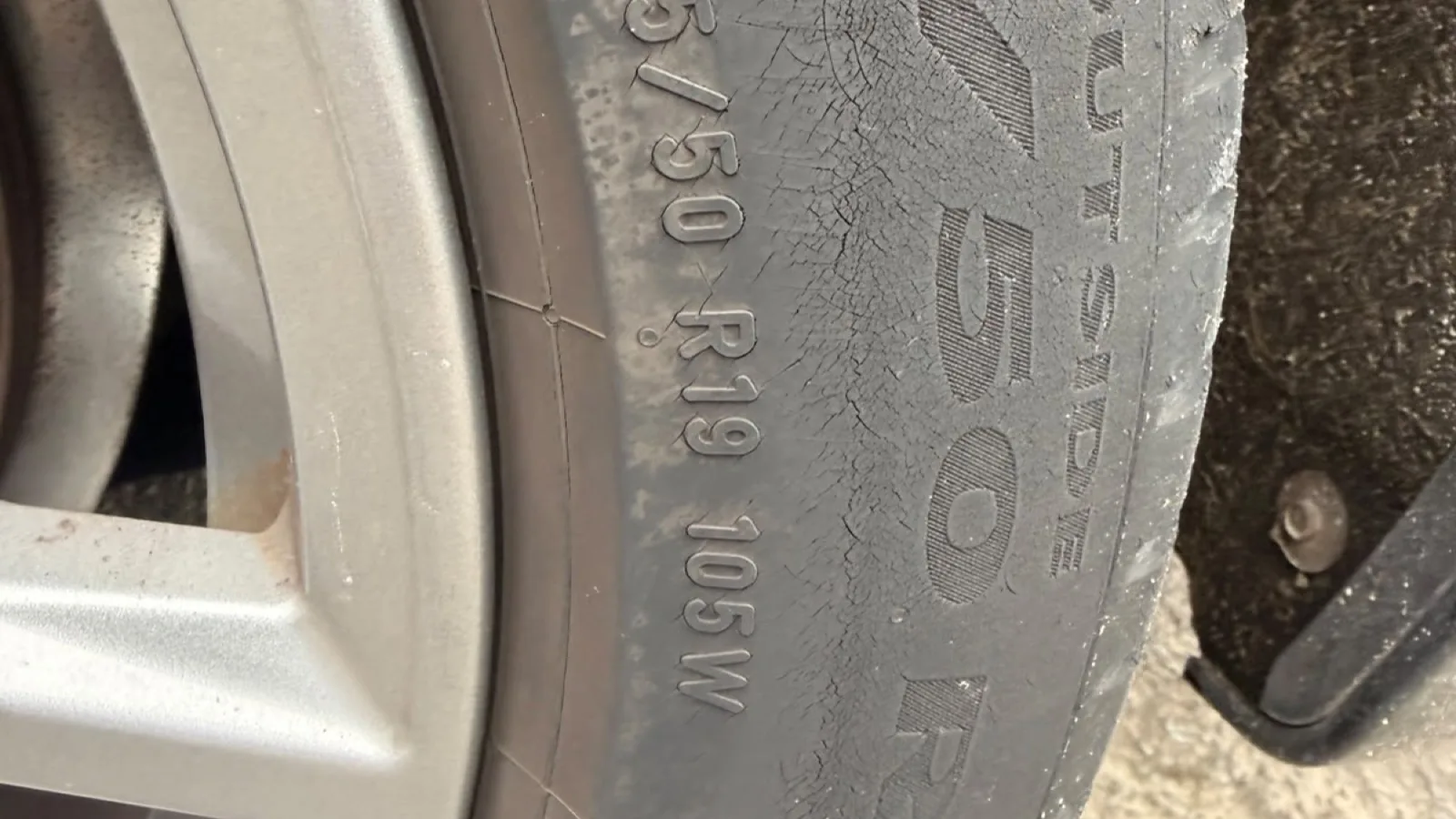
The size is printed on the sidewall, like 205/55 R16. Send that and where you are, and I will come back with a fitted price and the next slot.
A photo of the sidewall does the job if you would rather not type it out.
Opens WhatsApp with your message ready to send
Covered here: what decides the cost of a new tpms sensor; how do you know a tpms sensor has failed; how long do tpms sensors last; does a faulty tpms fail the mot; does every car have a sensor in each wheel.
Four things. First, the sensor. A maker's original part usually costs more. A good aftermarket sensor is programmed to work like the original and often costs less.
Second, the coding. Every sensor has an ID the car must learn. Some cars learn it after a short drive. Others need a tool plugged in, or a menu on the dash. Third, the tyre. The sensor sits inside the wheel, so the tyre has to come off the rim. If you are buying new tyres anyway, that work is already being done.
Fourth, how many. One dead sensor is a one wheel job. But sensors of the same age tend to die close together. We will tell you if the others look near the end, and you choose whether to do them now or later. No pressure either way.
The big sign is a tyre light that stays on when all four pressures are right. On many cars a light that flashes for a minute or so, then stays on, points to a fault in the system rather than a low tyre.
Other signs: the dash shows a dash or no reading for one wheel, or the warning comes and goes on its own. A sensor can also be snapped or bent by a pothole or a careless tyre change.
Rule out the easy things first. Check each tyre with a gauge when it is cold. Look for a nail or a slow leak. If one tyre keeps going down, that is a puncture, not a sensor. Our slow puncture guide covers that one.
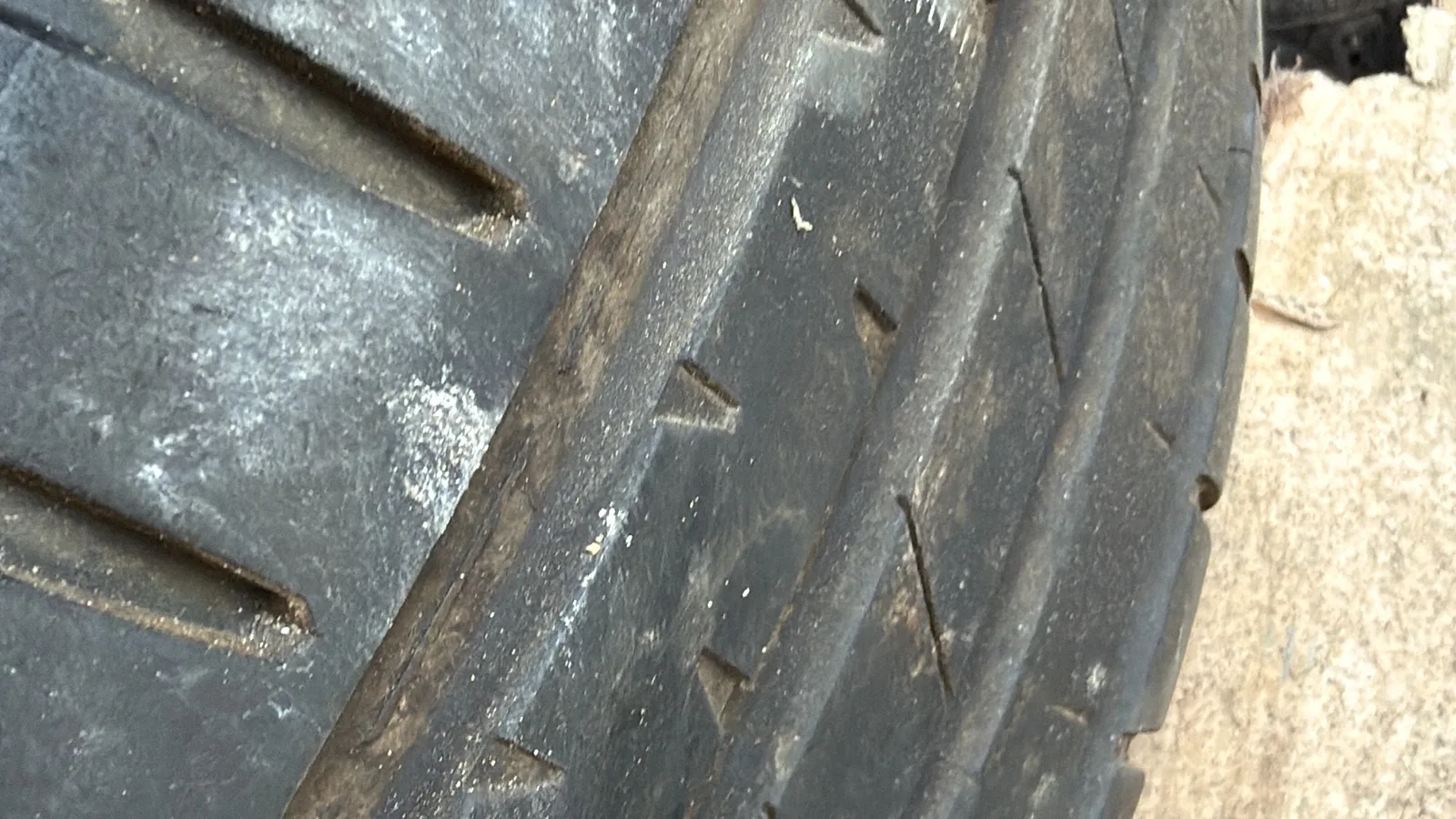
Most sensors last around 5 to 10 years. The limit is the small battery sealed inside. It cannot be swapped or charged, so when it goes, the sensor goes.
That is why they often fail around the time a car hits 7 or 8 years old. Short trips, cold winters and road salt do not help. Salt attacks the metal valve stem, and a corroded stem can snap when the nut is undone.
If your car is getting on and you are due tyres, it is worth asking about the sensors at the same time. It is the cheapest moment to do it, because the tyre is already off the rim. See how long tyres last to plan both jobs.

Yes, on most cars. If your car was first used from 1 January 2012 and has TPMS, a warning light that stays on is an MOT failure. The rule has been in the MOT since 2015.
TPMS has been fitted to every new car sold here since November 2014. So most cars on the road now have it. If your MOT is coming up and the light is on, sort it first. It saves a fail, a retest and a second trip.
The tester is not checking the pressures on the dash. They check that the system is not showing a fault. A lit light is enough to fail. Our failed MOT on tyres guide lists the other tyre items they check.
No. There are two kinds of system. Direct TPMS has a sensor inside each wheel, usually built into the valve. It reads the real pressure.
Indirect TPMS has no sensors in the wheels at all. It uses the ABS wheel speed sensors to spot a tyre turning faster than the others, which means it is low. If your car is indirect, there is no sensor to buy. After you set the pressures, you reset the system from the dash or a button.
Not sure which you have? Look for a metal valve with a nut on the outside, a common sign of a sensor. Or send us the registration and we check for you. It saves you paying for a part your car does not use. Read the right pressure for your car before you reset.
The questions that usually come next.
 TPMS sensorsThe valves that watch your pressures.Read the guide →
 TPMS warning lightWhat the tyre light is telling you.Read the guide →
 Cold weather tyre pressureWhy the light comes on in the frost.Read the guide →
 Failed mot on tyresRead the full guide.Read the guide →
 Correct tyre pressureWhere to find it and how to set it.Read the guide →
 Slow puncture: causes and signsThe tyre that keeps going down.Read the guide →
Know these and you can compare any quote fairly.
A maker's part or a programmed aftermarket sensor. Both work. The original usually costs more.
Some cars learn the new sensor on a drive. Others need a tool. That changes the time on the job.
The sensor is inside the wheel. If new tyres are going on, the hard part is already done.
Sensors are priced per wheel. Old ones tend to die close together, so ask about the rest.
Salt corrodes metal valve stems. A seized one can snap, and then it needs replacing too.
Each tyre change should get a fresh seal, nut and valve core so the sensor does not leak.
Most tyre lights are not a dead sensor. Rule these out first and you may not need one.
Check them cold, before a drive. Use the figures on the door pillar, not the tyre wall.
Some cars have a sensor in the spare as well. A soft spare can set the light off.
A nail, a crack or a leaking valve makes one tyre drop again and again. That is a puncture.
After setting pressures, many cars need a reset from a menu or a button. The handbook shows how.
Flashing then steady often means a system fault. Steady from the start often means low pressure.
If the dash shows a blank or dash for one tyre, that is the sensor to check first.
What happens after you message, wherever the car is parked.
Send the registration and which wheel shows the fault. We check whether your system uses wheel sensors and exactly which one your car needs. No guesswork.
You get one figure for the sensor, fitted and coded, before we set off. Doing tyres too? We price both together so you see the saving.
The tyre comes off the rim, the new sensor goes in with fresh seals, and the wheel is balanced on the van before it goes back on.
The sensor is coded to the car and we check the readings on the dash. Pressures are set and nuts torqued before the fitter leaves.
4.4★★★★★average rating on Google
Brilliant service, same day, quick and easy. Was really rushed for time and they moved things around to ensure they got to me to get it fixed. Would defo recommend
Got us out of an unfortunate place of a Luton van blowout, super quick helpful and fairly priced!
Stranded in a car park with no spare! Called and they came within the hour, changed the tyre and was on my way 20 minutes later. Great service, delighted they made it so easy.
Send the registration and a photo of the dash. We tell you if it is a sensor, a puncture or just a reset, and price the fix.
A fitter is out on the road as you read this. Send the size now and the next free slot is yours, at the same price whatever the hour.
Straight answers on cost, time and the MOT.
The cost to replace a TPMS sensor depends on the sensor, the car and the work around it. An original part usually costs more than a programmed aftermarket one. Some cars need a tool to learn the new sensor. And the tyre must come off the rim. We send one fitted price for your car before we set off.
We do not publish a flat price, because it would be wrong for half the cars on the road. A small hatchback and a big German SUV use very different sensors. Some cars take a cheap universal sensor. Others need one made for that model only. What we promise is one figure, fitted and coded, with no call out charge added. Our TPMS sensor page shows how the job is done at the car.
The cheapest way to do it is with new tyres. The tyre is off the rim anyway, so the sensor adds far less time. If your tyres are close to due, ask for both prices together. You then see exactly what the sensor adds, line by line. Send the registration, or call 0300 124 6981. See when to replace tyres to judge your tread first.
Budget for a new seal kit on each sensor every time the tyres change. That keeps the valve from leaking. If a sensor is old or dead, add the cost of a new sensor and coding for that wheel. We price all of it up front, so the tyre quote you get already shows it.
The seal kit is a small part: a new seal, nut and valve core. It stops the valve leaking once the tyre is back on. Skipping it is a common cause of a slow leak after a tyre change. It is a small part that saves a big nuisance. A full sensor is only needed if the old one is dead, damaged or seized. Our slow puncture guide covers leaks that start after a tyre change.
When you send your size or registration, tell us if the tyre light has been on. We can then price a sensor as well, so there is no second visit. If the sensors are fine, you do not pay for one. Simple as that. We will not swap a working sensor just to add to the bill. Call 0300 124 6981 or read what a fitted price includes.
Replacing a TPMS sensor usually adds a short time to each wheel. The tyre comes off the rim, the old sensor comes out, the new one goes in with fresh seals, and the wheel is balanced again. Then the car learns the new sensor. Done alongside a tyre change, it barely stretches the job.
A tyre on its own takes us about 20 to 40 minutes. A sensor on the same wheel adds a bit to that, not a second visit. Coding is the part that varies. Some cars learn the sensor on a short drive. Others need a tool at the car. Either way, the fitter checks the dash before leaving. The warning light guide explains why the light can take a few miles to clear.
If you are booking a fitting, tell us about the light when you book. Then the fitter brings the right sensor and the tool, and the job is done in one go. We give you an honest time when we quote. If it will run longer, we say so up front. See how mobile fitting works or call 0300 124 6981.
Yes. On cars first used from 1 January 2012 that have TPMS, a warning light that stays on is an MOT failure. The tester does not need to find a flat tyre. A lit TPMS light showing a fault is enough. Fix it before the test to save a fail and a retest.
Since November 2014 every new car sold here has had tyre pressure monitoring. So if your car is from around then or newer, this rule almost certainly applies to you. Older cars with it fitted may be caught too, depending on when they were first used. The date on your V5C log book is the one that counts. Our failed MOT on tyres guide covers the other tyre fails.
If the light only came on in cold weather, check and set the pressures first. It may clear after a reset. Cold air drops tyre pressure, so the first frost often trips it. If it stays on, send us the registration a few days before the test. We fit the sensor at your home or work so the car goes in clean. Call 0300 124 6981. The tyre check guide covers the rest.
If the TPMS light stays on after you pump up the tyres, the most likely cause is a sensor with a flat battery. Other causes: a missed reset, a soft spare with its own sensor, or a slow puncture letting one tyre drop again. Check the pressures cold first, then reset the system.
Many cars need a reset after you change the pressures. It is usually a menu on the dash or a button in the glovebox or under the steering wheel. The handbook shows where. If you cannot find it, we can show you when we visit. Some cars clear the light only after a short drive at a steady speed. Our guide to the right tyre pressure shows where to find your figures.
Still on after all that? Then it is likely a sensor or a leak. Watch one tyre over a few days. If it keeps dropping, it is a puncture, and a repair from £39.95 may be all it needs. If it holds, the sensor is the suspect. A fitter can test it at the car in a few minutes. Call 0300 124 6981 or see our puncture repairs.
Most TPMS sensors last around 5 to 10 years. The battery inside is sealed and cannot be changed or charged, so when it runs out, the whole sensor is replaced. Heavy use, cold weather and salted roads can shorten that. Sensors fitted at the same time tend to fail close together.
So if one sensor dies on an eight year old car, the other three are not far behind. You can replace just the dead one. Many drivers do. Or you can do all four in one visit and forget about it for years. That saves the van coming back three more times as each one dies. We will tell you what we see and let you pick. Read our TPMS page for the options.
Corrosion is the other enemy. A metal valve stem can seize and snap when the nut is undone. That is why we look at each valve before we start. If one looks bad, you hear about it before any work begins. You decide what happens next, not us. Call 0300 124 6981 or read cold weather tyre pressure.
You can usually drive with a faulty TPMS sensor if you have checked all four pressures with a gauge and they are right. The car is not less safe on its own. But you have lost the warning that tells you a tyre is going down. Check the pressures by hand until the sensor is replaced.
The real risk is a puncture you do not notice. That is the whole job of the system. Without a working sensor, a slow leak can drain a tyre over days. A soft tyre wears fast and can overheat on the motorway. Check weekly with a gauge until it is fixed. A cheap digital gauge from a garage forecourt is enough. Our how to check your tyres guide takes two minutes.
Also book the fix before your MOT. A lit light is a fail on most cars from 2012 on. If the light is flashing or the car feels odd, stop and check before you drive on. Never drive on a tyre that is flat. Call 0300 124 6981 and we come to you, day or night. See emergency fitting.
Ask before the job starts, because it depends on why it broke. Old sensors can be seized by corrosion and snap even with care. That is wear, not fitter damage. A good fitter checks the valve first and tells you if it looks seized, so you can decide before anything is touched.
That is how we work. The fitter looks at each valve before the tyre comes off. If one is badly corroded, we tell you and give you the price of a new sensor there and then. You choose. No surprise on the bill, and no argument after. It takes the fitter a minute and saves a lot of bad feeling. Our TPMS sensor service explains what we check.
If you ever have a problem after a tyre change, go back to the fitter first and ask them to look. Photos of the valve and the dash help. Most sensible firms will talk it through. Keep the invoice, as it shows what was done and when. Want it done with the checks built in? Call 0300 124 6981. Or read how our fitting works.
On a newer car still inside the maker's warranty, a failed TPMS sensor may be covered. Check with the dealer first. Once the warranty ends, sensors are a wear item, much like a battery, and you pay for the replacement. We tell you the fitted price before any work starts.
Dealers and warranties differ, so read your own terms. The small print decides it, not the salesman. A sensor damaged by a pothole or a kerb is usually treated as damage, not a fault. Some tyre cover products include damage to the wheel or valve. Read what yours says before you pay twice. Our tyre warranty guide explains what cover like that usually pays for.
Out of warranty? You do not have to go back to the dealer. A good aftermarket sensor is coded to work the same as the original. It reads the pressure the same way and shows on the same dash. We fit them at your home or work, with no call out charge. Send the registration or call 0300 124 6981. Read the TPMS light guide first.
Every new car sold in the UK since November 2014 has had to come with a tyre pressure monitoring system. If your car has one, it must work for the MOT. On cars first used from 1 January 2012, a warning light that stays on is a fail. Older cars without it do not need it.
There is no rule that says you must fit sensors to a car that never had them. And there is no fine at the roadside for a lit TPMS light on its own. Police check the tyres, not the dashboard light. Driving on a tyre that is too soft is a different story. Wrong pressure can make a tyre illegal. Our UK tyre law guide explains why.
If you fit a second set of wheels without sensors, like winter wheels, the light will stay on. That can fail the MOT on a car with TPMS. Ask us before you buy extra wheels. Sensors can be fitted to a second set so the light stays off. Call 0300 124 6981 or read do you need winter tyres.
Yes. We fit TPMS sensors at your home, your work or the roadside across the North West and North Wales. The tyre comes off on the van, the sensor goes in with new seals, the wheel is balanced, and the sensor is coded to the car. There is no call out charge.
Send the registration and tell us which wheel shows the fault. We check your system first. If your car uses indirect TPMS, there is no sensor to buy, and we tell you that instead of selling you one. You get a straight answer before anyone drives out. See the areas we cover. We are AA and RAC approved.
We need room to jack the car and firm ground. A drive or a car park works well. The sensor and the tool travel on the van. Nothing needs ordering once we know the car. Most jobs are done in one visit. If you also need tyres, we do both in one visit. That is the cheapest way to replace a sensor. Call 0300 124 6981 or read can tyres be fitted at home.
Not always. If one sensor dies on a car that is 7 years old or more, the others are likely near the end. Doing all four at once saves future visits. On a newer car, or if one sensor was damaged, replacing just that one makes sense. We tell you which applies.
The best time to do all four is when you buy four new tyres. Every tyre is off the rim anyway. Two tyres? Do those two sensors and keep an eye on the others. We note the age of each sensor for you when we can read it. Then you know what is coming and can plan for it. The two tyres or four guide helps with the tyre side of it.
Money tight? Do the dead one now. Two or more tyres can go on pay monthly at 0%, subject to status, which frees cash for the sensor. There is no pressure to do more than you need. A dead sensor is the only one that must be done. Call 0300 124 6981. Or read pay monthly tyres.