Welcome to

Mobile tyre fitting · North West & North Wales · We fit around you

Approved by the AA and RAC. No call-out charge. Around 32 minutes on average, 24 hours a day.
info@yournewtyres.co.ukTell us your name and tyre size — we will reply on WhatsApp with a price and an ETA.
91V is the load index and speed rating. 91 means each tyre can carry up to 615kg. V means it is built for speeds up to 149mph, or 240km/h. Your new tyres must match or beat both numbers your car needs. A higher rating is fine. A lower load index is never allowed, and a lower speed rating is not advised.
You are about to buy tyres and the code at the end of the size looks like noise. It is the most ignored part of a tyre, and one of the most important. It sits right after the size, like 205/55 R16 91V. Our guide to reading your tyre size covers the numbers before it.
Why it matters in plain words. The load index tells you how much weight each tyre can safely hold at the right pressure. The speed rating tells you the top speed it can hold under that load. Fit a tyre below what the car needs and it can overheat and fail. Insurers can also refuse a claim. That is a lot to risk for a few pounds. Our tyre labels guide covers the other grades.
You do not have to work any of this out. Send us the registration. We look up the size, load and speed your car needs and quote tyres that meet it, fitted. Call 0300 124 6981 or WhatsApp 07943 185471. Popular sizes like 205/55 R16 are on the van.
The size is on the sidewall of the tyre, or send us a photo of it. It lands with the fitter on shift. No call-out charge, and the fitting is already in the price.
You are through to YourNewTyres. What size are the tyres?
The size is printed on the sidewall, like 205/55 R16. Send that and where you are, and I will come back with a fitted price and the next slot.
A photo of the sidewall does the job if you would rather not type it out.
Opens WhatsApp with your message ready to send
Covered here: what do the speed rating letters mean; what does the load index number mean; can you fit a higher or lower rating; what does xl on a tyre mean; where do you find the rating your car needs.
The letter is the top speed the tyre can hold for a long time when it is loaded and pumped up right. It is not a target. It is a safety margin.
The common car letters, lowest to highest: T is 118mph. H is 130mph. V is 149mph. W is 168mph. Y is 186mph. Lower letters exist too. S is 112mph, R is 106mph and Q is 99mph. You mostly see those on vans, 4x4 tyres and some winter tyres.
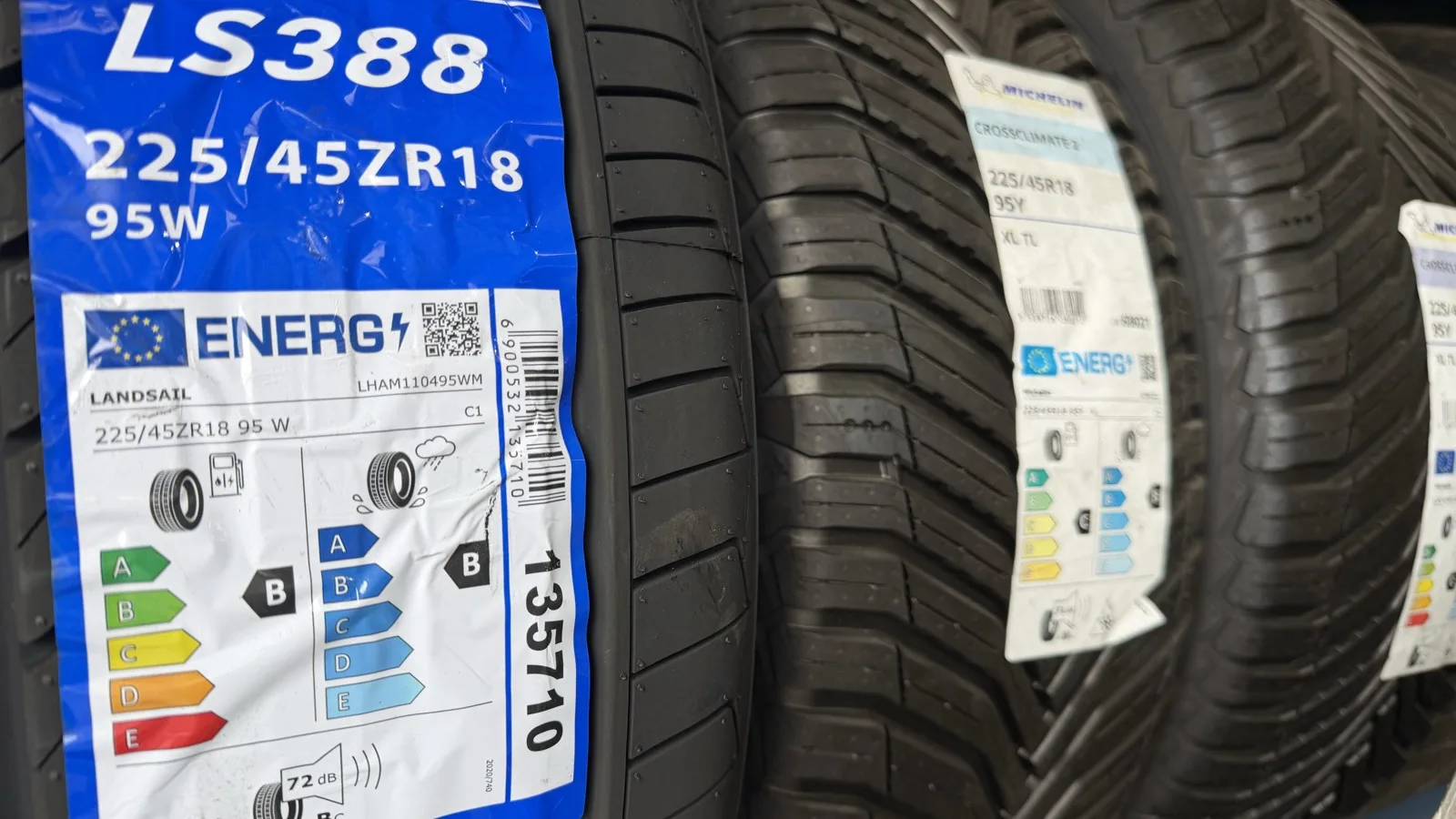
Two extras you may spot. ZR in the size, like 225/45 ZR17, means the tyre is built for over 149mph. A letter in brackets, like (Y), means over 186mph. Most family cars need H or V. Fast cars and big engines need W or Y. The car maker sets the minimum, not the tyre seller.
The load index is a code for the most weight one tyre can carry at the right pressure. The number is not the weight. You look it up.
Some common ones. 84 is 500kg. 88 is 560kg. 91 is 615kg. 94 is 670kg. 95 is 690kg. 97 is 730kg. 100 is 800kg. 103 is 875kg. 107 is 975kg. 110 is 1,060kg. 111 is 1,090kg. 118 is 1,320kg. Each step up adds a little more weight.
Multiply by four for the whole car. Four 91 tyres can carry about 2,460kg between them. That is more than the car weighs, and it should be. The margin covers people, luggage, a tow bar load and hard braking. Heavier cars, SUVs and vans need higher numbers. See our SUV and 4x4 tyres guide.
Higher is fine. A V rated tyre on a car that needs H is no problem. Sometimes it is the only tyre in stock in your size. A higher load index is fine too, as long as the size is right.
Lower is where it goes wrong. A load index below what your car needs is not allowed. The tyre can overheat and fail, and an MOT tester can fail it. A speed rating below the car's need is not advised. It can affect your insurance, so read your policy before you think about it.
The one known exception is winter tyres. They are sometimes sold with a lower speed rating than the summer tyre. That is common in Europe, but tell your insurer first. Our winter tyres guide covers the rest.
XL means extra load. It is a stronger tyre that can carry more weight at a higher pressure than the standard version in the same size. You might see it written as XL, EXTRA LOAD or RF, which means reinforced.
If your car came on XL tyres, fit XL again. The car maker chose them for the weight. A standard load tyre in the same size will have a lower load index, and that may be too low.
Heavy cars and many electric cars use XL tyres, because batteries add a lot of weight. Some newer EV tyres carry an HL mark, for high load, which goes further again. Pressures matter more on XL tyres. Check the figure on the door pillar. Read EV tyres explained if you drive electric.
Start with the handbook. It lists the approved tyre sizes with the load and speed codes. Many cars also have a sticker in the door frame or fuel flap with the same details.
The tyres on your car now are a good guide, but only if they were right. If the car has had cheap tyres fitted in the past, the code on them may already be too low. Always check against the handbook, not just the old tyre.
Or skip the homework. Send us the registration and we look up what your car needs. We only quote tyres that match or beat it. If the only stock in your size is a higher rating, we tell you, and it is fine to fit. Our tyre sizes page lists the common sizes we carry.
The questions that usually come next.
 Reading your tyre sizeWhat the numbers on the sidewall mean.Read the guide →
 Find your tyre sizeEvery size we fit, with prices by message.Read the guide →
 Tyre labels explainedFuel, wet grip and noise grades.Read the guide →
 SUV and 4x4 tyresRoad, all terrain and in between.Read the guide →
 Van tyres guideLoad ratings and reinforced casings.Read the guide →
 EV tyres explainedWeight, torque and wear.Read the guide →
Each one is the load number, then the speed letter. Here is what they mean in plain English.
84 is 500kg per tyre. V is 149mph. Common on small hatchbacks like city cars and superminis.
91 is 615kg per tyre. V is 149mph. One of the most common codes on UK family cars.
94 is 670kg per tyre. W is 168mph. Seen on larger saloons and faster versions of family cars.
100 is 800kg per tyre. Y is 186mph. Typical on big performance saloons and fast SUVs.
103 is 875kg per tyre. T is 118mph. Common on 4x4 and all terrain tyres.
110 is 1,060kg per tyre. V is 149mph. Found on big SUVs and some heavy electric cars.
A minute with the sidewall and the handbook stops the wrong tyre going on.
Find the size, then the number and letter after it, like 91V. Write them down or take a photo.
Match the code to the approved list for your car, not just the old tyre.
If the old tyre says XL or Extra Load, the new one must too.
A lower load index than the car needs is not allowed and can fail the MOT.
Match or beat it. A lower letter can void your cover, so check with your insurer first.
Both tyres on an axle should share the same size, type and ratings.
What happens after you message, wherever the car is parked.
We look up the sizes approved for your car, with the load index and speed rating each one needs. No reading tiny numbers off a dirty tyre.
We quote tyres that match or beat your car's rating, fitted. If a higher rating is all we can get, we say so and explain why it is fine.
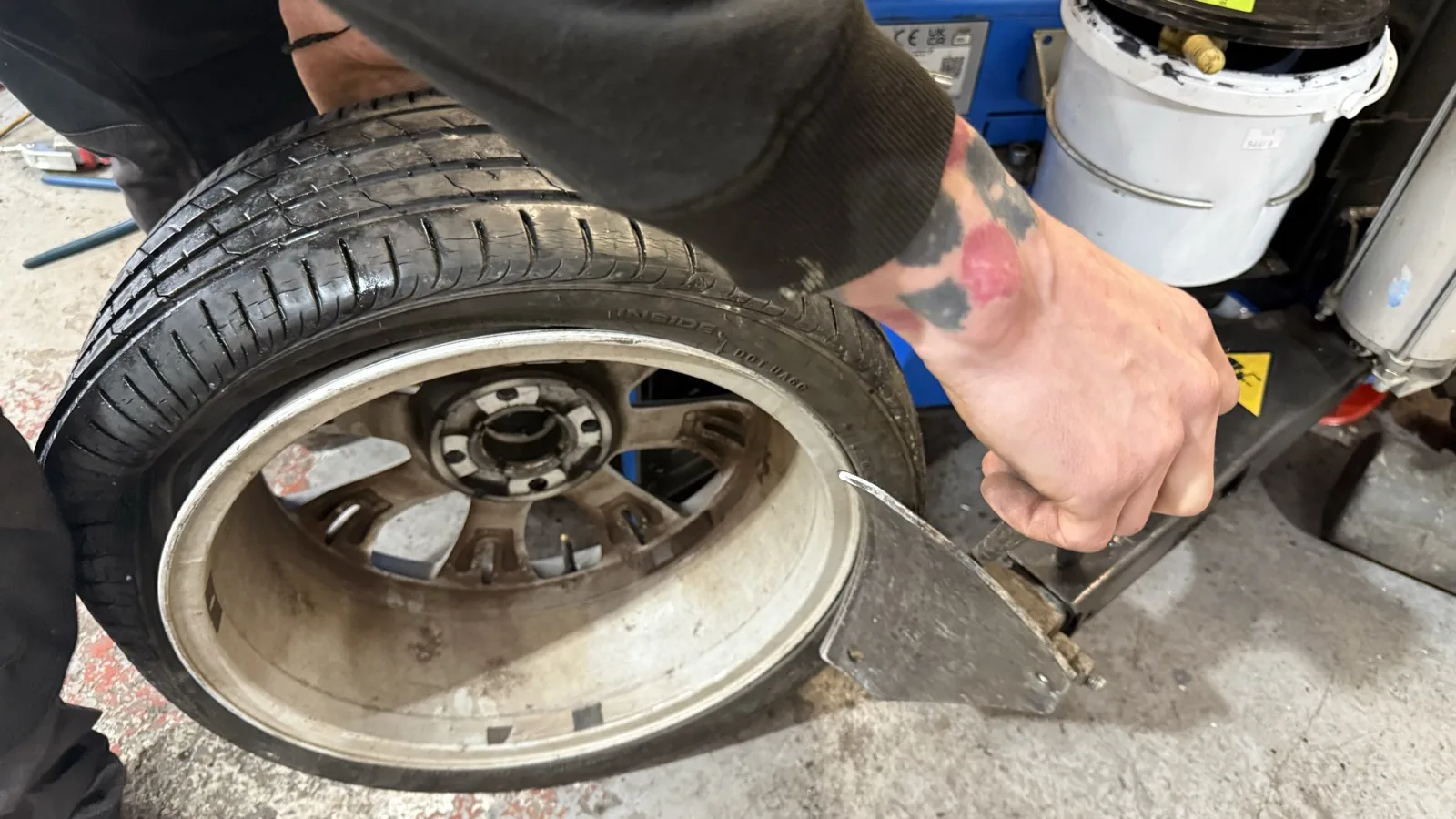
The van comes to your home, your work or the roadside. Each tyre takes about 20 to 40 minutes, balanced before it goes back on.
XL and standard tyres can need different pressures. We set them to the right figure for your car and for the load you usually carry.
4.4★★★★★average rating on Google
Stranded in a car park with no spare! Called and they came within the hour, changed the tyre and was on my way 20 minutes later. Great service, delighted they made it so easy.
Brilliant service, same day, quick and easy. Was really rushed for time and they moved things around to ensure they got to me to get it fixed. Would defo recommend
Got us out of an unfortunate place of a Luton van blowout, super quick helpful and fairly priced!
Send the registration. We check the approved load index and speed rating, then send tyres that match, fitted.
There is no out of hours rate and no waiting for the morning. Message now and we come to the car tonight.
The codes explained, one question at a time.
91V on a tyre means a load index of 91 and a speed rating of V. The 91 says each tyre can carry up to 615kg at the right pressure. The V says it can hold speeds up to 149mph, or 240km/h. It is one of the most common codes on UK family cars.
Four tyres at 91 can carry about 2,460kg between them. That is well over what a family hatchback weighs, and it should be. The spare capacity covers passengers, a full boot and the extra load when you brake hard. It is a safety margin, not a guess. Car makers test to it. Our guide to reading your tyre size covers the rest of the code.
If your car needs 91V, you can fit 91V, 91W or 94V. Anything equal or higher. You cannot fit 88V or 91H in its place, because both are lower. 88 carries less weight, and H is a slower letter. The code is often on the 205/55 R16 size, one of the most common on UK roads. Send your registration and we quote the right tyres, or call 0300 124 6981.
The speed rating is the letter at the end of the tyre code. It shows the top speed the tyre can hold for a long time when loaded and pumped up right. T is 118mph, H is 130mph, V is 149mph, W is 168mph and Y is 186mph. Your car maker sets the minimum.
The rating is a safety margin, not a speed to aim for. UK limits top out at 70mph, but a tyre still needs the margin. Heat builds in a tyre at speed and under load. A higher rating means the tyre copes with that heat better. It also means the tyre is built a little stiffer. Lower letters like S, R and Q show up on vans and some winter and 4x4 tyres. Our van tyres guide covers those codes.
ZR in the size means over 149mph, and a letter in brackets means higher still. You see those on fast cars. If you drive one, never cut corners on the rating. The car can use it. So can a cheap tyre that was never meant to. Our performance tyres page explains what else changes, or call 0300 124 6981.
The load index is the number before the speed letter. It is a code for the most weight one tyre can carry at the right pressure. 88 is 560kg, 91 is 615kg, 94 is 670kg and 100 is 800kg. You look the number up. It is not the weight itself.
Every step up the scale adds a bit more weight. 84 is 500kg. 97 is 730kg. 103 is 875kg. 111 is 1,090kg. 118 is 1,320kg. Cars mostly sit in the 80s and 90s. SUVs, big estates and vans go higher. Towing adds load to the rear tyres too. Electric cars often need more, because batteries are heavy. A big family SUV can weigh far more than it looks. Our EV tyres guide explains why.
The load index only works if the pressure is right. A soft tyre cannot carry its rated load safely. So set the pressures to the door plate, and use the higher figure when the car is full. The tyre pressure guide shows where to find them. A cheap gauge is all you need. Or call 0300 124 6981 and ask a fitter.
Yes. You can always fit a tyre with a higher speed rating than your car needs. A V rated tyre on a car that needs H is fine. Sometimes it is the only tyre in stock in your size. It can feel a little firmer, but it is safe and legal.
The same goes for load. A higher load index than the car needs is fine, as long as the size is correct. The only thing to watch is pressure. Stronger tyres may need a different figure. We set that for you when we fit them. You do not need to work it out. The right figure is on the door plate, and we use it. See tyre labels explained for the other grades on a new tyre.
Keep both tyres on an axle the same where you can. A mismatch in speed letter across an axle is not ideal, even if both are above the minimum. It can make the car feel different turning left and right. The car handles best when left and right match. Call 0300 124 6981 or read mixing tyres for what is allowed.
It is not advised. A speed rating below what your car needs can affect your insurance, and the tyre may not cope with the heat if the car is driven hard. Winter tyres are the known exception. They are often sold with a lower speed letter. Tell your insurer before you fit them.
Insurers look at this after a crash. If the tyres are below the car maker's spec, a claim can get messy. It is not worth the saving. The gap in price between the right and wrong letter is usually small. A cheaper tyre with the right rating is always a better choice than a dearer tyre with the wrong one. Our budget tyres all come in the right ratings for common cars.
If you are fitting winter tyres with a lower letter, some cars let you set a speed warning on the dash. Use it. And keep the summer set's rating for the rest of the year. When spring comes, the summer tyres go back on with the full rating. Not sure what applies to your car? Send the registration and we check. Read do you need winter tyres, or call 0300 124 6981.
No. Fitting a tyre with a lower load index than your car needs is not allowed. The tyre may not carry the weight safely, it can overheat and fail, and an MOT tester can fail it. It can also give your insurer a reason to refuse a claim. Always match or beat the load index.
This is the rule we never bend. We will not fit a tyre with a lower load index than your car needs, even if you ask. The risk is a tyre that fails when the car is full, on the motorway, on a hot day. That is exactly when you need it most. A holiday run with a full boot is the classic case. Our UK tyre law guide covers the other rules on tyres.
The common trap is XL. If your car needs an XL tyre and you fit a standard one in the same size, the load index drops. It looks identical until you read the code. Online listings do not always make it clear, so read the full code. Send us a photo of the sidewall and we check it for you. Call 0300 124 6981 or read the tyre size guide.
XL means extra load. It is a stronger version of the tyre that carries more weight, at a higher pressure, than the standard tyre in the same size. It may say XL, Extra Load or RF for reinforced. If your car came on XL tyres, the new ones must be XL too.
Car makers pick XL for heavier cars, bigger engines and electric cars. The extra strength lets the tyre carry that weight without a bigger size. A standard load tyre in the same size will have a lower load index. That can put it below what your car needs. So never assume a tyre is XL. Check the letters on the wall. See low profile tyres, where XL is common.
XL tyres often need higher pressures. The door plate shows the figure. Running an XL tyre too soft wastes its strength and wears the edges. It can also make the car feel heavy in corners. We set the pressures right when we fit them. Want to check your tyres? Call 0300 124 6981 or read how to check your tyres.
All four are V rated, so each is built for up to 149mph. The number is the load. 84 is 500kg per tyre, 86 is 530kg, 88 is 560kg and 89 is 580kg. You see them on small and mid sized hatchbacks. Your new tyres must match or beat the load number.
An 84V car can take 86V, 88V or higher. An 88V car cannot take 84V or 86V, because the load is lower. The speed letter must also be V or above, so W or Y is fine. The same logic applies to 83H and 84H. H means 130mph. You see those on older small cars. 83 is 487kg and 84 is 500kg. Our tyre sizes page lists the common small car sizes.
Smaller cars also run smaller wheels, so there is often more choice at the value end. That is good news if you want to save money. A good budget tyre with the right code is a sensible buy for short trips. Just check the code before you buy. Send the registration for fitted prices across tiers, or call 0300 124 6981. See budget vs premium tyres.
100Y means each tyre carries up to 800kg and is built for up to 186mph. 103V means 875kg per tyre and up to 149mph. Both are high load codes. You see them on big saloons, fast estates, SUVs and heavy electric cars. The new tyre must match or beat both parts.
Cars with these codes are heavy, fast or both. So cheaper tyres with a lower code are a real risk. They look the same on the rack. The difference is hidden in two or three small characters. Always check the code on the quote before you pay. Our quotes show it for every tyre. Our premium tyres and mid range tyres pages show the ranges that come in these codes.
103T is also common on 4x4 and all terrain tyres. T means 118mph. If your SUV came on 103V road tyres, a 103T all terrain tyre would be a lower speed rating. Check with us and your insurer first. A quick call now saves a row later. Call 0300 124 6981 or read the SUV and 4x4 guide.
Vans usually need a much higher load index than cars, often above 100. Van tyres are marked C for commercial, like 215/65 R16C, and many show two load numbers, such as 109/107. The first is for a single wheel. The second is for twin rear wheels. Always match the van's spec.
A van tyre with a car load index is a danger when the van is loaded. The tyre can overheat, wear fast and fail. And it may not be legal for the load you carry. So van tyres are built stronger, with more plies and higher pressures. They ride a little firmer because of it. Codes like 110V, 111T and 118R turn up on vans, big SUVs and campers. Our van tyres page lists the common sizes.
Motorhomes and campers often need the same or higher. They carry weight all the time. Pressures matter even more, because a soft van tyre overheats quickly. Check them before every long trip. We fit van tyres on site for trades and fleets. Call 0300 124 6981 or read fleet tyre fitting.
The right tyre rating for your car is in the handbook, which lists every approved size with its load and speed code. Many cars also show it on a sticker in the door frame or fuel flap. The tyres on your car now are a guide, but only if they were right in the first place.
Old tyres can mislead you. If a past owner fitted cheaper tyres with a lower code, copying them repeats the mistake. Always check against the handbook when you can. It is the car maker's list, so it is the one that counts. If the handbook is missing, the car maker or a tyre fitter can look it up from the registration. Our tyre size guide shows where each number sits.
The fastest route is to send us the registration. We look up what your car needs and only quote tyres that meet it. If you want to see the code yourself, send a photo of the sidewall and we read it back to you. It takes a minute. Call 0300 124 6981 or see our tyre sizes.
Yes. Send us your registration and we fit tyres with the right load index and speed rating at your home, your work or the roadside across the North West and North Wales. We only quote tyres that meet or beat your car's spec. There is no call out charge.
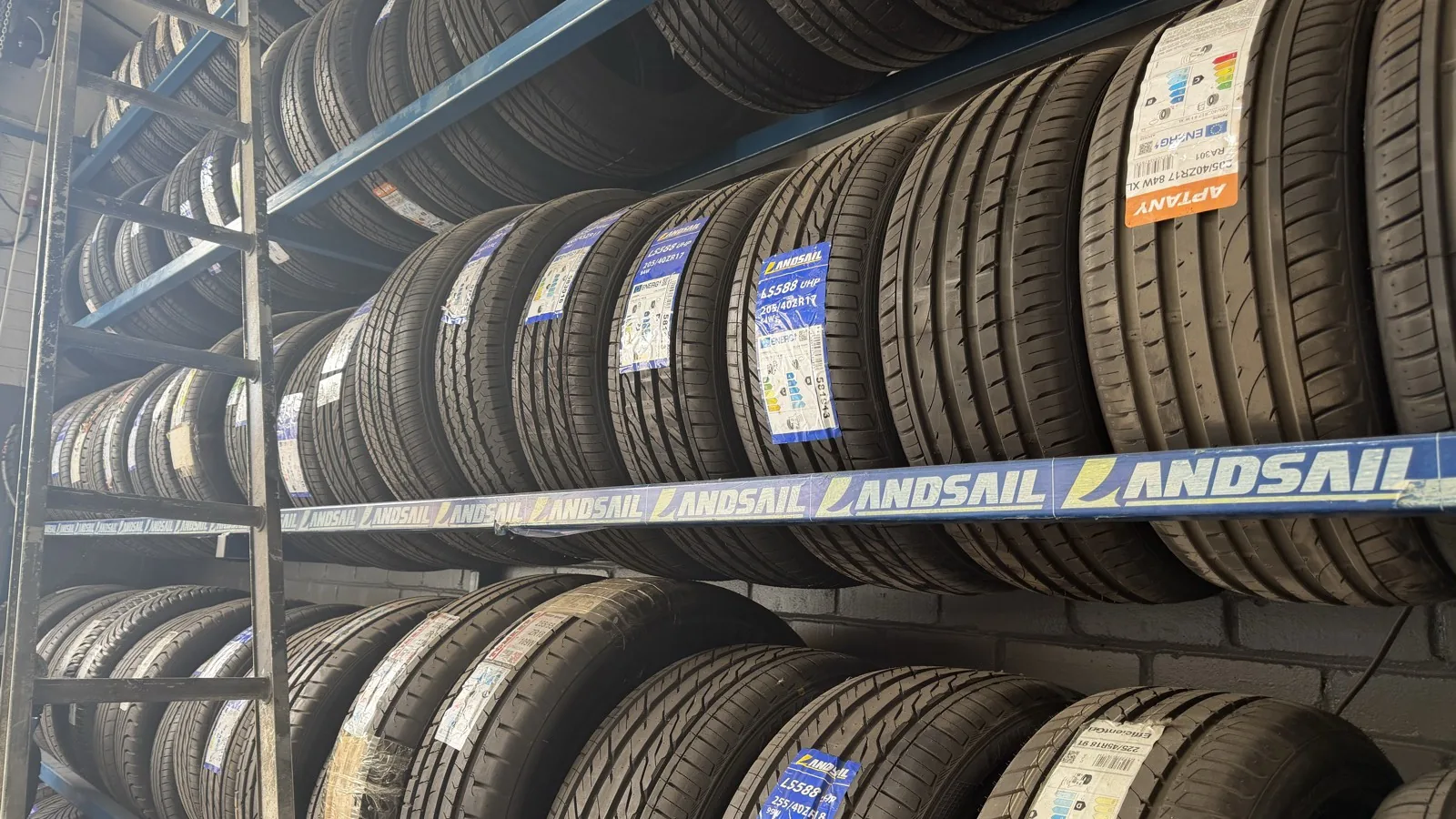
We cover more than 2,700 areas and we are AA and RAC approved. The van carries the common sizes, so we can often fit the right tyre the same day rather than ordering it and coming back. Each tyre takes about 20 to 40 minutes. We check the code on the new tyre against your car before it goes on. See the areas we cover.
Two or more tyres can go on pay monthly at 0%, subject to status. NHS and key workers can ask about up to 30% off. We set the pressures for the tyre type, torque the nuts and take the old tyres away. Nothing is left for you to sort. Pay at the car when it is done. Call 0300 124 6981 or read mobile tyre fitting.