Welcome to

Mobile tyre fitting · North West & North Wales · We fit around you

Approved by the AA and RAC. No call-out charge. Around 32 minutes on average, 24 hours a day.
info@yournewtyres.co.ukTell us your name and tyre size — we will reply on WhatsApp with a price and an ETA.
You can drive a short, gentle distance on a slow puncture if you pump the tyre up to the right pressure first, but only to get it fixed. Avoid the motorway, and do not keep topping it up for weeks. A tyre that runs soft overheats, wears and can fail without warning.
The signs of a slow puncture:
One sign is enough to check. TPMS warning light explains what the light is telling you.
Here is the danger. A slow puncture feels harmless because the tyre still works. But a tyre running soft flexes more, heats up and wears on its edges. The hole can also get bigger without warning, so a slow leak turns into a fast one at the worst moment. The fix is usually quick and far cheaper than a new tyre. Can a punctured tyre be repaired sets out what can be fixed.
Got a tyre that keeps going down? Call 0300 124 6981 or send a photo on WhatsApp to 07943 185471 with where the car is. We come to you, find the leak and fix it on the spot. A tread puncture repair to BS AU 159 is £39.95. More help sits in our tyre guides.
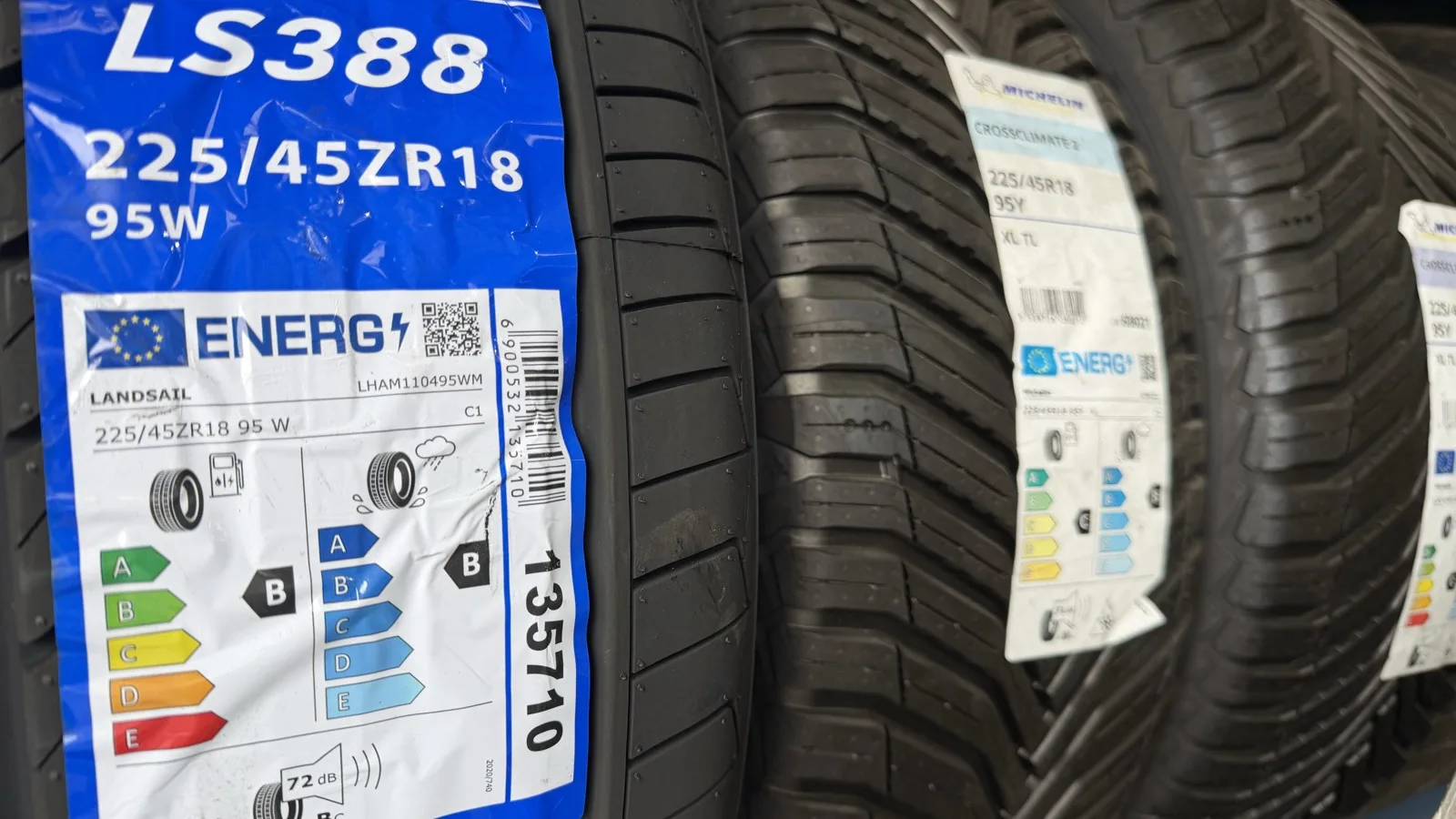
The size is on the sidewall of the tyre, or send us a photo of it. It lands with the fitter on shift. No call-out charge, and the fitting is already in the price.
You are through to YourNewTyres. What size are the tyres?
The size is printed on the sidewall, like 205/55 R16. Send that and where you are, and I will come back with a fitted price and the next slot.
A photo of the sidewall does the job if you would rather not type it out.
Opens WhatsApp with your message ready to send
Covered here: how do you know if you have a slow puncture; what causes a slow puncture; is it safe to drive on a slow puncture; how long does a slow puncture take to go down; can a slow puncture be repaired; is a slow puncture an mot failure.
The clearest sign is one tyre that needs air more often than the others. Check all four with a gauge. If one is a few psi down every time, and the rest hold, that tyre has a leak.
On most newer cars, the tyre pressure warning light is the first clue. It comes on, you top up, it goes off, and a few days later it is back. That pattern almost always means a slow puncture, not a faulty sensor.
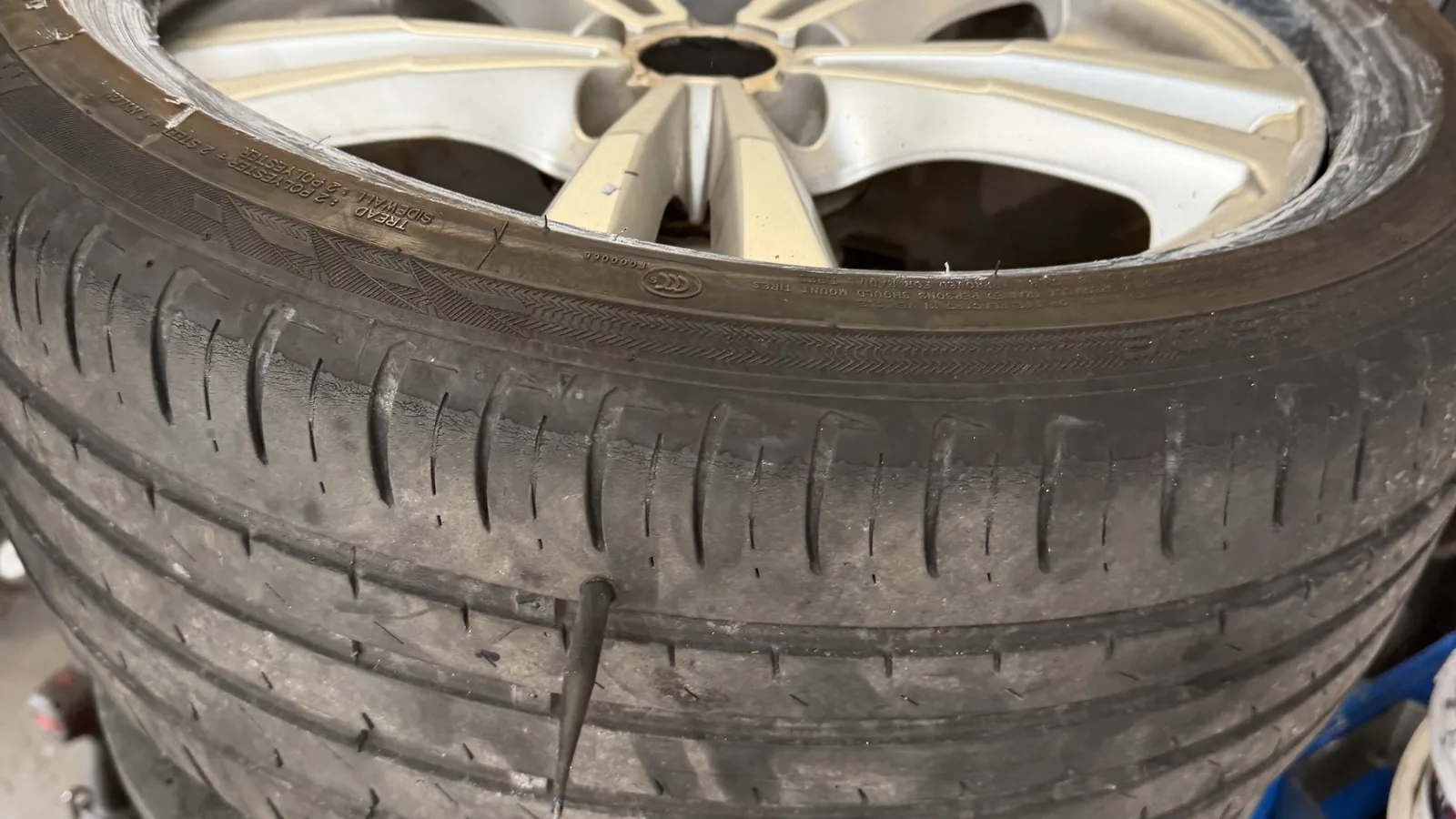
You may also feel it. The car drifts slightly towards the soft tyre, the steering feels a touch heavier, or the ride feels different on that corner. Look at the tyre on level ground. A soft tyre has a wider, flatter bulge where it meets the road. Then look at the tread for a nail or screw head, often shiny from wear. How to check your tyres has the full monthly routine.
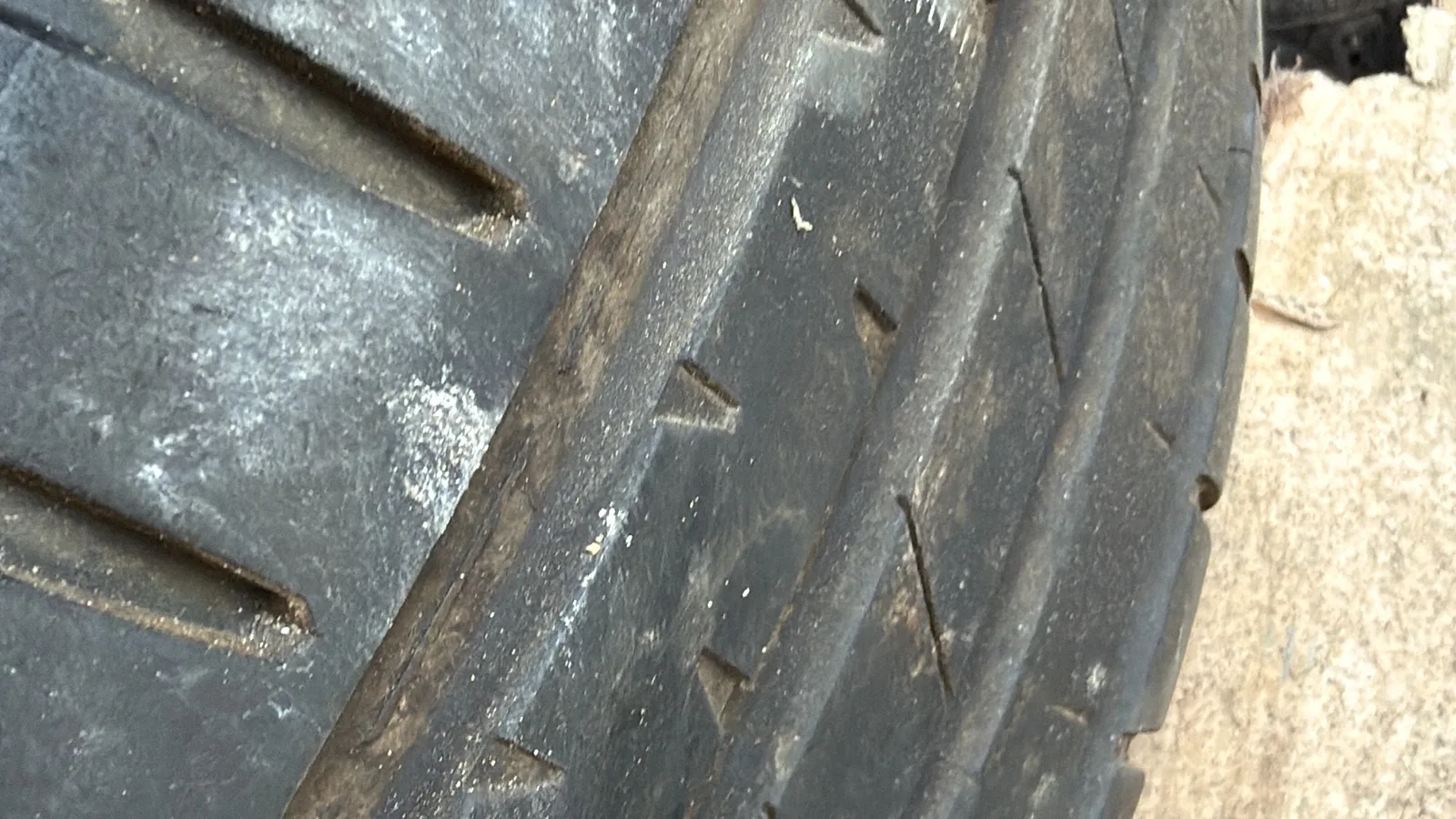
The most common cause is a nail or screw in the tread. It often plugs its own hole, so the air creeps out slowly around it. That is why you should leave it in until the tyre is fixed. Nail in tyre explains why.
Next comes the bead, where the tyre seals against the rim. On alloy wheels, corrosion can build up under the tyre and break the seal. Older steel wheels can rust and leak at the rim or a weld. A rim bent by a pothole or kerb may not seal either.
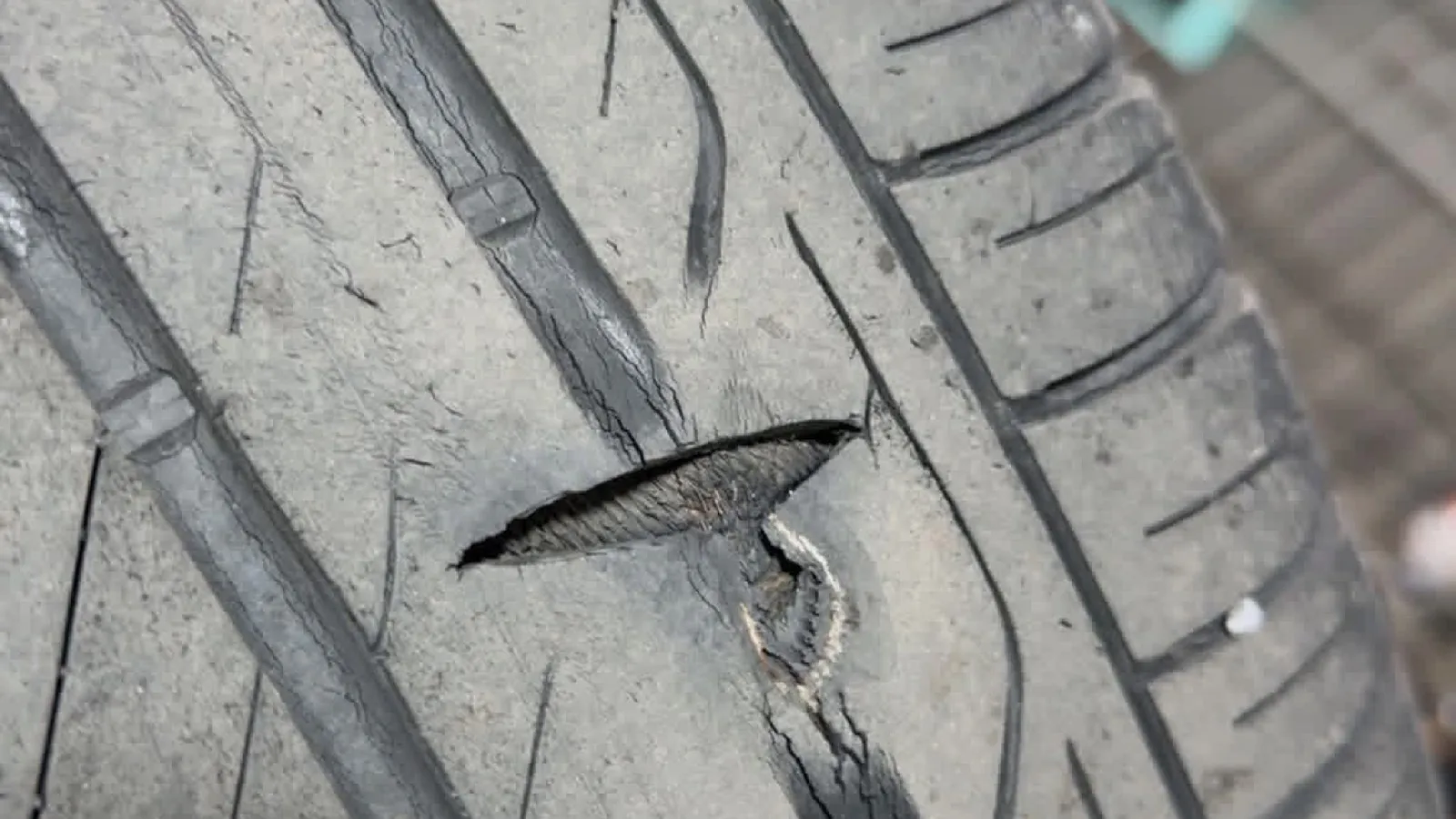
Then the valve. The small core inside can work loose or let air past, and the rubber of an old valve can crack. Valves on pressure sensors have their own seals, which can leak too. Less often, the tyre itself is the cause: a small cut, a split from a pothole, or old rubber cracking. Pothole damage to tyres covers damage from a hard hit.
For a short, gentle drive to get it fixed, usually yes, as long as you pump the tyre up to the right pressure first and it holds long enough. Keep speeds down, avoid the motorway, and check it again before any trip.
What is not safe is living with it. A tyre that is often soft runs hot, wears on both edges and grips less in the rain. The law also says tyres must be properly inflated for the use the car is put to. A tyre that is well below its pressure can count against you, on top of the risk.
Never drive on a tyre that has gone flat. It wrecks the tyre in a very short distance, often turning a £39.95 repair into a new tyre, and it can damage the wheel. If the tyre will not hold air, stop, stay safe, and call us out to the car. Flat tyre: what to do covers the first few minutes.
It varies a lot. Some slow punctures lose a little air over several weeks. Others empty the tyre overnight. It depends on the size of the hole, where it is, and whether something is still plugging it.
A nail in the tread might hold for weeks, then start leaking faster as it works loose. A corroded bead often leaks slowly and steadily, losing a few psi a week. A leaking valve can be slow or quick. Cold weather makes every leak look worse, because the pressure drops anyway.
So do not judge it by how it has been so far. A slow leak can speed up without warning. Check the tyre every day or two until it is fixed, and always before a longer drive. If it drops noticeably in a single day, do not drive on it. Cold weather tyre pressure explains the winter drop, so you can tell it from a leak.
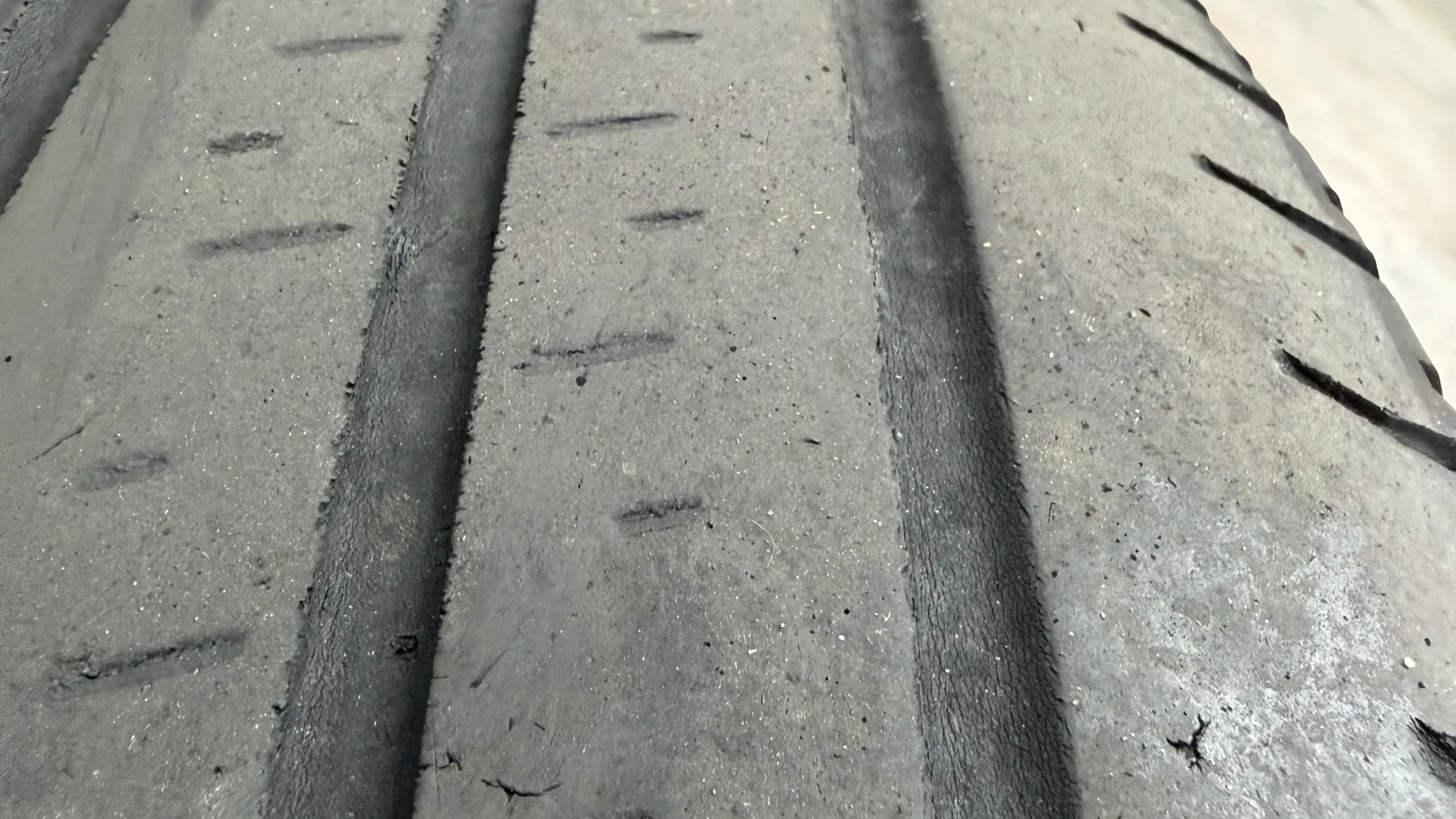
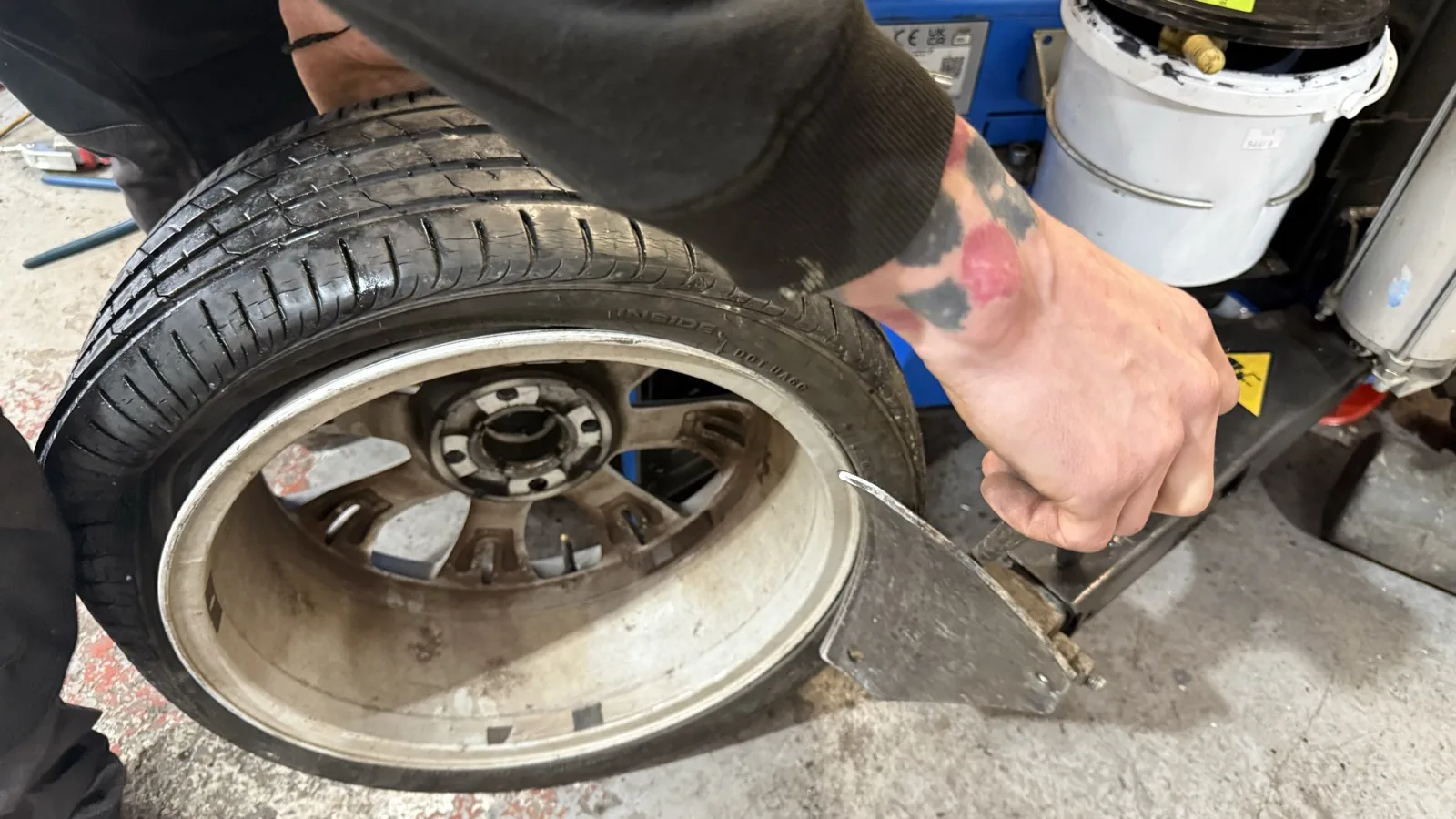
Often, yes. A nail or screw in the central three quarters of the tread, with a hole no bigger than 6mm, can usually be repaired to BS AU 159. That means taking the tyre off the rim, checking the inside for damage and repairing it from the inside. Ours is £39.95.
A leak at the bead is fixed by taking the tyre off, cleaning the corrosion from the rim and resealing it. A leaking valve is replaced. Neither needs a new tyre, as long as the tyre itself is sound.
Some slow punctures cannot be repaired. A hole in the sidewall or the shoulder, a hole bigger than 6mm, or damage inside from driving on it flat all mean a new tyre. So does a tyre that is already worn close to the limit. Can a punctured tyre be repaired covers every rule, and puncture repairs the service.
A slow leak on its own is not an MOT item, but what goes with it often is. A nail or screw in the tread, a cut, or damage to the tyre can fail. So can a tyre that is badly underinflated when it is tested.
On cars fitted with a tyre pressure monitoring system, a warning light that stays on is an MOT fail. That catches a lot of drivers with slow punctures, because the light is on when the car arrives at the test.
The easy answer is to fix it before the test. A proper repair costs far less than a failed test, a retest and a new tyre. Failed MOT on tyres lists everything the tester checks on the tyres, and TPMS sensors covers the sensor side.
The questions that usually come next.
 Puncture repairs at your doorBS AU 159 repairs from £39.95, done at the car.Read the guide →
 Nail in your tyre?Leave it in, and what to do next.Read the guide →
 Can a puncture be repaired?The repair rules, in plain English.Read the guide →
 TPMS warning lightWhat the tyre light is telling you.Read the guide →
 Flat tyre: what to doThe first ten minutes, step by step.Read the guide →
 Pothole damageBulges, cracks and bent rims.Read the guide →
Not every slow puncture is a nail. The fitter checks all six.
In the tread, often plugging its own hole. Usually repairable to BS AU 159 if it sits in the central area.
Corrosion under the tyre on an alloy breaks the seal. Cleaned and resealed, no new tyre needed.
A loose or worn valve core, or an old cracked valve. Replaced on the spot in minutes.
A pothole or kerb bends the rim so it no longer seals. It may need straightening.
A cut or split from a kerb or pothole. The sidewall cannot be repaired, so it is a new tyre.
Cracks in an old tyre can let air seep out. Check the date code on the sidewall.
Short term only. The aim is to get it fixed, not to manage it.
Set it to the door plate figure before every drive, with the tyre cold.
Pulling it out turns a slow leak into a fast one, and the hole is still repairable.
Gentle local driving only. No motorway, no heavy loads, no long trips.
If it drops noticeably in a day, stop driving on it and get it sorted.
A flat tyre is ruined in a very short distance, and it can damage the wheel.
Most slow punctures are a quick repair at the car. Leaving it only costs more.
What happens after you message, wherever the car is parked.
A tyre that keeps dropping, a light that keeps coming back or a nail you can see. Send a photo and where the car is parked.
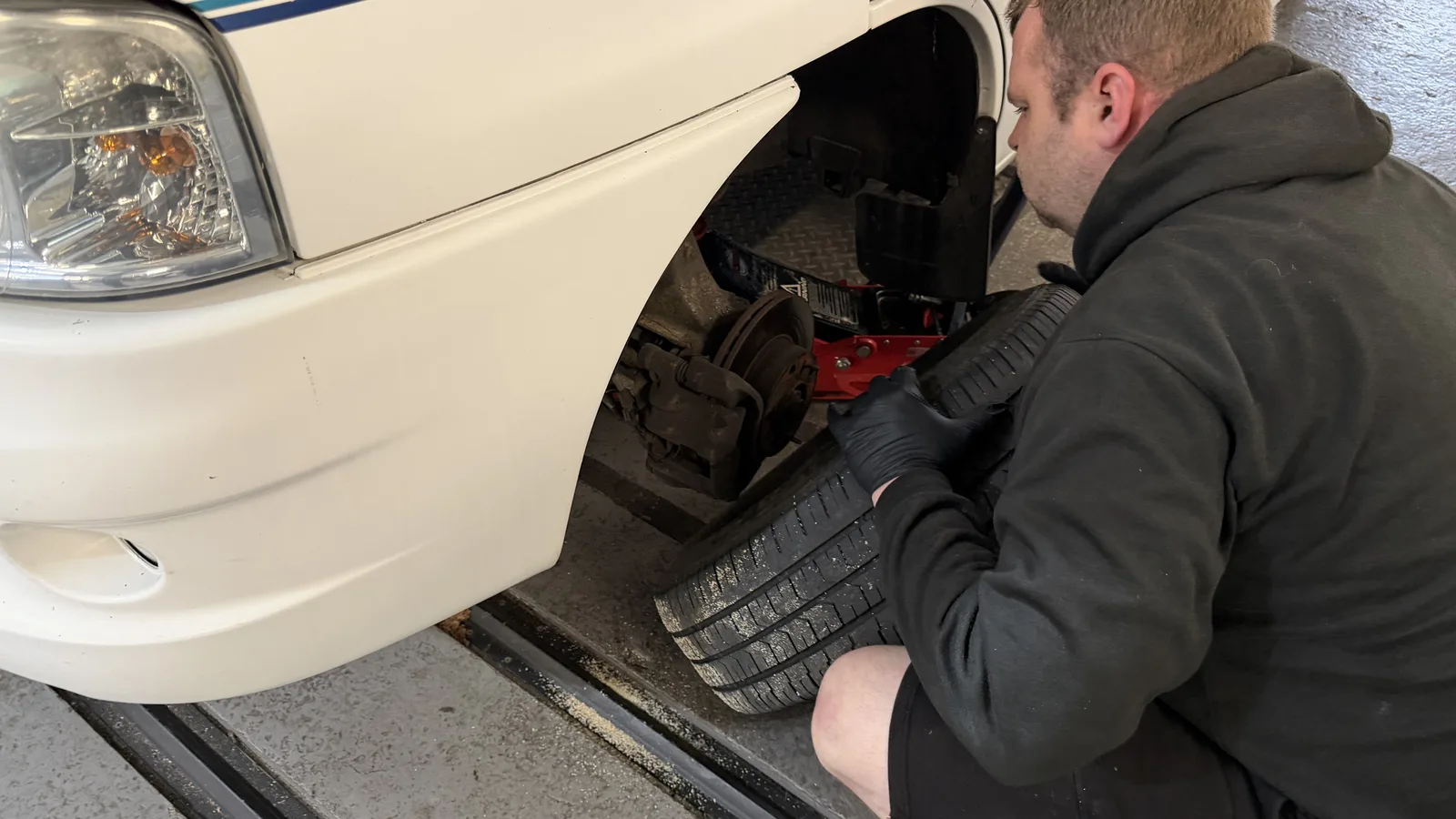
The fitter takes the tyre off the rim and checks the tread, the bead, the valve and the inside of the tyre for the real cause.
A tread puncture repaired to BS AU 159 for £39.95, a bead cleaned and resealed, or a valve replaced. New tyre only if it is needed.
The wheel is balanced on the van, the pressure set to the door plate and the nuts torqued by hand. Then we check the pressure holds.
4.4★★★★★average rating on Google
Stranded in a car park with no spare! Called and they came within the hour, changed the tyre and was on my way 20 minutes later. Great service, delighted they made it so easy.
Brilliant service, same day, quick and easy. Was really rushed for time and they moved things around to ensure they got to me to get it fixed. Would defo recommend
Got us out of an unfortunate place of a Luton van blowout, super quick helpful and fairly priced!
Send a photo and where the car is. We find the leak and fix it at your home, work or the roadside, 24 hours a day.
Every hour you leave a flat tyre on a car is an hour you cannot use it. The van is on shift now, send the size.
What drivers ask us about the tyre that keeps going soft.
You can drive a short, gentle distance on a slow puncture, as long as the tyre is pumped up to the right pressure first and holds it. Only drive to get it fixed. Avoid the motorway, and do not keep topping it up for weeks, because a soft tyre overheats and can fail.
The problem is that a slow puncture never stays the same. A nail can work loose, a bead leak can get worse, and a tyre that lost a little air last week can lose it all today. Driving on a tyre that is soft also damages it from the inside, where you cannot see. The sooner it is fixed, the more likely it is a repair rather than a new tyre. Nail in tyre covers what to do if you can see the cause.
If the tyre will not hold air long enough to drive safely, do not risk it. We come to you instead. Call 0300 124 6981 or WhatsApp 07943 185471 with a photo and your location. A tread puncture repair to BS AU 159 is £39.95, done at the car. Puncture repairs explains how the job works.
It is best not to. Motorway speeds heat a tyre up fast, and a tyre that is even slightly soft gets much hotter. That is when a slow leak can turn into a blowout. If you must use a motorway to reach home, pump the tyre up first, keep your speed down and stop at the first safe chance to check it.
If the pressure warning light comes on while you are on the motorway, leave at the next exit or services and check the tyre. Do not stop on the hard shoulder unless you have to. If the tyre is going down fast, the hard shoulder or an emergency area is the safe place, and everyone should get out behind the barrier. Tyre blowout on the motorway covers the worst case.
Better still, get the slow puncture fixed before a long drive. We come to your home or work, so there is no need to drive anywhere on it. Call 0300 124 6981 and tell us when you need the car. Emergency mobile tyre fitting covers urgent roadside jobs, 24 hours a day.
The main sign is one tyre that keeps losing pressure while the others hold. You may also see the tyre pressure warning light come back again and again, feel the car pull slightly to one side, or notice one tyre looks flatter at the bottom than the rest.
Use a gauge rather than your eyes. Modern tyres can be quite low before they look soft. Check all four with the tyres cold and compare them. If one is always lower, that is your slow puncture. A shiny nail or screw head in the tread is the most common find. Turn the steering to full lock to see the whole front tread. How to check your tyres walks you through the check.
If you cannot see a cause, it may be the bead, the valve or the rim. Those need the tyre off to find, and it is a quick job for a fitter with the right kit. Send a photo to 07943 185471 or call 0300 124 6981 and we will come and find the leak. TPMS warning light explains what the warning light is telling you.
A slow puncture can take anything from a few hours to a few weeks to go down. It depends on the size of the hole, where it is, and whether a nail is still plugging it. Some lose a few psi a week. Others empty the tyre overnight. A slow leak can also speed up without warning.
That is why the time it took last week tells you very little about next week. A nail that held well can work loose on a bumpy road. A bead leak can get worse as corrosion spreads. Cold weather drops every tyre, which can make a small leak look like a big one. Check it every day or two until it is fixed. Cold weather tyre pressure explains the winter drop.
If the tyre loses a lot in one day, do not drive on it. Pump it up only if you are sure it will hold, and only for a short trip. The best move is to get it fixed straight away. Call 0300 124 6981. Flat tyre: what to do covers what to do if it goes fully flat.
Yes, most slow punctures can be repaired. A nail or screw in the central three quarters of the tread, up to 6mm, can be repaired to BS AU 159. A bead leak can be cleaned and resealed, and a leaking valve replaced. Sidewall damage, big holes or a tyre driven flat need replacing.
A proper repair means taking the tyre off the rim, checking the inside for damage, and repairing from the inside. A plug pushed in from the outside is not the same, because nobody has checked inside the tyre. Damage from driving on it soft can hide in there, as a ring of rubbed rubber inside the sidewall. Can a punctured tyre be repaired sets out the full rules.
Our tread puncture repair is £39.95, done at your home, work or the roadside. If the tyre cannot be repaired, we tell you why and quote a new one, fitted. Call 0300 124 6981 or read puncture repairs. Getting it seen early is the best way to keep it a repair. Every day on a soft tyre makes a new one more likely.
Our slow puncture repair is £39.95 for a tread puncture repaired to BS AU 159, done at your home, work or the roadside. That covers taking the tyre off the rim, checking inside, repairing it properly and refitting it. There is no call out charge on top.
If the leak is at the bead or the valve rather than a hole, the fitter explains what it needs before doing anything. You always hear the price first, and nothing is done until you say yes. If the tyre cannot be repaired, because the damage is in the sidewall or too big, you get a fitted price for a new tyre instead. How much does mobile tyre fitting cost explains how tyre prices are made up.
Payment is by a secure link sent to your phone once the job is done, and we can send a photo of the finished job if you ask. A proper repair takes the tyre off the rim every time, which is why it lasts for the life of the tyre. Call 0300 124 6981 to book, day or night. Puncture repairs has the details.
A slow puncture with no nail is usually a leak at the bead, where the tyre seals against the wheel, or at the valve. Corrosion on alloy wheels is a common cause. A rim bent by a pothole, a cracked old valve or a small cut in the tyre can do it too.
Bead leaks are very common on older alloys. Corrosion builds up under the edge of the tyre and lifts the seal, letting air creep out slowly. The fix is to take the tyre off, clean the rim back to bare metal where it seals, and refit it with fresh bead sealant. The tyre itself is fine, so there is nothing to buy. Alloy wheel refurbishment covers wheels that are badly corroded.
Valves are the other usual suspect. The core can work loose, and old rubber valves crack. On cars with pressure sensors, the sensor valve has seals that can leak. TPMS sensors covers those. We check the tread, the bead and the valve every time, so the real cause gets fixed and you are not topping up again next week. Call 0300 124 6981.
A slow leak on its own is not an MOT fail, but the things that come with it often are. A nail or screw in the tyre, a cut, or a badly underinflated tyre can fail. On cars with a tyre pressure monitoring system, a warning light that stays on is a fail too.
That warning light catches many drivers. A slow puncture keeps setting it off, and if it is lit when the car arrives, the car fails. Fixing the leak before the test is far cheaper than a fail and a retest. Resetting the light on the morning of the test does not help if the tyre drops again on the way. Failed MOT on tyres lists every tyre check on the MOT.
Tread depth still counts as well. At least 1.6mm across the central three quarters, all the way round. A tyre that has been run soft can wear its edges quickly. UK tyre law covers the rules and the fines. Call 0300 124 6981 and we will fix it at home before your test, or at work while you get on with the day.
You can for a day or two while you arrange a repair, but not as a long term fix. Every time the tyre drops, it runs soft and takes damage. The leak can speed up without warning. And a nail left in for weeks can work deeper, making a repair less likely.
People put it off because the car still drives fine and life is busy. But a soft tyre wears its shoulders, uses more fuel and grips less in the wet. The damage inside a tyre that has been run low can make it unrepairable. So the few days you saved can cost you a whole tyre, when a repair would have done. Uneven tyre wear shows the edge wear low pressure leaves behind.
A repair is quick and it is done at the car, usually well inside an hour. We come to your home or work, so you do not lose time sitting in a garage. Call 0300 124 6981 or WhatsApp a photo to 07943 185471 with where the car is. Can you fit tyres at home explains what the fitter needs.
Tyre sealant can get you home on a small tread puncture, but it is only a temporary fix. It does not deal with a bead leak, a valve leak or sidewall damage. Once sealant has been used, the tyre needs checking and a proper repair or replacement as soon as possible.
Sealant also makes a proper repair harder, and it can make a mess of a pressure sensor. The fitter has to clean it all out of the tyre before repairing it, and some tyres cannot be repaired afterwards. Always tell the fitter if you have used it, so they can clean it out properly. Many new cars come with a sealant kit instead of a spare. Spare, run flat or sealant compares the options.
If you have a slow puncture, a proper repair is better than sealant from the start. It is quicker than you think, and we come to you, so there is no need to drive on the leak at all. Call 0300 124 6981 and we will sort it at your door. Self sealing tyres covers tyres with a built in sealing layer, which is a different thing.
Start by looking over the tread for a nail, screw or cut, turning the wheel so you see all of it. If you find nothing, spray soapy water over the tread, the valve and the edge of the rim. Bubbles show where the air is escaping. A leak at the rim or valve points to a bead or valve problem.
Pump the tyre up first, because a leak is easier to spot at full pressure. Check the valve by spraying the tip with the cap off. Remember the inner face of the tyre and rim, which is hard to reach on the car. Some leaks only show with the tyre off, especially at the bead on the inner side. How to check your tyres covers the routine checks.
If you find the cause, leave any nail in place and mark the spot with chalk or tape. If you cannot find it, the fitter will. We take the tyre off the rim and check everything. Call 0300 124 6981 or send a photo to 07943 185471. Nail in tyre explains why the nail stays put.
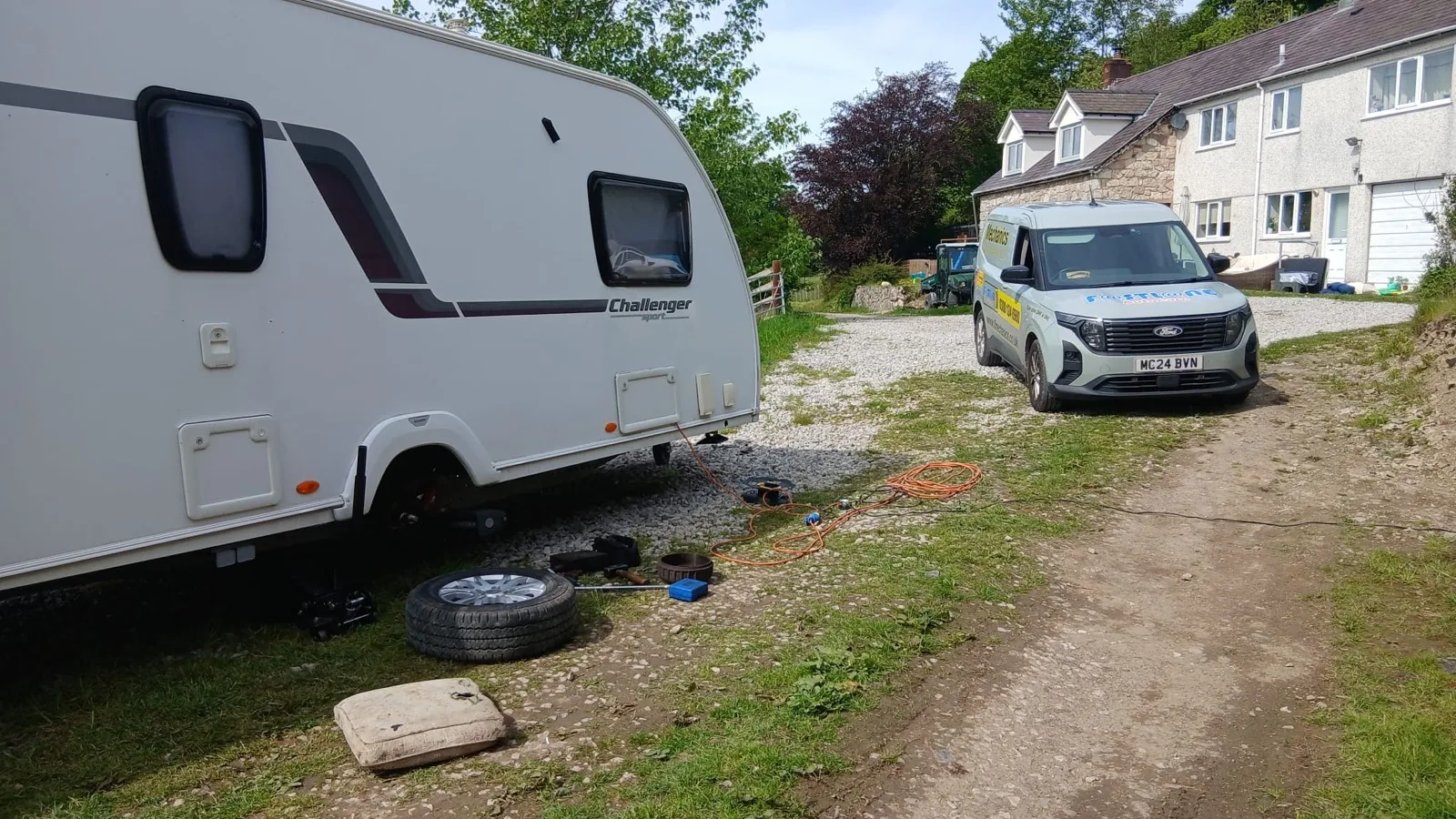
Yes. We find and fix slow punctures at your home, your work or the roadside across the North West and North Wales, 24 hours a day. There is no call out charge. A tread puncture repair to BS AU 159 is £39.95, and a new tyre is fitted only if the old one cannot be saved.
The fitter takes the tyre off the rim, checks the tread, the bead, the valve and the inside, and fixes the real cause. The wheel is then balanced on the van and the pressure set to the door plate figure. The other three tyres get a pressure check while we are there, and you hear about anything else we spot. Puncture repairs explains the job in full.
Payment is by a secure link sent to your phone, and a photo of the finished job is yours if you ask. If you need a new tyre, two or more can go on pay monthly at 0%, subject to status. NHS staff and key workers can ask about up to 30% off. Call 0300 124 6981 or WhatsApp 07943 185471 to book.