Welcome to

Mobile tyre fitting · North West & North Wales · We fit around you

Approved by the AA and RAC. No call-out charge. Around 32 minutes on average, 24 hours a day.
info@yournewtyres.co.ukTell us your name and tyre size — we will reply on WhatsApp with a price and an ETA.
Four locations we are called to most. The one place we will not work is a live lane, and that is the whole point of the training.
M6, M56, M62, M60, M61, M58, M65 and the A55 through North Wales. Van positioned to protect the working area, cones out before tools.
Motorway fitting →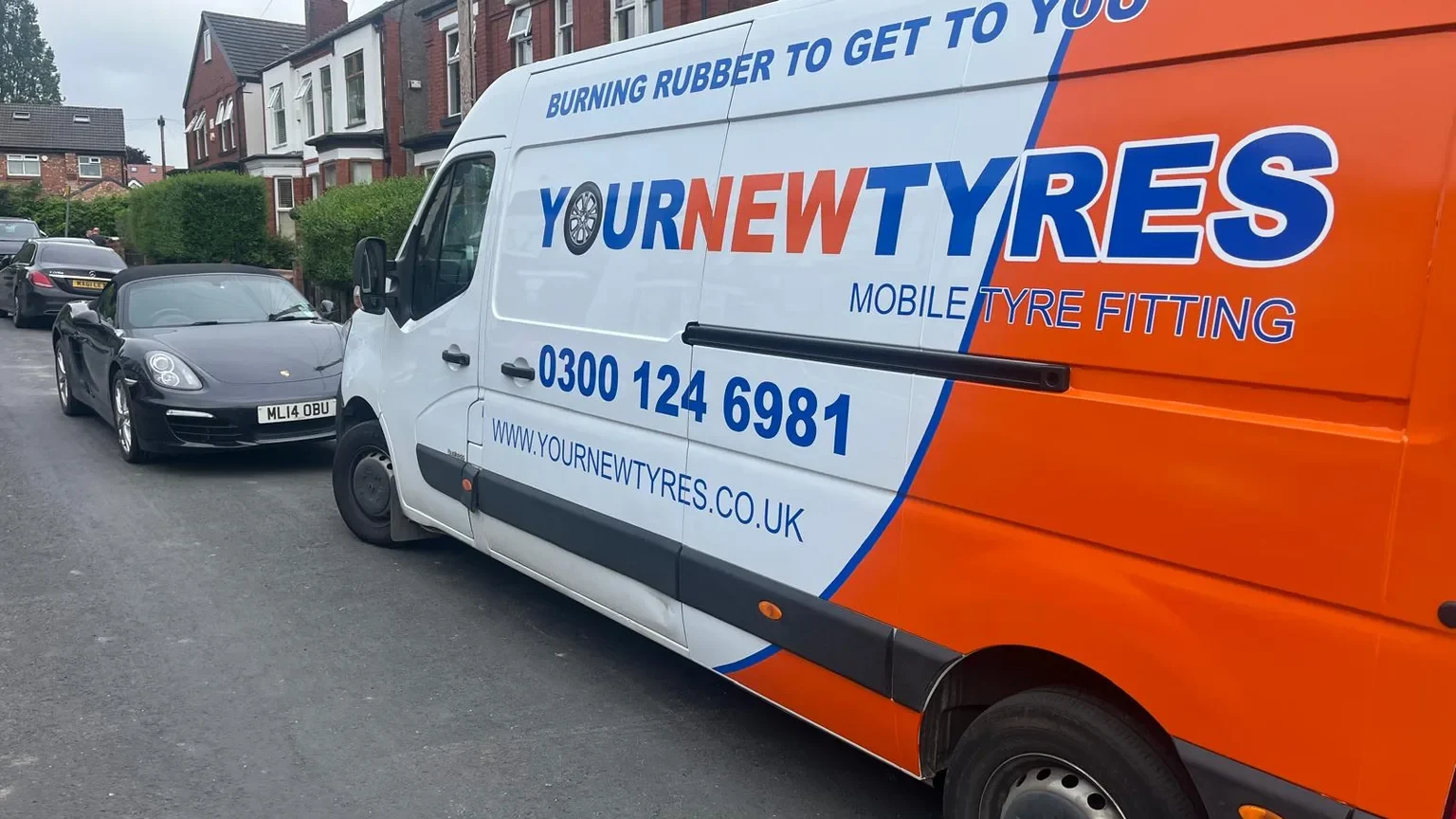
The orange bays with a phone. Get to one if you can, get behind the barrier, and we will meet you there.
What to do first →
From Knutsford to Lancaster, plus the trunk roads that link the towns we cover. Safer ground, same discipline.
Mobile tyre fitting →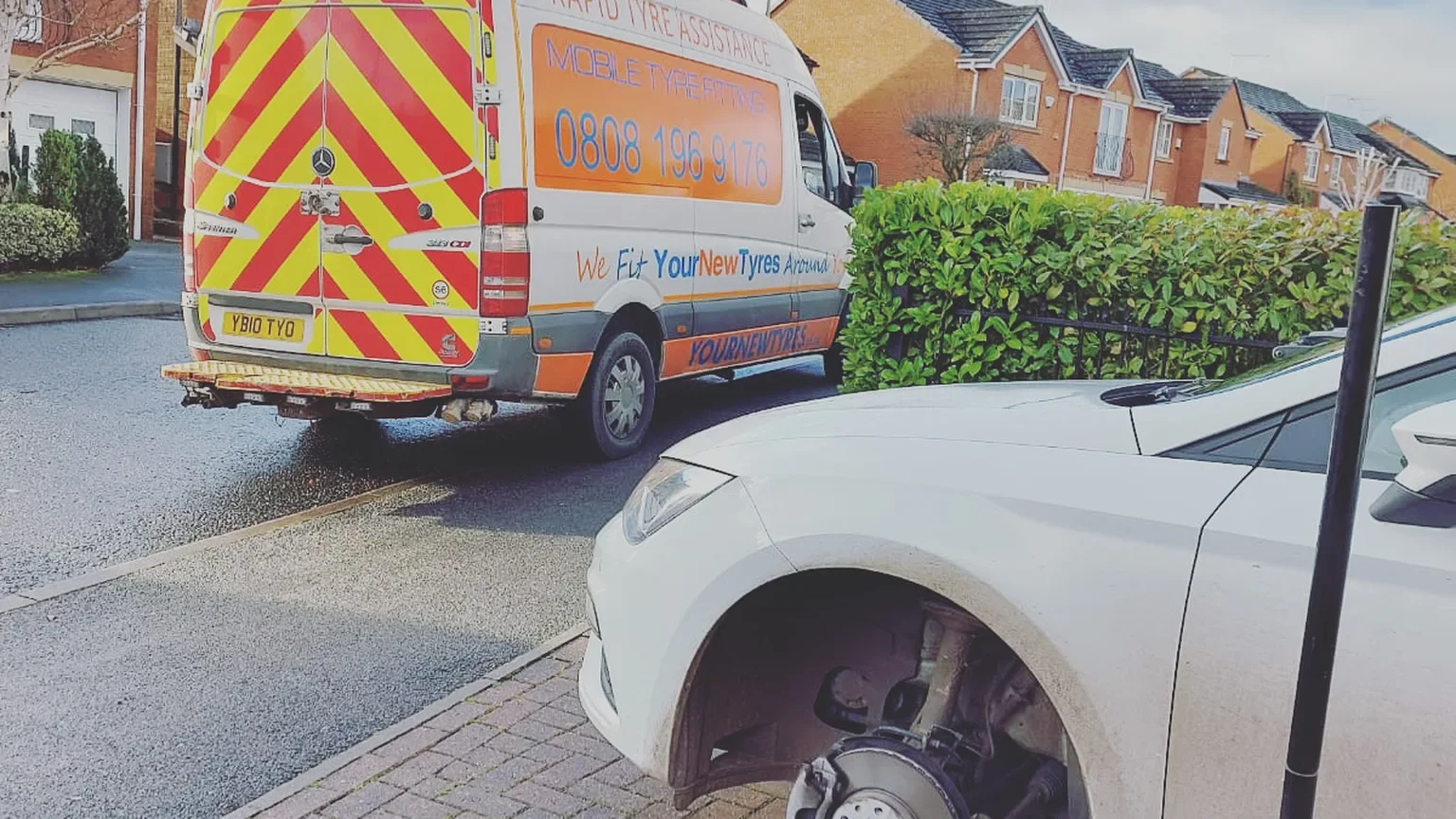
Most of our work is not dramatic at all. The same fitters bring the same care to a quiet cul-de-sac.
Every area we cover →The size is on the sidewall of the tyre, or send us a photo of it. It lands with the fitter on shift. No call-out charge, and the fitting is already in the price.
You are through to YourNewTyres. What size are the tyres?
The size is printed on the sidewall, like 205/55 R16. Send that and where you are, and I will come back with a fitted price and the next slot.
A photo of the sidewall does the job if you would rather not type it out.
Opens WhatsApp with your message ready to send
It looks slower than a driveway job. Every step is there for a reason.
The van stops behind your car, angled to shield the working area, beacons on, so passing traffic sees a wall of orange before it sees a person.
The working area is coned and the fitter checks the road before every move between the van and your car.
Reflective clothing head to toe, tools and the old tyre kept on the safe side, never a back turned to the traffic for longer than it has to be.
You and your passengers stay away from the traffic side while the wheel is changed. If a location is not safe to work in, we say so.
The official National Highways advice, in the order that matters.
Get to the next emergency area, the orange bays with a phone, or as far left as you can. Hazard lights on.
If it is safe, leave by the passenger side and get behind the barrier, well away from the road.
Stay in the car with your seatbelt on and call 999. Do not step into a live lane for any reason.
National Highways is on 0300 123 5000. Once you are safe, call 0300 124 6981 and a REACT trained fitter is on the way.
REACT is the National Tyre Distributors Association's roadside safety licence for tyre technicians, introduced in 2011 and backed by National Highways as best practice on the strategic road network. Our fitters hold it, which is why we attend hard shoulders, emergency areas, services and lay-bys 24 hours a day across the North West and North Wales. Call 0300 124 6981 once you are safely behind the barrier.
Before 2011 there was no common standard for working beside live traffic, and tyre technicians were being killed and injured doing a job that looks routine. The NTDA built REACT to fix that. The course takes a technician through the whole roadside job: the clothing, the equipment the van must carry, where to stop on arrival, how to cone off the working area, how to lift and change a wheel with traffic passing, how to clear the debris and how to leave the scene without stepping into a live lane. It ends in a formal assessment, and a pass puts the technician on a national database with a licence that has to be renewed every five years.
Tell us the road, the direction and the nearest junction or the number on the emergency area sign. A photo of the sidewall gives us the size, so the tyre that arrives is the one that fits. Then stay behind the barrier with your phone. We will give you an honest arrival time rather than a guess, and we will update you if anything changes. Our average across the core area is around 32 minutes, and a motorway location depends on where the nearest van is coming from. If you have no spare, only a sealant kit, or a locking wheel nut key that has gone missing, say so on the call and we will bring the right kit for locking wheel nut removal.
We attend cars, vans, 4x4s and light commercials up to 3.5 tonnes. Trades and delivery drivers make up a good share of our roadside work, because a van off the road is a day's income gone, and our fleet tyre fitting gives an operator one number for the whole fleet. If the damage is in the central tread and the tyre has not been run flat we will do a proper puncture repair rather than sell you a tyre. If it has been run flat, we will explain why the casing is no longer safe and what we recommend instead.
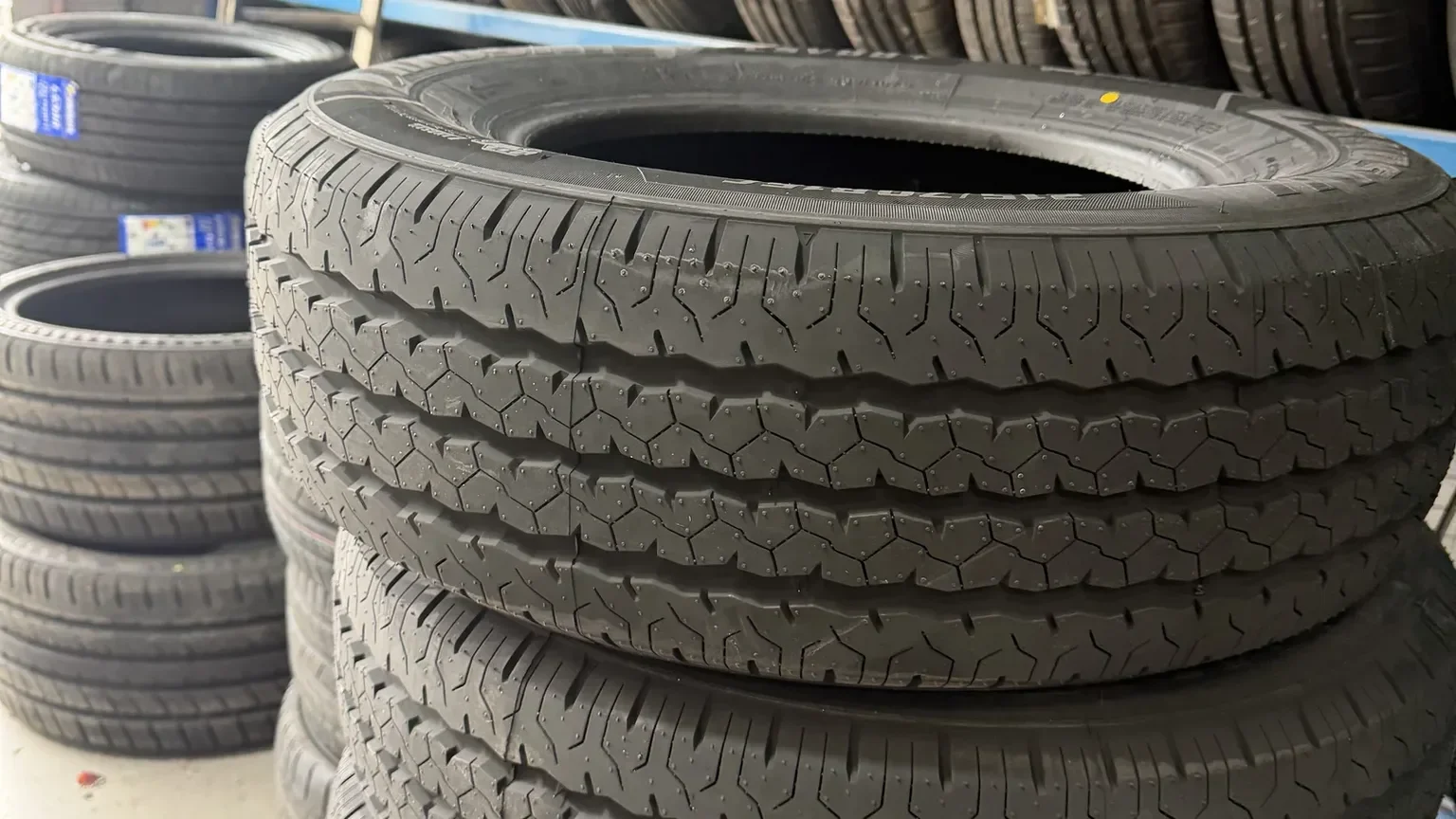
The guides drivers read most when something has gone wrong on the road.
Tyre blowout on the motorwayWhat a blowout feels like, how to hold the car straight and what to do in the first ten minutes.Read the guide →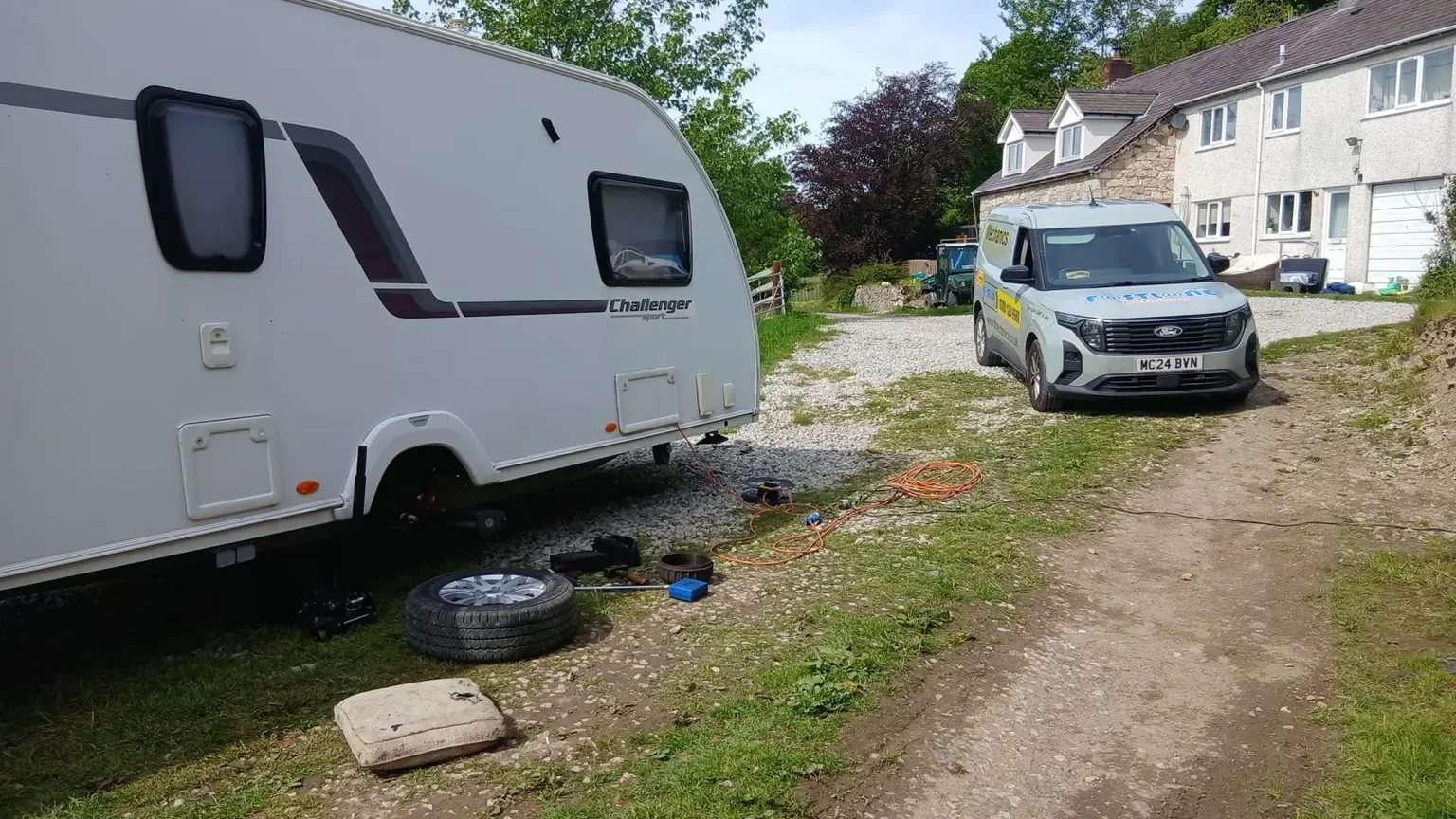 Flat tyre and no spareMost new cars carry a repair kit, not a wheel. Here is what it can and cannot fix.Read the guide →
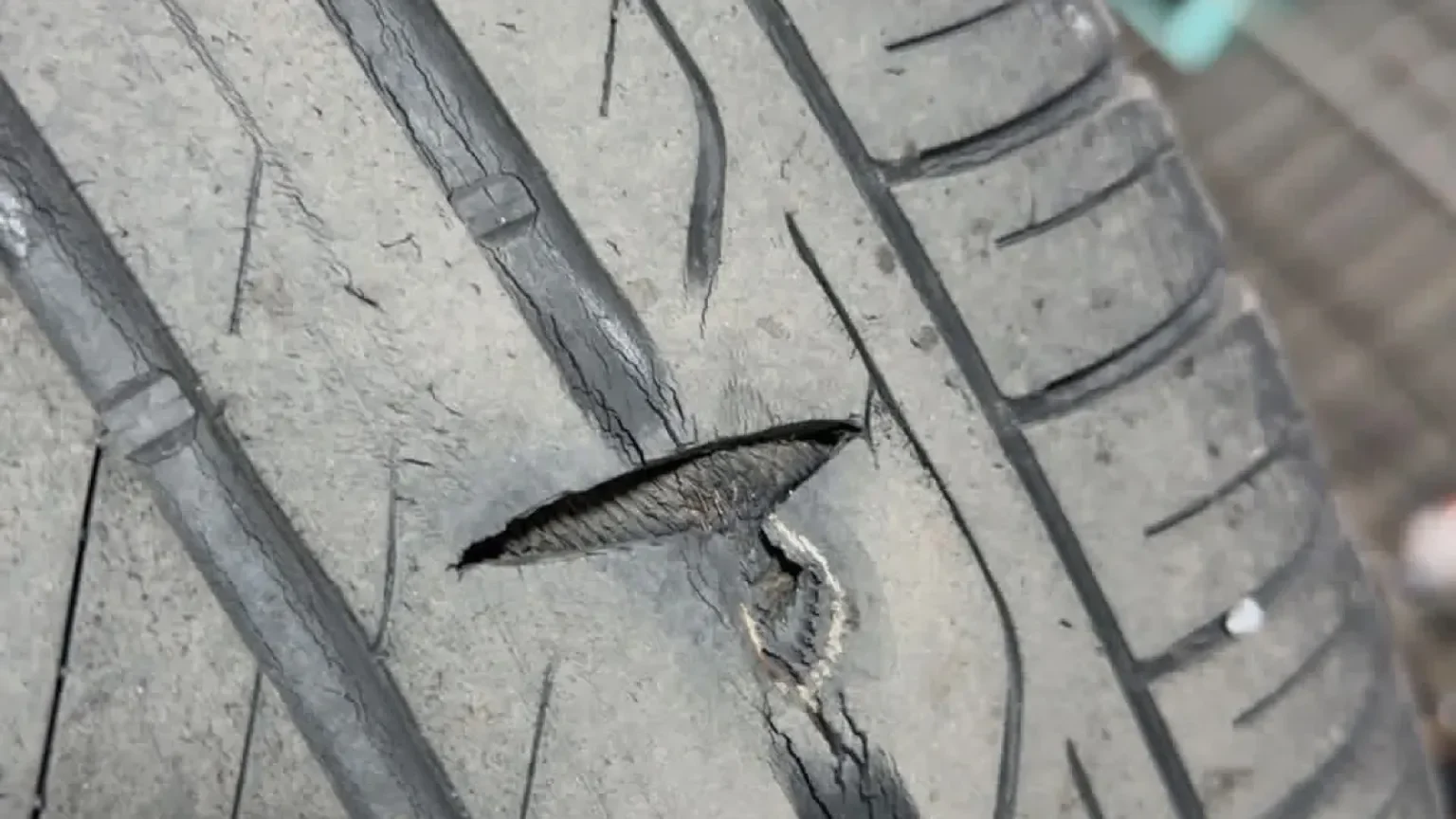
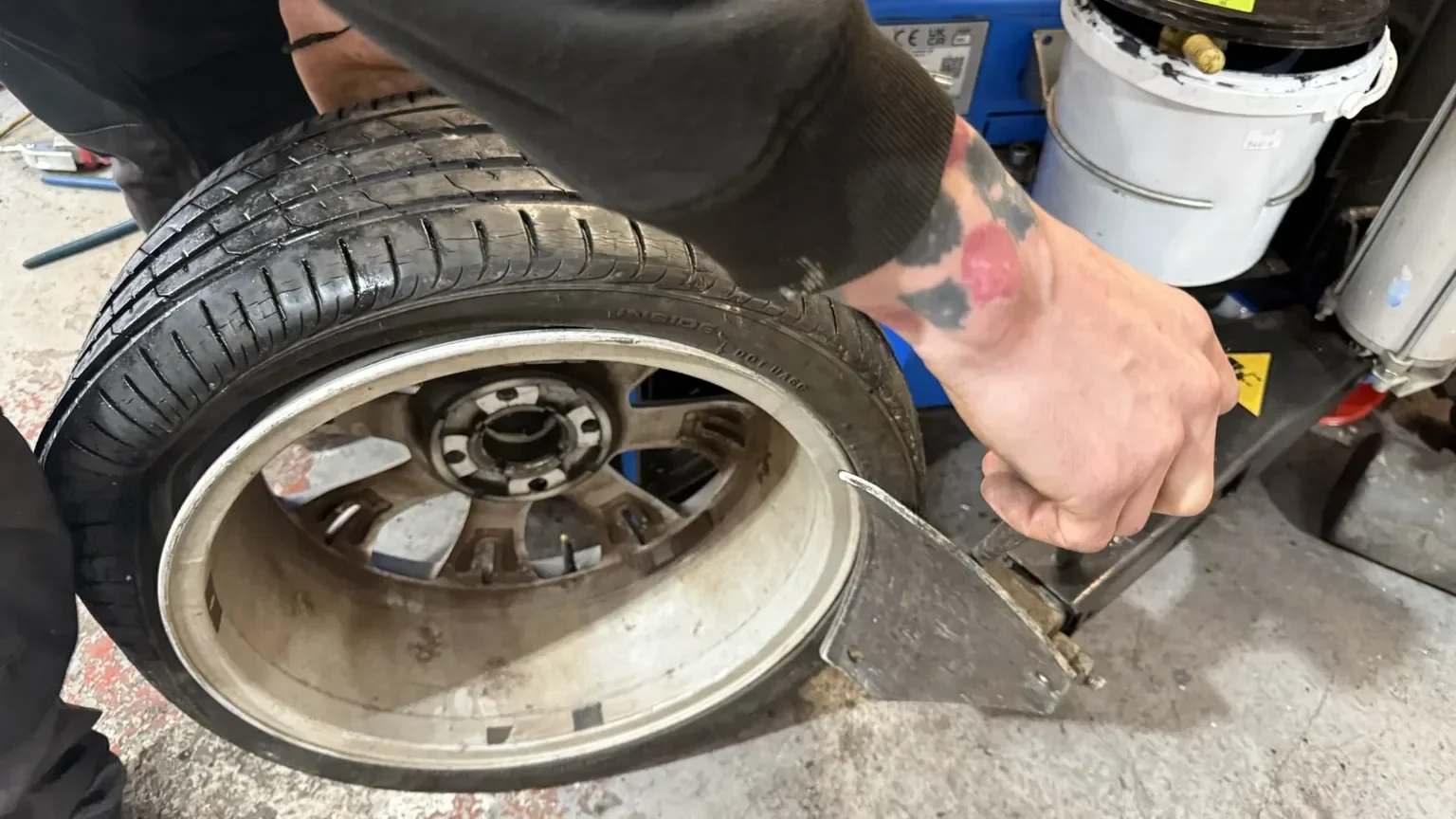 Nail in your tyreCan you drive on it, how far, and when it can be repaired rather than replaced.Read the guide →
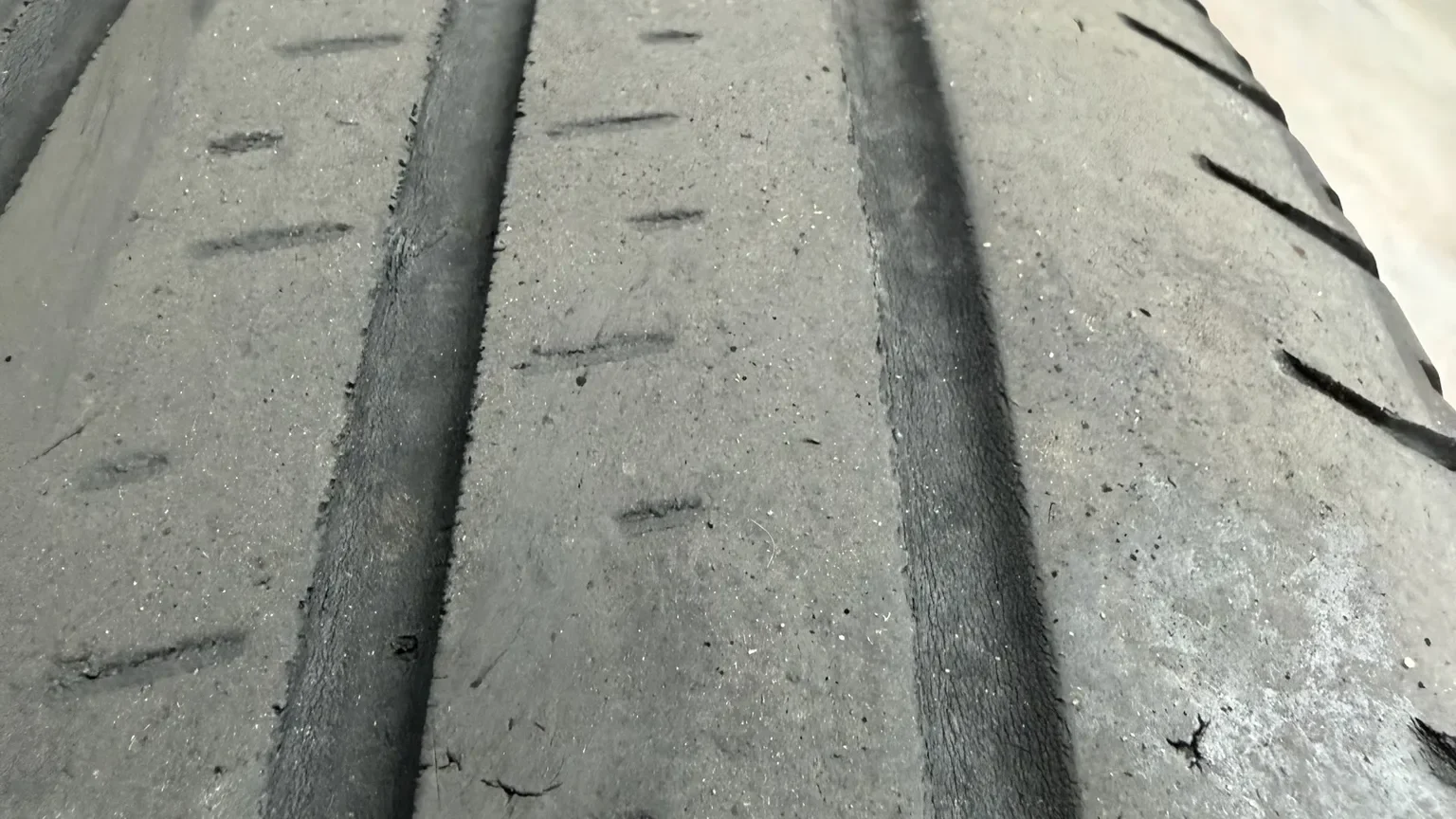 Slow punctureThe signs, the causes, and why a tyre that keeps going down is not one to ignore.Read the guide →
 Failed an MOT on tyresThe fastest way to get the retest done without losing another day.Read the guide →
 TPMS warning lightWhat the pressure light actually means and when it is the sensor rather than the tyre.Read the guide →
Get to safety first. Then call and a REACT trained fitter is on the way, any hour, no call-out charge.
What drivers ask when they are stood behind the barrier waiting for us.
REACT stands for Roadside Emergency Action Concerning Technicians. It is the National Tyre Distributors Association's licence to work safely at the roadside, created in 2011 after too many tyre technicians were hurt working beside live traffic.
The course covers protective clothing, where to stop the van, how to cone off the working area, how to remove and refit a wheel with traffic passing, how to clear up and how to leave the scene safely. It ends in a formal assessment, and technicians who pass go on the NTDA's national database.
Our fitters are REACT trained, which is why we will attend a roadside job that many mobile fitters turn down.
Yes, if the fitter is trained for it and the location is safe. Our REACT trained fitters attend hard shoulders, emergency areas on smart motorways, motorway services and lay-bys across the North West and North Wales.
What we will never do is work in a live lane. If you are stopped somewhere with no protection, your first call is National Highways on 0300 123 5000, or 999 if you are in danger, and they will get you to a safe place first. Then call 0300 124 6981 and we will come to you.
No. National Highways advises drivers not to attempt repairs on the hard shoulder, and the safety record of the roadside industry before REACT shows why.
A hard shoulder puts you a couple of metres from traffic at 70mph, often in the dark or the rain, kneeling with your back to the road. Get everyone out on the passenger side, get behind the barrier, and let a trained fitter with a marked van, cones and the right equipment do the job. Our guide to a blowout on the motorway walks you through the first ten minutes.
Go left. Aim for the next emergency area, the orange bays with a phone, and if you cannot reach one, pull as far left as you can.
If you can get out safely, leave by the passenger side and get behind the barrier. If you cannot get out, keep your seatbelt on, put your hazard lights on and call 999. Once you are safe, National Highways can close the lane with a red X and we can attend. Our guide to a flat tyre with no spare covers what to do if your car has a repair kit rather than a wheel.
The REACT scheme is backed by National Highways as best practice for safe working on the strategic road network, and most recovery and breakdown organisations will only send technicians who hold one.
It is not something a customer can check from the passenger seat, which is exactly why we tell you about it here. When you book a roadside fitting in Warrington or anywhere else we cover, you get a fitter who has been trained and assessed for that environment.
Five years. After that the technician takes a refresher course and is reassessed before the licence is renewed.
The NTDA keeps a national database of every licence holder, which is how the scheme keeps track of who is current. Training has moved on too: the original course has been joined by a REACT-compliant Licensed Mobile Tyre Technician card that adds the fitting skills on top of the roadside safety.
The first thing is positioning. The van is parked to protect the working area with the beacons on, and cones go out before any tools do.
The fitter wears full high-visibility clothing, works from the safe side wherever possible, keeps tools and the old tyre away from the traffic side, and checks the road before every move. It looks slower than a driveway job. It is not slower, it is deliberate, and it is why the scheme has the safety record it has.
Yes. We are a 24 hour service and a roadside call is a roadside call whatever the time.
Bad weather is exactly when the training earns its keep, because rain, spray and darkness are what make the roadside dangerous. Our vans carry lighting and reflective equipment, and if a location is genuinely unsafe to work in we will say so and help you arrange recovery to somewhere we can fit the tyre properly.
We carry the popular sizes and we confirm your size before we set off, so in most cases the tyre that goes on at the roadside is the one you keep.
Send a photo of the sidewall on WhatsApp if you are not sure of the size. If we do not have your exact tyre on the van we will tell you straight away and give you the honest options rather than turning up empty handed.
Sometimes. A puncture repair is only legal and safe when the damage is in the central three quarters of the tread and the tyre has not been driven flat.
A tyre run flat for even a short distance on a motorway will usually have damaged its inner sidewall, and we will not repair it. We check properly at the roadside and tell you what we find before we do anything.
We do. Van tyres up to 3.5 tonnes are a big part of our roadside work, particularly for trades and delivery drivers who cannot afford a day off the road.
If you run several vehicles, our fleet tyre fitting gives you one number to call for the whole fleet, day or night.
Only if you are in danger or in a live lane. On a hard shoulder or in an emergency area, with everyone safely behind the barrier, you can call us directly on 0300 124 6981.
If you are in a live lane, stuck in a running lane on a smart motorway, or someone is hurt, call 999 first. National Highways is on 0300 123 5000 and will help you get to safety before any fitter attends.
Our average across the core North West area is around 32 minutes, measured on our own jobs.
Motorway locations depend on which junction you are near and which direction the van has to come from, and we will give you an honest time when you call rather than a guess. If you are waiting somewhere exposed, stay behind the barrier and keep your phone with you so we can update you.