Welcome to

Mobile tyre fitting · North West & North Wales · We fit around you

Approved by the AA and RAC. No call-out charge. Around 32 minutes on average, 24 hours a day.
info@yournewtyres.co.ukTell us your name and tyre size — we will reply on WhatsApp with a price and an ETA.
Tyre noise is usually uneven tread wear, like cupping or feathering. It makes a drone that rises with speed. Other causes: a loud tread pattern, low pressures, a flat spot, a rough road or a worn wheel bearing. Worn tyres will not get quieter on their own. They need replacing, and the cause of the wear needs fixing.
You turned the radio up to drown it out. It did not work. So start with the sound itself. A steady hum that climbs with speed points at the tread. A beat that keeps time with the wheels points at a flat spot, a bulge or a balance problem. A growl that changes when you steer gently left and right is often a wheel or bearing problem rather than the tyre.
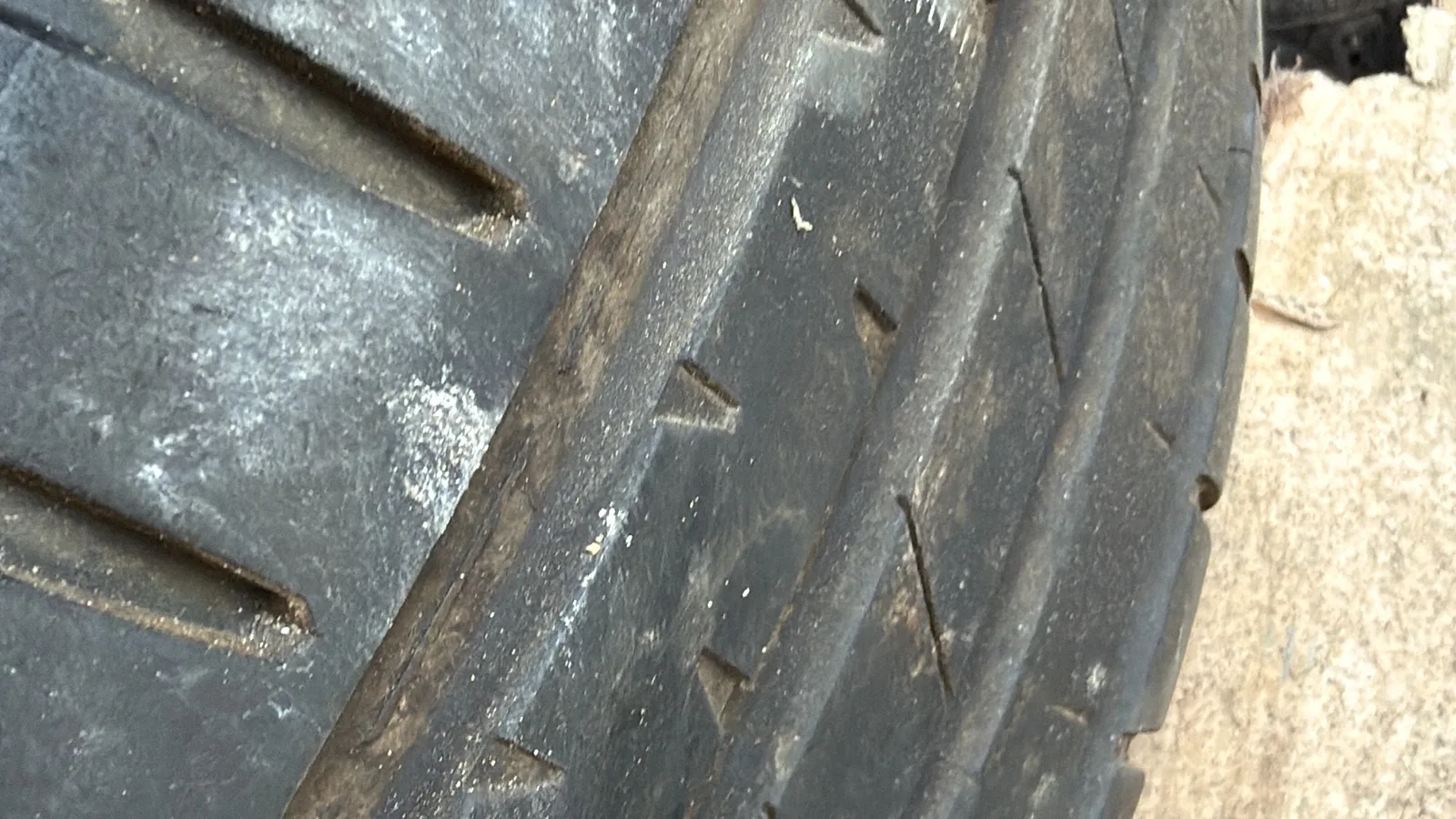
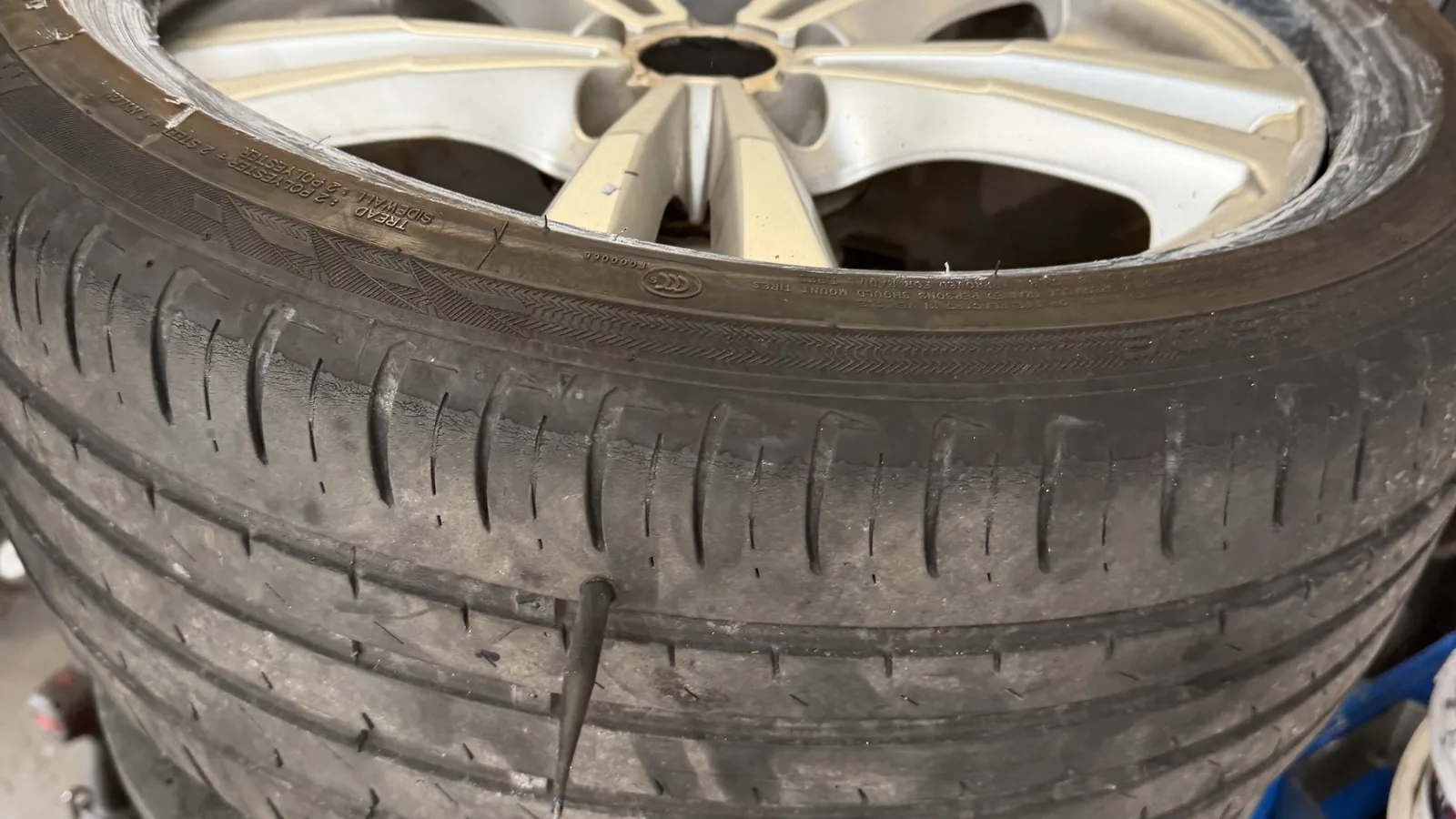
Most tyre drone comes from uneven wear. Worn shock absorbers leave dips around the tread, called cupping. Bad tracking scrubs the tread blocks into a saw tooth edge, called feathering. Run your hand across the tread. If it feels rough one way and smooth the other, read uneven tyre wear next.
Worn unevenly? New tyres cure the noise. Fixing the cause stops it coming back. Send us the size or registration and we send back a fitted price. We fit at home or work across the North West and North Wales. Call 0300 124 6981 any time.
The size is on the sidewall of the tyre, or send us a photo of it. It lands with the fitter on shift. No call-out charge, and the fitting is already in the price.
You are through to YourNewTyres. What size are the tyres?
The size is printed on the sidewall, like 205/55 R16. Send that and where you are, and I will come back with a fitted price and the next slot.
A photo of the sidewall does the job if you would rather not type it out.
Opens WhatsApp with your message ready to send
Covered here: what does each tyre noise mean; why do worn tyres get louder; is it the tyres or a wheel bearing; why are my new tyres louder than the old ones; how do you make tyres quieter.
A low hum or drone that gets louder as you speed up is the classic worn tread sound. It is often worse on coarse road surfaces and quieter on smooth new tarmac. A rhythmic thump that speeds up with the car points to one spot on one tyre. That could be a flat spot, a bulge or a lump where the inside has come apart.
A tick or click at low speed is often a stone or a nail in the tread. A squeal on corners usually means low pressure or simply cornering hard.
A growl or roar that gets louder when you lean the car one way is often a wheel bearing. Of all of these, the thump is the one to take seriously straight away. A bulge can fail without much warning, so stop and look before you drive further.
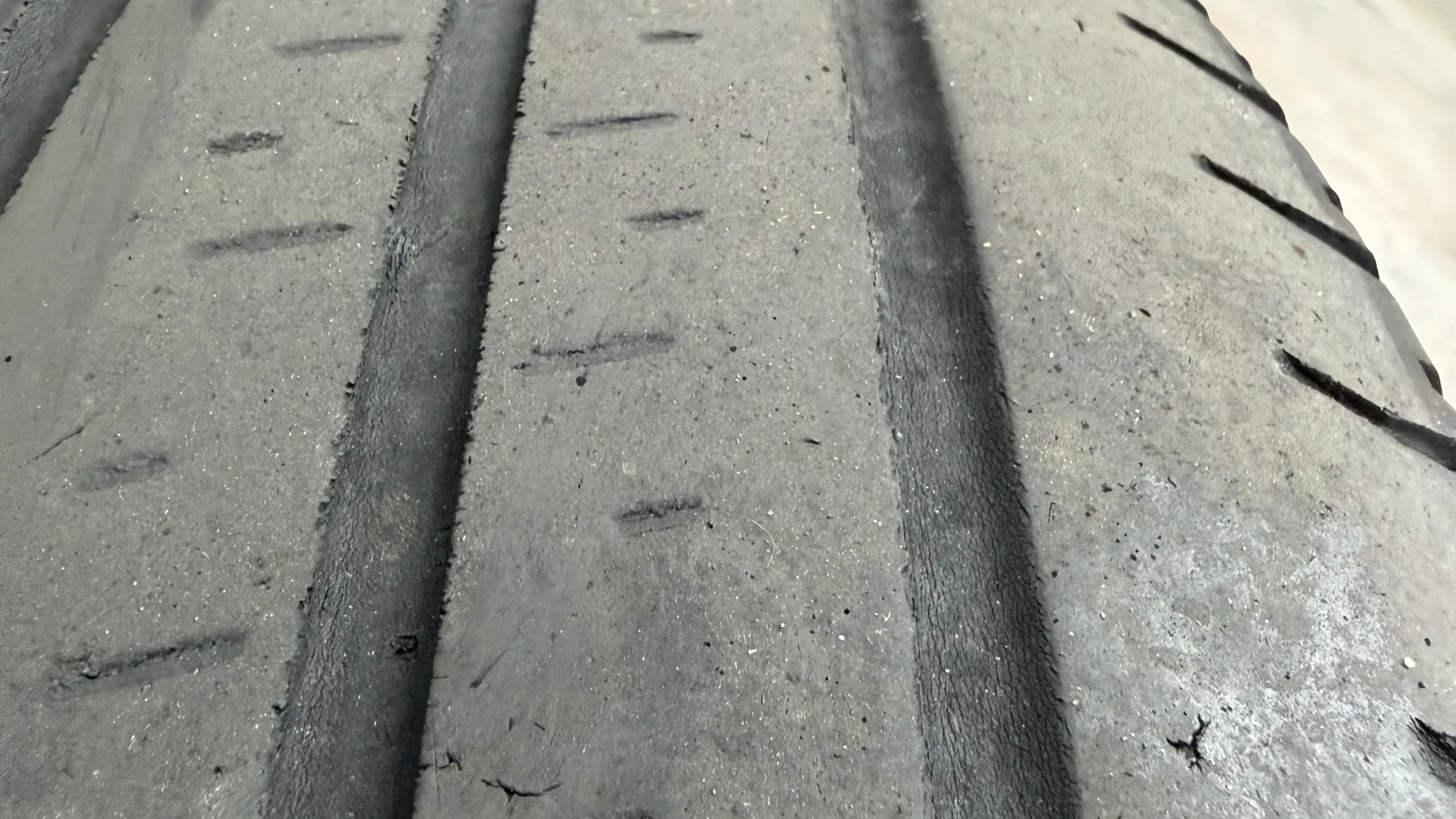
A new tyre has even blocks of rubber that meet the road smoothly. As it wears, especially if it wears unevenly, those blocks hit the road at different heights. Each impact makes a little noise, and at motorway speed that adds up to a drone.
Two patterns cause most of it. Cupping is a series of shallow dips around the tyre, often from worn shock absorbers letting the wheel bounce. Feathering is when each tread block wears into a slope, usually from tracking that is out. Both can be felt with a flat hand across the tread.
Low pressures make things worse, because the tyre flexes more and wears on its shoulders. Once a tyre is worn like this, the noise will not go away. It will get louder as the wear gets deeper. See wheel alignment for the tracking side.
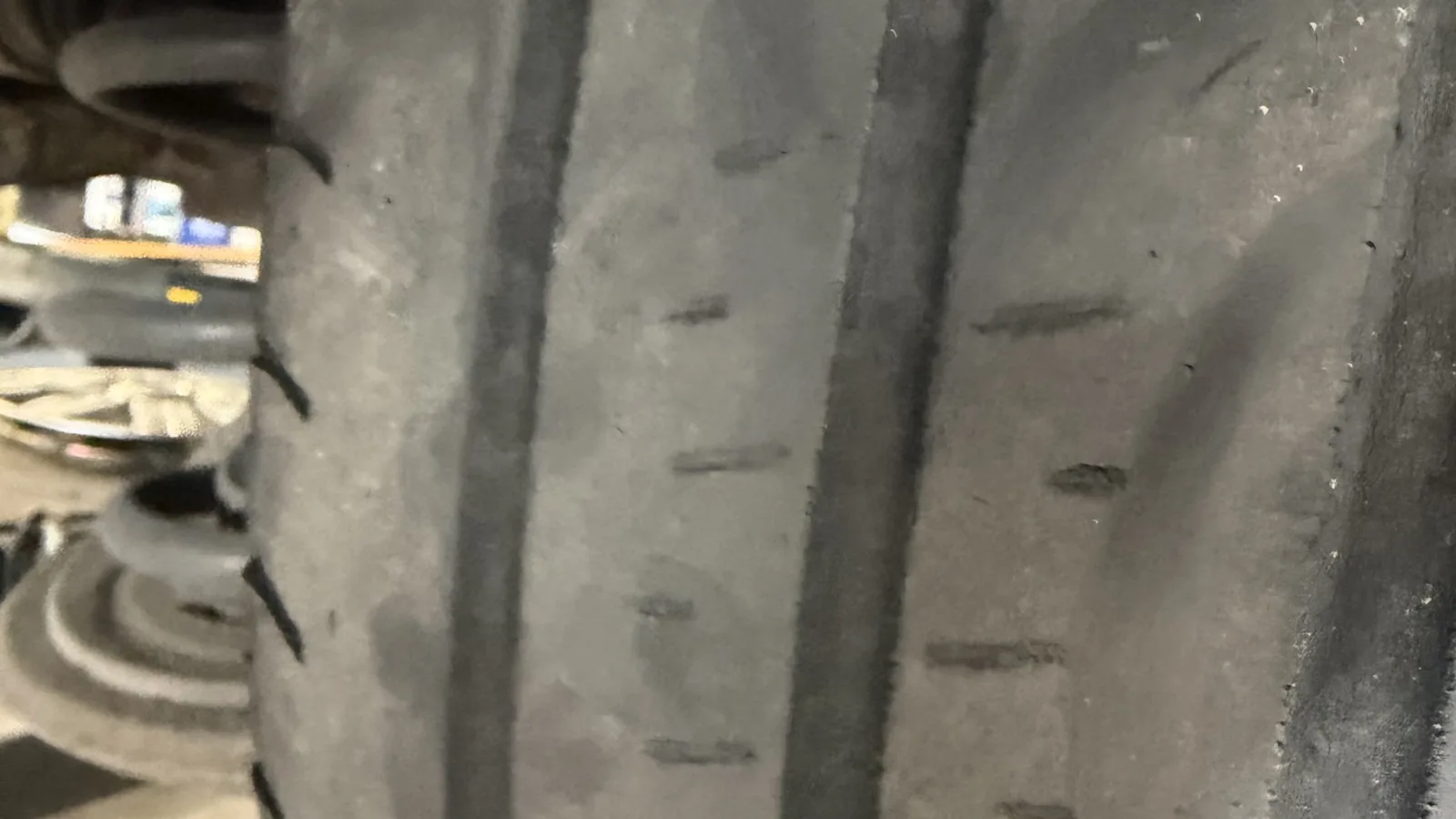
This is the question most drivers get wrong, because both sounds rise with speed. A safe test helps. On a quiet, straight road, at a steady speed, weave very gently left and right.
If the noise gets louder when you steer one way and quieter the other, it is likely a bearing. Leaning the car loads one side and unloads the other, and a worn bearing complains when it is loaded. Tyre noise tends to stay the same through gentle steering. It does change with the road surface though, so a drone that fades on smooth tarmac points back at the tyres.
A worn bearing needs a garage or a mechanic, not a tyre fitter. We will tell you honestly if the tyres look fine and the noise is coming from somewhere else.

This catches plenty of people out, even after buying a well reviewed tyre. The most common reason is a different tread pattern. All season and winter patterns have more edges and grooves than a summer tyre, and they are usually louder. A full depth tread also moves more than a worn one, so a new tyre can sound different at first.
A few other things are worth asking the fitter to check. Are the pressures set to the figure for your car? Are directional tyres fitted the right way round? The arrow on the sidewall should point forwards.
Were the wheels balanced? It is also possible the old noise was there all along, and a quieter tread has uncovered a bearing. The external noise figure on the EU tyre label gives a rough comparison between tyres.
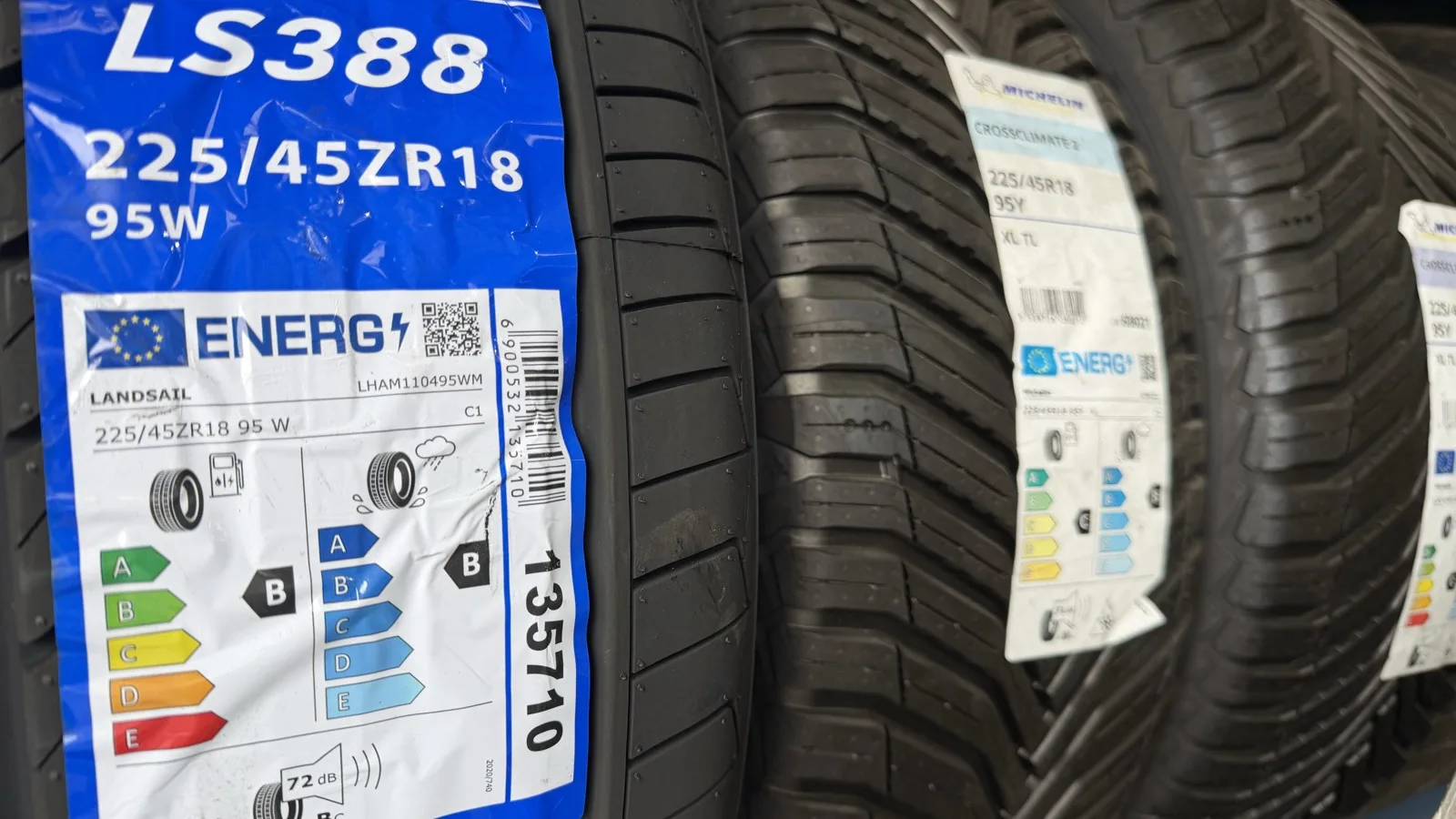
Start with the free fixes. Set the pressures to the figures on the door pillar, checked cold. Look for stones in the grooves and pick them out. If the car pulls or the steering wheel sits off centre, have the tracking checked.
If the tread is cupped or feathered, the only real fix is new tyres, plus whatever caused the wear. That usually means tracking, worn shock absorbers or both. When you choose replacements, compare the noise figure on the label. It is measured in decibels, and every 3dB is roughly double the sound energy, so small numbers matter.
Larger rims with low profile tyres pass more noise into the cabin. Electric cars make tyre noise more obvious, because there is no engine to cover it. Some tyres have a foam layer inside to damp the hollow ring of the tyre. Our guide to EV tyres covers those.
The questions that usually come next.
 Uneven tyre wearRead the pattern and find the cause.Read the guide →
 Wheel alignmentTracking that stops the edges wearing.Read the guide →
 Wheel balancingThe cure for a shake at speed.Read the guide →
 Tyre labels explainedFuel, wet grip and noise grades.Read the guide →
 When to replace tyresRead the full guide.Read the guide →
 EV tyres explainedWeight, torque and wear.Read the guide →
Match the sound, then check the likely cause first.
Usually uneven wear such as cupping or feathering. It gets louder as the wear deepens and will not fade on its own.
A flat spot, a bulge or a lump in one tyre. Stop and check. A bulge can burst.
Often a wheel bearing, not the tyre. If gentle steering changes it, see a mechanic.
A stone or a nail in the tread. A nail or screw needs checking inside the tyre, not just pulling out.
Usually low pressure or hard cornering. Check the pressures cold against the figure on the door pillar.
Air squeezed out of the grooves on coarse chippings. Quieter on smooth tarmac means the road is the main cause.
Do these safely, on the drive or on a quiet road. Stop if you find a bulge.
Run a flat hand around the tyre both ways. Rough one way and smooth the other means feathering. Wavy dips mean cupping.
Low pressure makes the shoulders wear and the tyre flex more. Set it cold to the figure on the door pillar.
Check both sidewalls, including the inside edge. A lump or bulge means the tyre is damaged inside and needs changing.
Stones and screws in the grooves click at low speed. A screw or nail needs a proper inspection, not just pulling out.
On a quiet straight road, steer slightly left and right. A noise that changes with the lean suggests a wheel bearing.
If the drone fades on smooth tarmac and returns on coarse chippings, the tread pattern or wear is the likely source.
What happens after you message, wherever the car is parked.
WhatsApp a picture of the tread and the size to 07943 185471. Uneven wear often shows clearly, and it helps us bring the right tyre.
If the tyres look healthy and the noise sounds like a bearing, we will say so. There is no point selling tyres that will not fix it.
We fit at home or work across the North West and North Wales. Each tyre takes about 20 to 40 minutes, balanced before it goes back on.
We show you the wear pattern and what caused it. Get the tracking or suspension sorted and the new tyres stay quiet for much longer.
 Spread the cost of your tyres
Two or more new tyres can go on pay monthly at 0%, subject to status. Same fitted price, fitted at your home or work.
4.4★★★★★average rating on Google
Brilliant service, same day, quick and easy. Was really rushed for time and they moved things around to ensure they got to me to get it fixed. Would defo recommend
Got us out of an unfortunate place of a Luton van blowout, super quick helpful and fairly priced!
Stranded in a car park with no spare! Called and they came within the hour, changed the tyre and was on my way 20 minutes later. Great service, delighted they made it so easy.
Send the size or the registration and where the car is. We reply with a fitted price and a time, 24 hours a day, with no call out charge.
A fitter is out on the road as you read this. Send the size now and the next free slot is yours, at the same price whatever the hour.
The follow up questions we hear at the roadside.
Tyre noise is mostly caused by the tread meeting the road, and it gets louder when the tread wears unevenly. Cupping and feathering are the usual culprits. Tread pattern, low pressures, coarse road surfaces and flat spots add to it. A worn wheel bearing can sound very similar, so it is worth ruling out.
Cupping leaves a wavy pattern of dips around the tyre and usually points to tired shock absorbers. Feathering leaves each block with a slope and usually points to tracking that is out. Both make a drone that climbs with speed and gets worse as the wear deepens. Our guide to uneven tyre wear has the full list of patterns and what causes each. It also covers wear on the inner edge, which is easy to miss.
The road surface matters more than people think. Coarse chippings are much louder than smooth tarmac, whatever tyre you have. If the noise changes the moment the surface changes, the tyres may be fine. If it is there on every road, send us a photo of the tread or call 0300 124 6981. See also how to check your tyres.
Tyres that get loud suddenly usually have a new problem in one place. Think flat spot, bulge, stone, nail, or a tyre gone soft. Gradual wear makes noise creep up over months. A sudden change points at something that happened recently, so check the tyres before driving far.
A thump that keeps time with the wheel is the one to worry about. It can mean the inside of the tyre has separated after a pothole, and a bulge can fail without warning. Pull over somewhere safe and look before you go further. Our guide to pothole damage shows what that looks like on the sidewall. Do not keep driving on it to see if it settles. A tyre with internal damage can look almost normal from the driver's seat.
A car that sat still for a while can get flat spots. They thump for the first few miles, then fade as the tyres warm up. If the thump stays, the tyre needs looking at properly. Call 0300 124 6981 and we can come to the car, or read emergency tyre fitting if it is not safe to drive.
New tyres are often louder because the tread pattern is different from the old ones. All season and winter patterns are usually noisier than summer tyres, and full depth tread moves more than worn tread. Wrong pressures, a directional tyre fitted backwards or an unbalanced wheel can also make new tyres louder than expected.
Check the noise figure on the label of the new tyre against the old one if you still have the details. A couple of decibels makes a real difference inside the car. Our guide to tyre labels explains the noise grade and what it does and does not measure. It sits in the bottom corner of the label, next to the wet grip and fuel grades.
Sometimes a quieter tyre simply reveals a sound that was already there. Old worn tyres drone so loudly that a failing bearing goes unnoticed until the new tyres go on. If the noise changes when you weave gently, have the bearings checked. If you want a second opinion on the tyres, call 0300 124 6981 or see directional tyres for fitting direction.
Ask the fitter to check four things. Are the pressures right for your car? Do directional tyres point the right way? Were the wheels balanced? Are the nuts done up properly? Then ask whether the tread pattern is simply louder than your old tyres. Most new tyre noise comes down to one of those.
If all four check out, the next suspect is something the old tyres were covering. A worn bearing or a knocking suspension part can hide behind the drone of worn tyres. A fitter can spin the wheel by hand and feel for roughness while the car is jacked up. That takes a couple of minutes and can save a lot of guessing. Our wheel balancing guide explains what balancing does and does not fix.
It is also fair to ask whether the tyre suits your driving. An all season tyre on a car that mostly does motorway miles will be louder than a good summer tyre. If we fitted the tyres, call 0300 124 6981 and we will come back and check. See all season tyres for the trade offs.
Tyre noise itself is not dangerous, but what causes it can be. A drone from uneven wear means grip is reducing on part of the tread. A thump can mean a bulge or internal damage that could fail. A growl can be a wheel bearing. Treat any new noise as a reason to check, not to ignore.
Uneven wear matters because one edge of the tyre can go below 1.6mm while the middle still looks fine. That makes the tyre illegal as well as noisy. It also means less grip on that edge in the wet, which is where it hurts most. Check the inner edges with the steering on full lock, or read tread wear indicators to find the limit bars.
If you see a bulge, cords or a deep cut, do not drive on the tyre. Fit the spare if you have one and it is safe to do so, or call for help. We come to the roadside across the North West and North Wales, 24 hours a day. Call 0300 124 6981 or see emergency fitting.
The quickest test is a gentle weave on a quiet straight road at a steady speed. If the noise gets louder when you steer one way and quieter the other, a wheel bearing is the likely cause. Tyre noise usually stays the same through gentle steering, but changes when the road surface changes.
Bearings also tend to growl or rumble rather than hum, and the noise often gets worse over weeks. With the car safely jacked up, a worn bearing can feel rough or have play when the wheel is rocked. That is a job for a mechanic. Driving on a badly worn bearing is not safe, so do not leave it for months. We will not sell you tyres for a bearing noise. See balancing explained for what a wheel shake means instead.
Tyre noise from uneven wear is easier to confirm, because you can see and feel it. Run a hand across the tread and look for dips or sloped blocks. If you find them, the tyres are part of the problem. Call 0300 124 6981 or read uneven tyre wear.
Tyre roar is the steady drone you hear at motorway speed, caused by the tread and the road surface together. Some roar is normal, especially on coarse concrete or chippings. If it has got louder over time, uneven wear is the usual reason, and it will keep getting worse until the tyres are replaced.
The motorway is where uneven wear shows up most, because the speed turns small bumps in the tread into a constant sound. If the roar is worse on one side of the car, look at the tyres on that side first. Check the inner edges too, because that is where tracking wear usually starts. A slight pull or an off centre steering wheel points at tracking. See tracking explained.
For high mileage drivers, choosing a tyre with a low noise figure makes long trips much less tiring. Noise wears you down over a few hours in a way you only notice when it stops. Our guide to tyres for long motorway runs covers what to look for. If you want prices on quieter options for your size, send us the registration or call 0300 124 6981.
Tyre noise often means you need new tyres, but not always. If the noise comes from cupped or feathered tread, the tyres will not get quieter and need replacing. If it comes from low pressure, a stone or the road surface, the tyres may be fine. A bearing noise needs a mechanic, not tyres.
Check the tread depth as well as the wear pattern. Noisy tyres that are also close to 1.6mm have two reasons to go. Noise alone is a comfort problem, but low tread is a safety and legal one. Our guide on when to replace tyres lists the signs, including cracking and age. Most tyres show several of those signs together by the time they get loud.
If you do replace them, fix what wore them out, or the new tyres will go the same way. Tracking is quick to check, and worn shock absorbers show up on a bounce test or an MOT. Send us a photo of the tread on WhatsApp and we will give an honest view before quoting. Or call 0300 124 6981. You can also read two tyres or four.
Yes, poor wheel alignment causes tyre noise indirectly by wearing the tread unevenly. Tracking that is out drags the tyre slightly sideways as it rolls, scrubbing the tread blocks into a sloped, feathered shape. That shape makes a drone that rises with speed and gets louder the longer it goes on.
Other clues: the car pulls to one side, the steering wheel sits off centre, or one edge of a tyre wears faster. A kerb strike or a big pothole is enough to knock tracking out. You might not notice it for weeks. So can worn steering parts, which is why the tracking sometimes drifts back after being set. Our wheel alignment guide explains what the settings do. Toe, camber and caster each leave their own mark on the tread.
Fixing the alignment stops the wear getting worse but does not repair the tread already damaged. If the feathering is deep, the tyres will stay noisy. We can fit new tyres at home or work, then you can have tracking set so they wear evenly. Call 0300 124 6981 or read how long tyres last.
Low tyre pressure can cause noise, mainly as squealing on corners and a softer, droning sound as the sidewall flexes more. Over time, running low also wears the shoulders of the tyre faster, which adds to the noise. Setting the pressures correctly, checked cold, is the first free fix to try.
The right figures are on a sticker in the door pillar, inside the fuel flap or in the handbook. There are often two sets, one for a normal load and one for a full car. Our guide to the right tyre pressure shows where to find them. Always check when the tyres are cold, before a long drive, because warm tyres read higher.
If one tyre keeps losing pressure, you may have a slow puncture. That needs looking at, because driving on a soft tyre damages it inside. Once the inside is damaged by running flat, the tyre cannot be repaired and has to be replaced. Our puncture repair is £39.95 to BS AU 159 where the damage is repairable. Call 0300 124 6981 if a tyre will not hold air.
To choose quieter tyres, compare the external noise figure on the EU tyre label, shown in decibels with a grade. Lower is quieter, and a gap of 3dB is roughly double the sound energy. Summer tyres are usually quieter than all season or winter ones. A smaller rim with more sidewall beats a low profile tyre.
The label measures noise outside the car, so it is a guide rather than a promise about the cabin. Independent tyre tests that measure interior noise are useful for a specific model. Rim size, the car's own sound deadening and the road surface all change what you hear inside. Our guide to tyre labels explains the grades.
Do not trade away wet grip for a few decibels. The wet grade matters more for safety. A quiet tyre that takes longer to stop in the rain is a poor swap. Tell us you want a quiet tyre when you send the size, and we will price options that balance both. Call 0300 124 6981 or read premium tyres to see where the quietest models usually sit.
Yes, we replace noisy tyres at your home, at work or at the roadside across the North West and North Wales. Send the size or registration and we send back a fitted price and a time. There is no call out charge, because fitting is priced into the tyre, and each tyre takes about 20 to 40 minutes.
Before we fit, we look at the old tyres and tell you what caused the noise. Then you know if tracking or suspension needs doing too. That way you are not paying for new tyres that wear out the same way. If the old ones look like tracking wear, we will say so plainly before you spend anything. See how mobile fitting works for what happens on the day.
We are AA and RAC approved and cover more than 2,700 areas, 24 hours a day and 365 days a year. In the core area we reach drivers in around 32 minutes on average when it is urgent. Two or more tyres can be spread with pay monthly at 0% subject to status. Call 0300 124 6981 or WhatsApp 07943 185471 to book.