Welcome to

Mobile tyre fitting · North West & North Wales · We fit around you

Approved by the AA and RAC. No call-out charge. Around 32 minutes on average, 24 hours a day.
info@yournewtyres.co.ukTell us your name and tyre size — we will reply on WhatsApp with a price and an ETA.
A motorhome needs tyres whose load index covers the plated weight on each axle, which on most coachbuilts means a CP camping tyre or a high load commercial tyre, inflated to a pressure set from the axle weight rather than the sidewall. They are replaced on age, at five to seven years, because they perish standing long before the tread wears. We fit them where the motorhome stands.
The weight is the whole story. A coachbuilt on a 3,500kg plate with the water tank full and the garage loaded sits near its rear axle limit for hours at motorway speed, and a tyre built for a family car or a lightly loaded van is not designed for that. The CP marking on a camping tyre means the casing and the bead are made for sustained heavy load at the high pressures a motorhome runs, and for standing laden for months without damage. Lighter panel van conversions are often fine on a good commercial van tyre with the right load index, and we say so rather than sell a CP tyre where it adds nothing. Either way the load index on the sidewall has to cover half the axle limit with a margin, and the pressure has to be set from the axle weight, ideally from a weighbridge ticket, not from a guess.
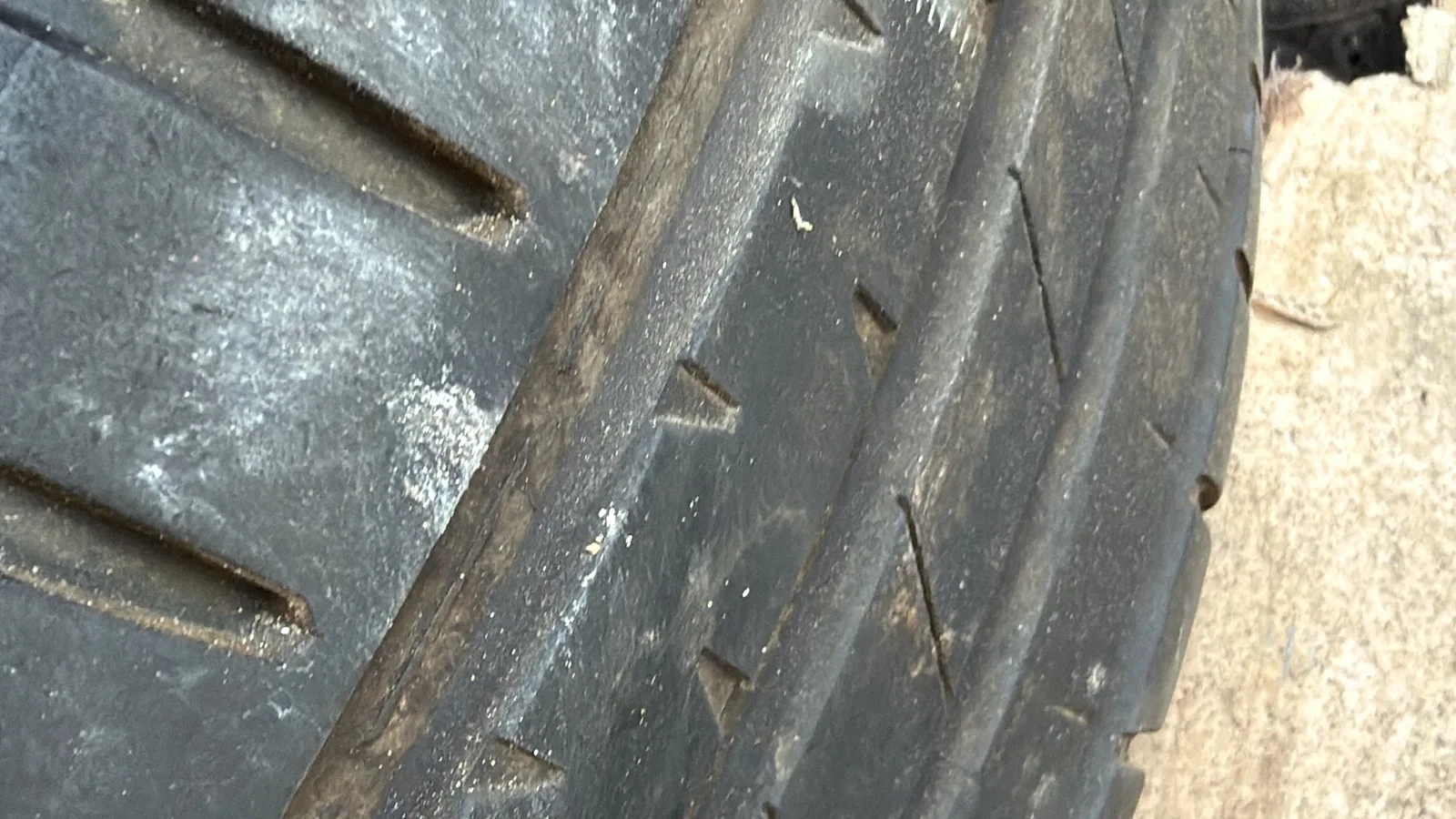
Age is the second story, and it is the one that causes the failures. A motorhome does low miles and stands fully laden through the winter, so the rubber hardens and cracks while the tread stays deep, and the first long, hot run of the year is when an old tyre lets go. Five to seven years is the limit whatever the tread looks like; the date code is four digits in a raised oval on the sidewall, week and year. Flat spots from standing, an under inflated inner rear on a twin wheel axle, and a sidewall crazed by a summer on a sunny pitch are the other things we look for. See cracked and perished tyres for what to look for yourself, and Tyron safety bands for keeping a burst front tyre on its rim.
The practical part is that the motorhome stays where it is. We jack it at the storage yard, on your drive or on a hard standing pitch, fit and balance the tyres on the van, set the pressures per axle with a calibrated gauge, read the date codes on the spare and torque the wheels. Four tyres or six, CP or commercial, coachbuilt, A class or campervan, and the same for a caravan on the next pitch. A fixed fitted price comes back from the size and the plate on WhatsApp before we set off, with no call out charge, and two or more tyres can be spread at 0% interest, subject to status. Call 0300 124 6981 any hour.
The size is on the sidewall of the tyre, or send us a photo of it. It lands with the fitter on shift. No call-out charge, and the fitting is already in the price.
You are through to YourNewTyres. What size are the tyres?
The size is printed on the sidewall, like 205/55 R16. Send that and where you are, and I will come back with a fitted price and the next slot.
A photo of the sidewall does the job if you would rather not type it out.
Opens WhatsApp with your message ready to send
Three ways it usually happens, and what actually needs to happen next.
You have pulled onto the M62 hard shoulder with a shredded tyre, no spare and a phone at 9 per cent. The recovery truck wants two hours. We come to the car with the tyre on the van.
You come out to the drive and one tyre is flat to the rim. The garage opens at half eight and cannot look at it until Thursday. We fit it on the drive before the school gates open.
A work van with a nail in a rear tyre is a day of jobs cancelled. We come to the yard or the site, before the first job if you send the size tonight.
Take these off the plate and the sidewall and the right tyre chooses itself.
The plate inside the door gives a maximum for each axle. Halve the rear figure for a single wheel axle and the tyre must carry at least that, with something in hand. A weighbridge ticket tells you what you actually run at.
CP camping tyres are built for sustained heavy load at high pressure and long spells parked laden. Heavy coachbuilts and A class vehicles need them; lighter conversions are often fine on a commercial tyre. See the van tyres guide.
The number and letter after the size. Motorhome indexes run from about 110 to 121, and twin wheel fitments carry a second, lower figure per tyre. The speed rating must exceed the vehicle's maximum. See the table.
Four digits in a raised oval, week then year. Five to seven years is the limit for a motorhome tyre regardless of tread, and the spare counts. We read every code on every visit and send them to you.
Set from the axle weight and the tyre maker's table, not the sidewall maximum and not the base van sticker. Front and rear usually differ, the rear is usually high, and the inner rear on a twin is the one that gets forgotten.
Flat spots that stay after a run, crazing in the sidewall from the sun, and a tyre that has sat under inflated all winter. All three are found while the wheel is off and all three argue for the age limit.
Most of these are passed on at the yard, and most of them end with a tyre on the hard shoulder.
They are a construction standard for sustained heavy load at high pressure and long spells parked laden. On a heavy coachbuilt they are the correct tyre; on a light conversion they may be unnecessary. It depends on the plate.
That figure is the maximum the tyre will take, not the running pressure. The right figure comes from the actual axle weight and the tyre maker's table, and the rear is usually different from the front.
Motorhome tyres almost never wear out. They age out at five to seven years with the tread barely touched, and the failure is a burst on the first hot run of the year, not a worn tyre in an inspection.
Often it is the pressure for the base van before it was converted and loaded. A coachbuilt on the same chassis weighs far more at the rear than the van the sticker was written for.
The other tyres are the same age and will fail for the same reason. An axle is replaced as a pair, a twin pair matched to each other, and a set of the same age goes together.
It does not. The tyre machine and the balancer come on the van, with jacking equipment for the weight, and the motorhome is done on its hard standing at the yard or on your drive.
Around two hours for four tyres at the storage yard or your drive, longer for six.
WhatsApp the tyre size from the sidewall, a photo of the plate inside the door and where the motorhome is kept. A fixed fitted price comes back with CP or commercial options.
The van arrives with the tyres, the machine, the balancer and the jacking gear for the weight. Firm level ground is all we need, plus the locking wheel nut key.
Each wheel comes off in turn, the new tyre goes on with a fresh valve and is balanced on the van. Twin rears are matched as pairs, inner valves checked.
Front and rear set to the axle weight figures with a calibrated gauge, wheels torqued by hand, the spare read and the date codes and pressures written down for you.
 Spread the cost of your tyres
Two or more motorhome tyres can be spread at 0% interest, subject to status, with the same fitted price either way.
A motorhome is a heavy vehicle that spends most of its life parked and the rest of it fully loaded on a motorway. That combination is unlike anything a car tyre is designed for, and it is why the CP marking exists. What follows is what the plate tells you, what the sidewall tells you, and why the pressure figure is the one most owners get wrong.
The plate inside the cab door gives the maximum for the vehicle and for each axle, and the rear axle figure is the one that matters, because that is where the water, the garage and the passengers sit. Halve it for a single wheel axle and the tyre load index has to cover that with a margin. Most owners have never weighed the vehicle laden, and many are surprised at the weighbridge. If you run near the limit, a CP tyre built for sustained heavy load is the right tyre and the pressure needs to reflect the real weight.
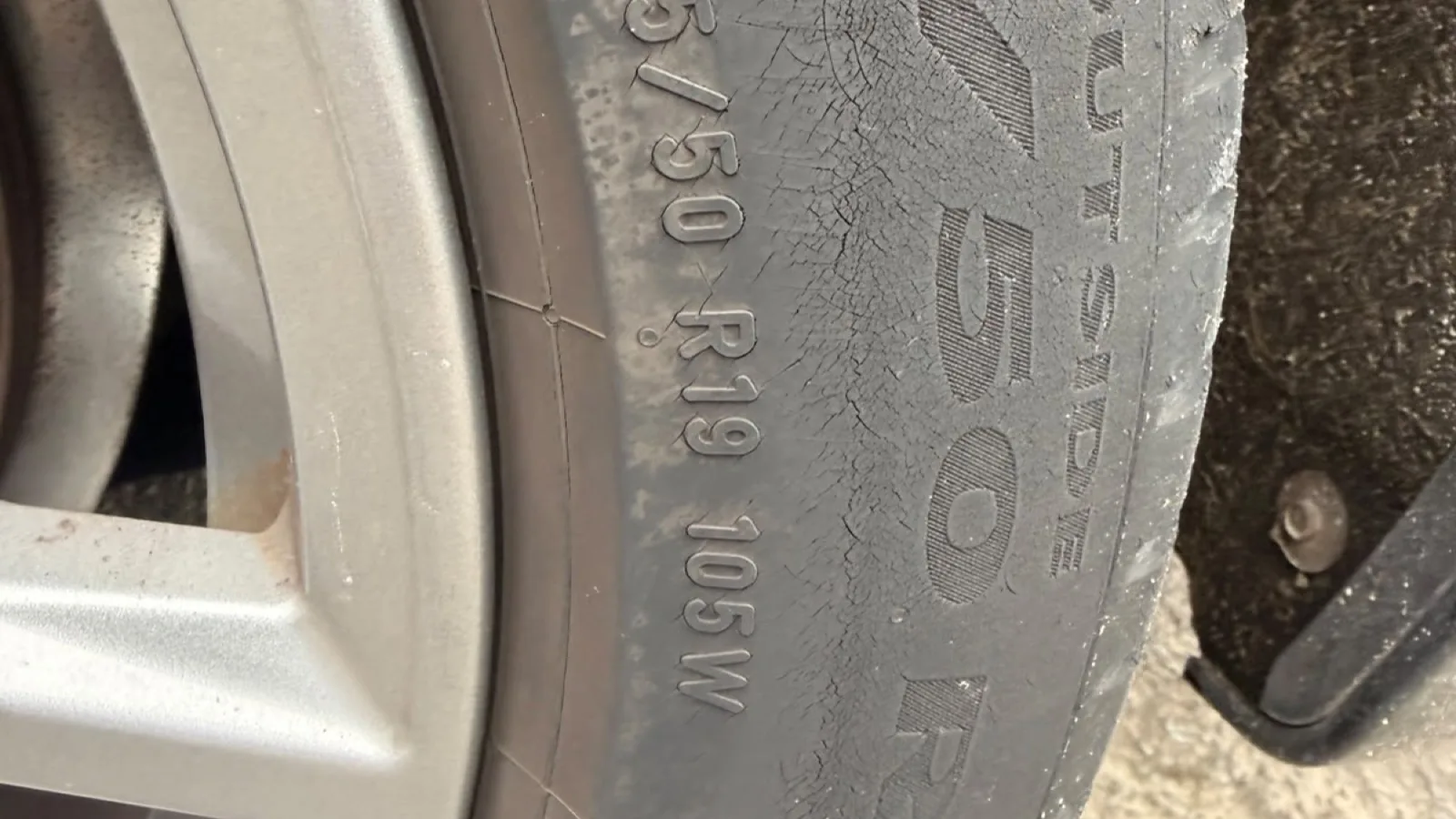
The size, the load index and the speed rating are moulded into every tyre, and a camping tyre carries CP after them. The index maps to a weight on a table, so 116 is 1,250kg per tyre, and a twin wheel fitment shows a second, lower figure for each tyre in the pair. The CP marking means the casing is built for the high pressures and long parked spells a motorhome imposes. We read all of it with the date code on every visit and send it to you, so the quote is for the tyre the vehicle needs, not the one that happens to be on it.
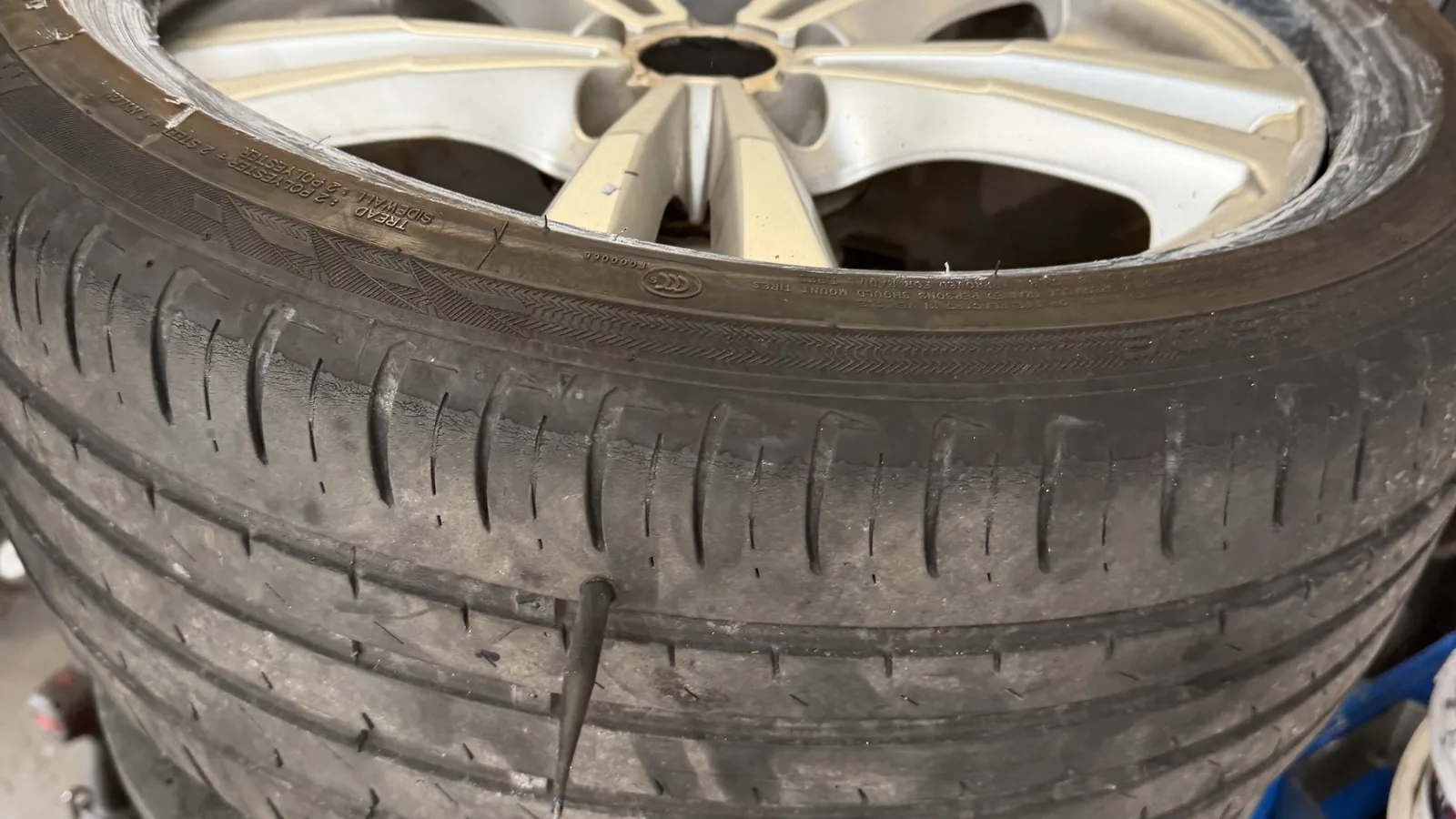
The sticker in the door is often for the base van before it was converted, and the sidewall figure is a maximum, so neither is the running pressure. The right number comes from the laden axle weight and the tyre maker's table, is usually different front and rear, and on a laden coachbuilt the rear is high. We set each axle with a calibrated gauge when we fit, check the inner rear valves on a twin, and write the figures down for you. A sensor set on the dash is the only way to watch them on the move.
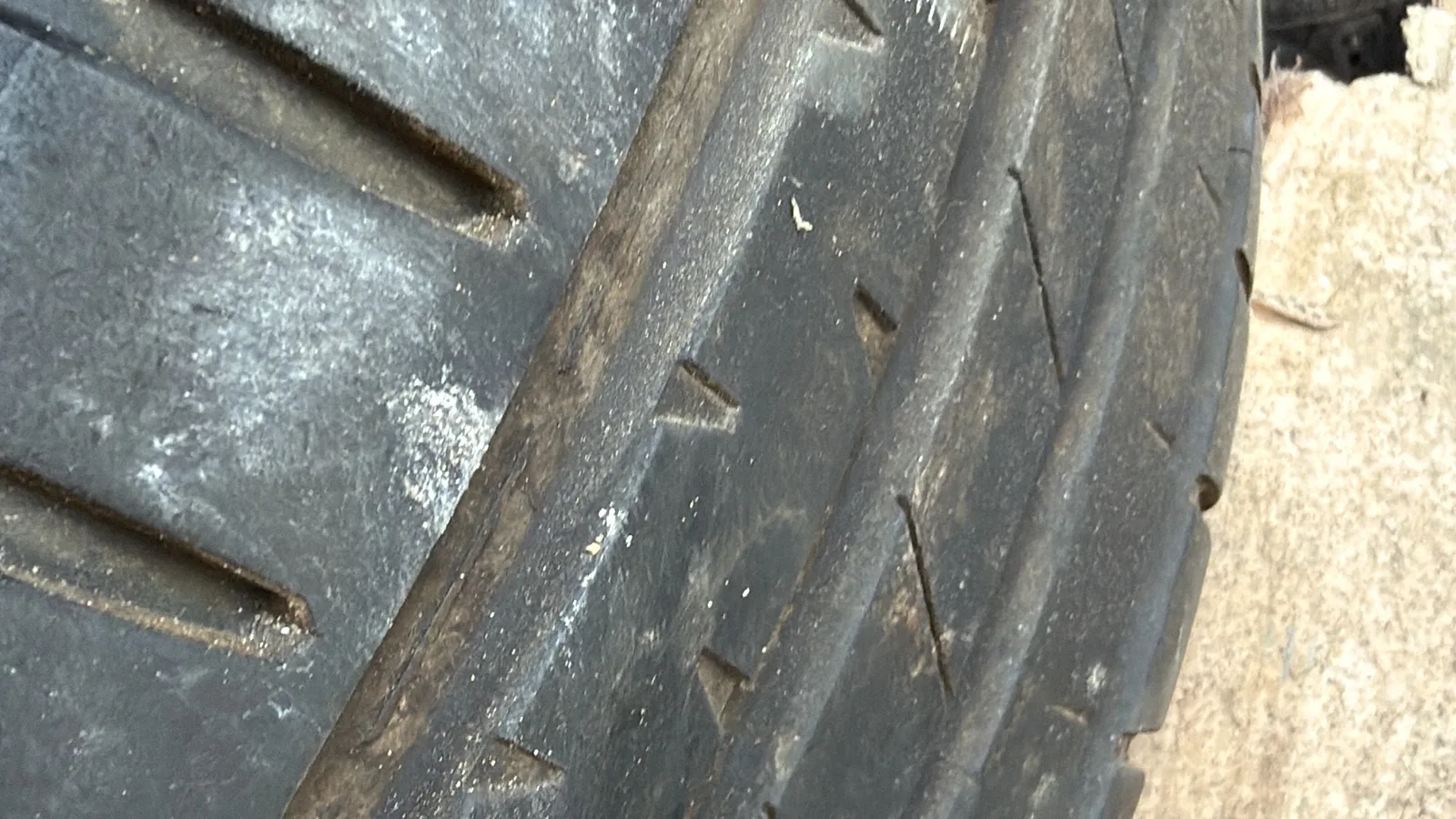
The guides that answer the question behind the question.
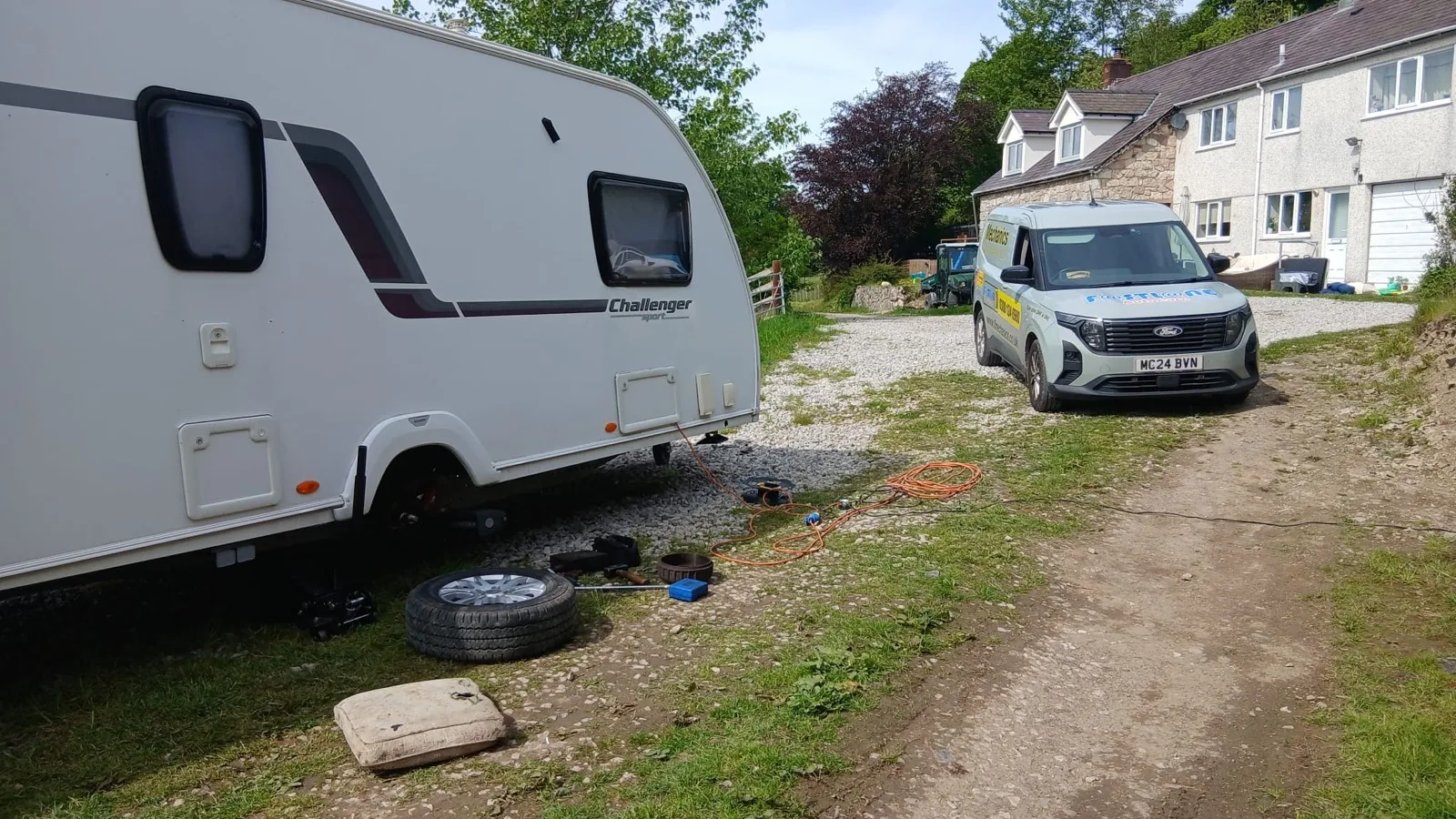 Caravan and motorhome tyresOne guide for every leisure vehicle, plate weights to pressures.Read the guide →
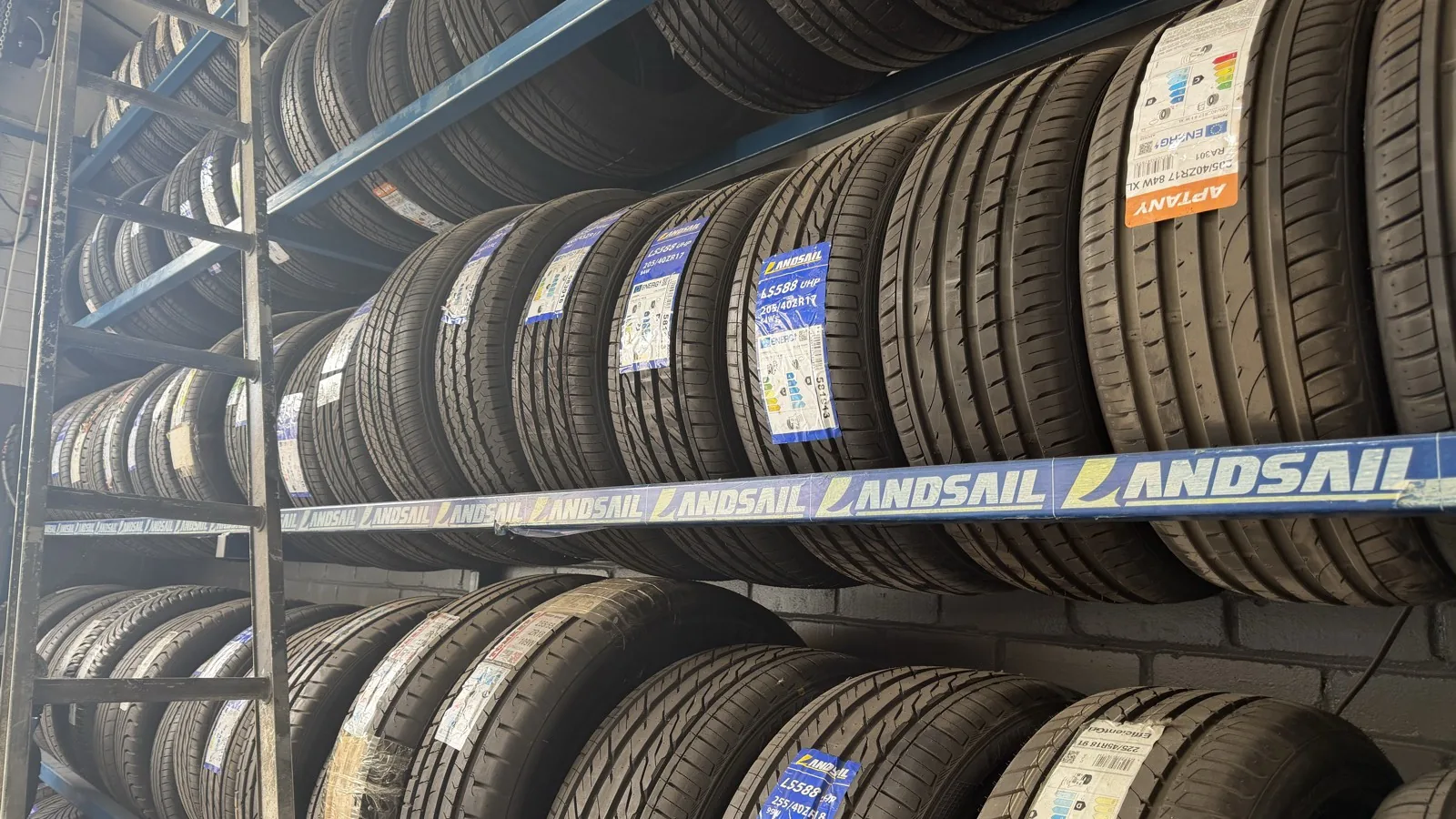 The van tyres guideLoad ratings and the commercial sizes most motorhomes sit on.Read the guide →
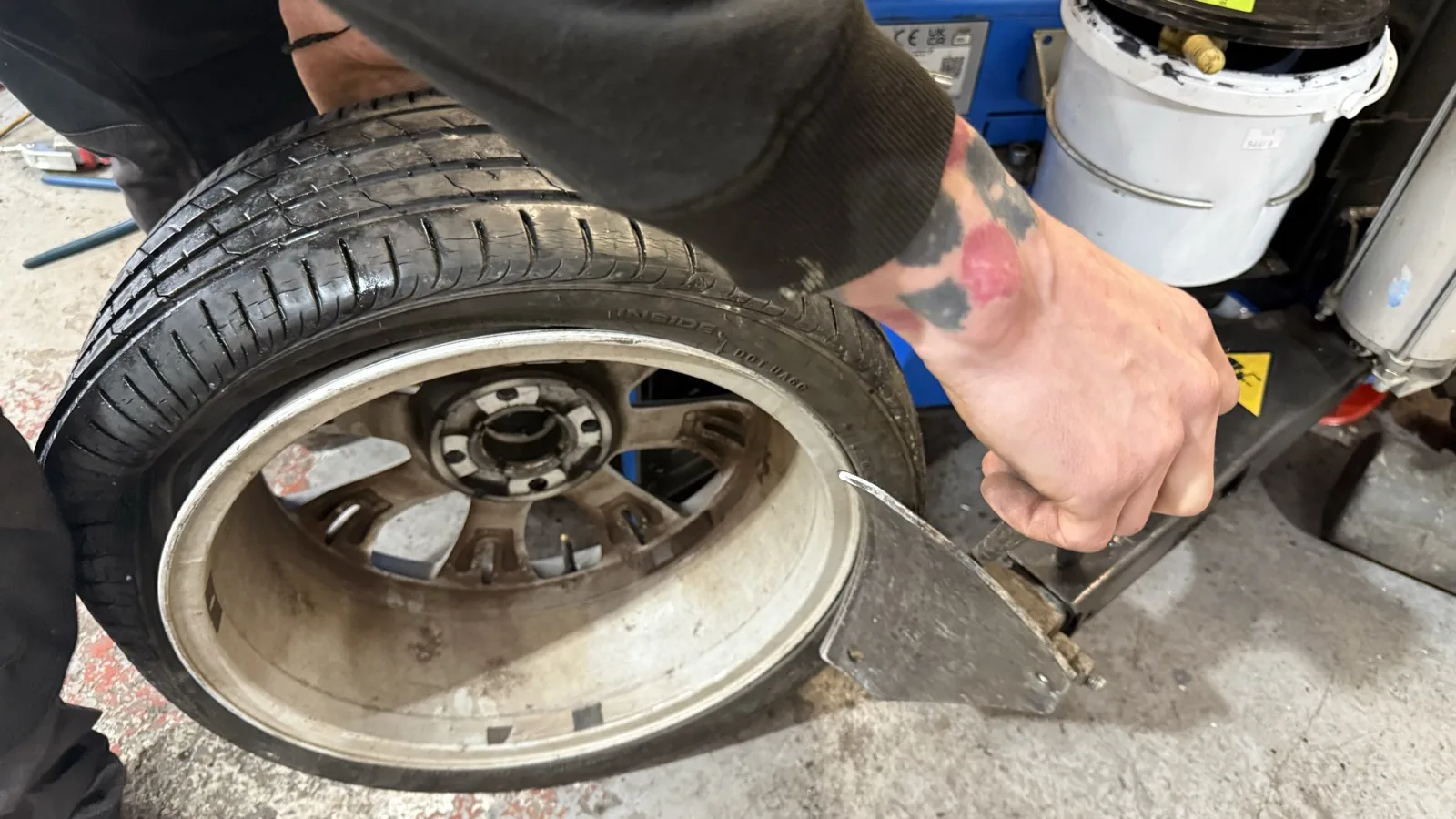 Tyron safety bandsKeeping a burst front tyre on the rim of a three tonne motorhome.Read the guide →
 Cracked and perished tyresThe crazing that means a motorhome tyre is finished.Read the guide →
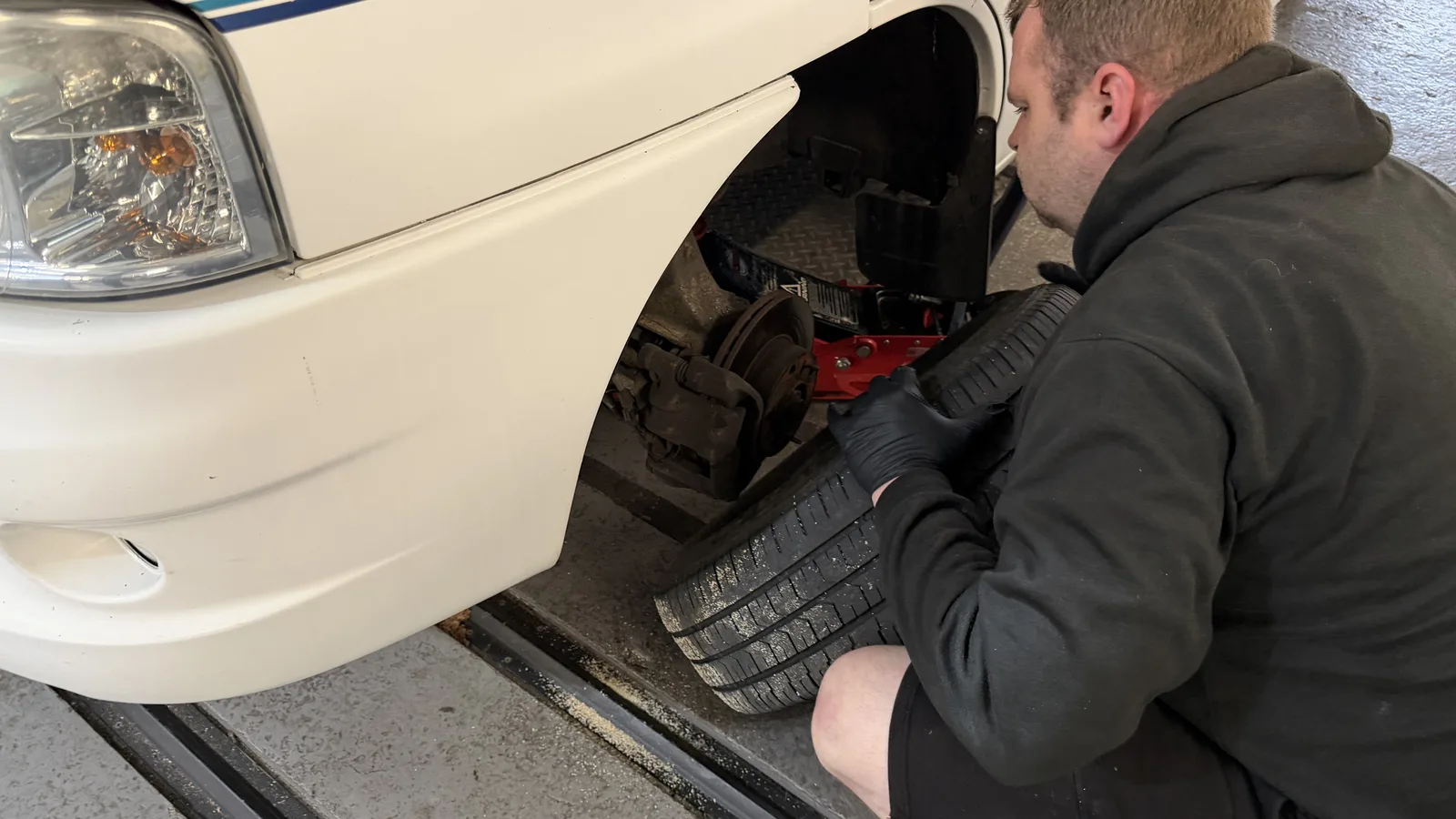 TPMS sensorsA pressure warning for six wheels, on the dashboard where you can see it.Read the guide →
 Tyre blowout on the motorwayThe first ten seconds after a front tyre lets go.Read the guide →
4.4★★★★★average rating on Google
Got us out of an unfortunate place of a Luton van blowout, super quick helpful and fairly priced!
Stranded in a car park with no spare! Called and they came within the hour, changed the tyre and was on my way 20 minutes later. Great service, delighted they made it so easy.
Brilliant service, same day, quick and easy. Was really rushed for time and they moved things around to ensure they got to me to get it fixed. Would defo recommend
Send the tyre size, a photo of the plate and where the motorhome is kept on WhatsApp. A fixed fitted price for the right CP or commercial tyre comes back, we fit at the storage yard, your drive or the campsite, set the pressures per axle, read the date codes on the spare and take the old tyres away. No call out charge, 24 hours a day.
Every hour you leave a flat tyre on a car is an hour you cannot use it. The van is on shift now, send the size.
What motorhome and campervan owners actually ask us at the yard.
CP is a marking on tyres designed specifically for motorhomes. A CP tyre has a reinforced casing built to carry the sustained heavy axle loads of a motorhome at the higher pressures those loads need, and to cope with long periods parked fully laden. It is the correct fitment for most coachbuilt and A class motorhomes.
The difference from an ordinary van tyre is the load it is built to carry at the rear at high pressure for hours at motorway speed. A motorhome rear axle is often near its plated limit with the water tank full and the garage loaded, and a CP tyre's casing and bead are designed for exactly that, whereas a commercial van tyre is designed for a load that goes up and down through the day.
Not every camper needs one. A panel van conversion on a light chassis is often fine on a good commercial tyre with the right load index, and we will say so rather than sell a CP tyre where it adds nothing. Tell us the base vehicle and the plate weights and we will recommend the right one. See the van tyres guide for how commercial tyres are rated.
On age, not on tread. Most motorhome tyres are finished at five to seven years old with plenty of tread left, because a motorhome does low miles and stands fully laden for months, which hardens and cracks the rubber long before it wears. Read the date code on the sidewall, and if the tyres are into that window, plan the set before the next long trip rather than after it.
A motorhome makes the ageing worse than a car does. It is heavy, so the tyres stand under a full load all winter; it is tall, so the sidewalls get the sun; and it is driven hard when it is driven, a fully loaded run down the M6 to the ferry after eight months on a pitch. That first long run of the year on old rubber is when motorhome tyres fail.
Look for the four digit date code in a raised oval on the sidewall, week and year. We read every code on every motorhome we visit, including the spare, and send them to you with the quote. See cracked and perished tyres for what an aged sidewall looks like, and when to replace tyres for the rest of the signs.
Yes. Panel van conversions, pop tops, coachbuilts on a van chassis, A class motorhomes and the small campers built on car derived vans are all fitted the same way, at your home, the storage yard or the campsite. The base vehicle decides the wheel size and the plate decides the load index; tell us both and we will recommend a commercial or CP tyre to suit.
A campervan on a light panel van base usually runs a commercial van tyre in a size the van carries, and many of those sizes are on the fitting van already, so a same day fitting is realistic. Heavier coachbuilts on a 3,500kg or 4,250kg plate move up to CP tyres or high load commercial sizes which we order for a booked visit.
If you are not sure what the base vehicle is, a photo of the sidewall and the plate inside the door tells us everything. See van tyres for the commercial fitments, and tyre sizes for where to find the size on the tyre.
Motorhome pressures depend on the actual weight on each axle, and they are set from the converter's handbook, the tyre maker's load and pressure table or a weighbridge ticket, not from the sidewall. Rear pressures on a laden coachbuilt are often far higher than a car's, and the front and rear figures usually differ. We set them per axle when we fit and give you the numbers.
Guessing is the common fault. The sidewall figure is the maximum the tyre will take, not the running pressure; the sticker in the door may be for the base van before it was converted; and the right figure changes with how the motorhome is loaded. The honest way to get it is to weigh each axle laden at a public weighbridge and read the figure from the tyre maker's table.
Too low and the tyre flexes and overheats under three tonnes; too high and the ride is harsh and the centre of the tread wears. A TPMS sensor set with a display on the dash shows all six or four wheels while you drive, which matters on a vehicle where a rear tyre can go soft without any feel through the steering. See tyre pressure in cold weather for why a winter in storage drops them.
Yes. The motorhome does not need to move. The van carries the tyre machine, the balancer and the compressor, so we jack the motorhome where it stands, at a storage yard, on your drive or on a pitch, fit and balance the tyres, set the pressures per axle and torque the wheels. Most of the motorhome sets we fit are done at storage sites in spring.
A motorhome is heavy, so we need firm, level ground to jack it safely and enough room on each side to work. Most yards and hard standings are fine; a soft grass pitch after rain is not, and we will say so. Tell us the site's access arrangements, whether the wheels have locking nuts and whether the vehicle has twin rear wheels when you book.
While the wheels are off we read the date codes on the spare and check the sidewalls for cracking. Call 0300 124 6981 with the site name and we will give you a day and a time. See where we cover across the North West and North Wales, including the sites along the North Wales coast.
It depends on the size, the load rating, whether the vehicle needs a CP tyre or a commercial one, and the make, so there is no single figure. We give you a fixed fitted price for your motorhome from the size on the sidewall and the plate, before we set off. Fitting, balancing, new valves, pressures set per axle and disposal are all inside it, with no call out charge.
Motorhome tyres cost more than car tyres because there is more of them: a 16 inch CP tyre carries a heavier casing and a higher load index than anything on a family car, and a coachbuilt needs four or six of them. That is the honest reason for the price, and it is also why we quote budget, mid range and premium options side by side rather than one figure.
On two or more tyres the fitted price can be spread at 0% interest, subject to status, which most owners use for a set replaced on age before the season. See pay monthly tyres, and tyre prices in 2026 for the general picture this year.
Sometimes. A commercial van tyre with a load index that covers the plated axle weight, and a speed rating above the vehicle's maximum, is legal and often perfectly suitable on a lighter motorhome or a panel van conversion. On a heavy coachbuilt or an A class running near its rear axle limit, a CP tyre is the right choice because it is designed for that sustained load at high pressure.
The decision is made from the plate. Take the rear axle limit, halve it for a single wheel axle, and any tyre whose load index covers that with a margin is a candidate; then ask whether the vehicle spends its life near that limit. A converter's recommendation, where there is one, settles it, and we follow the maker's position where it exists.
What we will not do is fit a van tyre with a lower load index because it is cheaper, or mix a CP tyre on one side with a commercial tyre on the other. See speed rating and load index for the table, and mixing tyres for why an axle is always matched.
Usually a nuisance rather than a danger, but it is a warning. A tyre that has stood fully laden on one spot for months takes a set, felt as a thump at low speed for the first few miles until the rubber warms and rounds out. If the vibration does not go after a run, the set has stayed in and the tyre is stiff enough to replace.
Flat spotting is worse on an old tyre, a heavy motorhome and a tyre that was under inflated when it was parked, because all three let the tyre deform more. It is one of the reasons for a five to seven year age limit and for inflating the tyres to the top of the range before laying the vehicle up for winter.
Moving the motorhome a few feet every month, or jacking it onto axle stands over winter, avoids it altogether. We check for a set by spinning each wheel on the balancer when we fit, so a flat spot that has become permanent is found before the first trip. See how to store tyres for the winter routine.
Enough to cover the heaviest plated axle, with a margin, which for most coachbuilts means the rear. The plate inside the door gives a maximum for each axle; halve the figure for a single wheel axle and the load index on the tyre must map to at least that many kilograms. Motorhome fitments are commonly in the 110 to 121 range, far above anything a car carries.
The load index is the number after the size on the sidewall and it maps to a weight on a table: 112 is 1,120kg, 116 is 1,250kg, 121 is 1,450kg. Twin rear wheel motorhomes use a second, lower figure for each tyre in the pair, and some sizes carry both figures on the sidewall.
A motorhome that is overloaded, and many are once the tanks are full and the garage is packed, runs its tyres beyond their index without the owner knowing. A weighbridge ticket is the only way to be sure. See speed rating and load index for the full table, and send a photo of the plate on WhatsApp and we will read it for you.
Yes. A class motorhomes, tag axle coachbuilts and vehicles with twin rear wheels are fitted in the same way, with the right load index for a twinned fitment, and the van carries jacking equipment for the weight. Six tyres take longer than four and the rear pairs must be matched to each other, so tell us the layout when you book and we allow the time.
Twin rear wheels bring one rule of their own: the two tyres in a pair must be the same make, size and tread depth, because a taller tyre in the pair carries more than its share and overheats. We fit twins as pairs and, where only one has failed, we tell you honestly whether the partner is close enough to keep.
Inner rear valves on a twin are hard to reach and often the reason a rear pair is under inflated; we fit valve extensions where they are missing and check both. See TPMS sensors for a sensor set that reads all six wheels, and the van tyres guide for the commercial sizes involved.
For a motorhome used through the year in the UK, an all season CP or commercial tyre in the right load index is a sensible choice, because it keeps grip on a cold wet campsite exit and a frosty A road without a second set of wheels. Winter tyres proper make sense for the Alps in January; for most owners all season is the practical answer.
The snowflake symbol on the sidewall is the thing to look for; an M+S marking on its own is a mud and snow tread pattern with no cold weather test behind it. Several tyre makers now offer camping rated all season tyres in the common motorhome sizes, and they carry the same load index as the summer version.
A motorhome on summer tyres pulling off a wet grass pitch in October is where most owners first wish they had thought about it. See all season tyres and do you need winter tyres in the UK for the trade offs, and tell us how you use the vehicle when you ask for a price.
Yes. Two or more motorhome tyres can be spread at 0% interest, subject to status, and a motorhome set is exactly the kind of purchase the plan is for: four or six large, load rated tyres replaced together on age, often in the same month as the habitation service. The application takes minutes on your phone and the fitted price is the same as paying on the day.
The fitted price you spread includes the fitting at the storage yard or your drive, balancing, new valves, pressures set per axle and disposal of the old tyres, with no call out charge.
A decision comes back to your phone while the van is being loaded, so the plan does not slow the visit down. See pay monthly tyres for how it works in full, or call 0300 124 6981 to talk it through before you send the size.
Yes, and the case is stronger on a motorhome than on almost anything else, because a front tyre failure on three tonnes affects the steering directly. A Tyron band fills the wheel well so a deflated tyre stays locked on the rim, so the vehicle keeps steering and braking through the tyre while you slow down instead of running on a steel rim edge that takes it wherever it points.
Fitting them with a new set of tyres is the cheap time to do it, because the tyres are off the rims anyway and the motorhome is jacked once. Bands are fitted once for the life of the wheel, move from tyre to tyre, have no moving parts and do not affect balance. Wheels with pressure sensors take a bracket and a band one size down.
Together with a five to seven year age rule and a sensor set on the dash, bands cover the three ways a motorhome tyre lets go. See Tyron safety bands for the fitting and the per wheel pricing, and tyre blowout on the motorway for what the first ten seconds feel like.
Anywhere across the North West and North Wales, which is more than 2,700 areas, and the tyres come to the motorhome rather than the other way round. Storage yards around Warrington, Wigan, Preston and Chester, drives across Greater Manchester and Liverpool, and the coastal sites along the A55 are all routine for us, fitted where the vehicle stands with no call out charge.
Response time depends on distance and on whether your size is on the van. Common panel van sizes can often be done the same day; CP tyres in the larger sizes are ordered for a booked visit and we tell you the day and the price before anything is committed. Around 32 minutes on average to reach a vehicle in our core area.
The nearest town pages are Preston, Chester, Manchester and St Helens, and the full list is on where we cover. Send the postcode of the storage yard and you get a real time back.
As a set where the tyres are the same age, which on a motorhome they nearly always are, because they age out together rather than wearing at different rates. At the least, an axle is replaced as a pair so both tyres are the same make, size, load index and age, and on a twin rear wheel vehicle the pair on each side must match each other too.
Replacing a single tyre on a motorhome only makes sense when road damage has taken one out of a set fitted recently. Otherwise you are paying for a second visit within months to do its partner, and running a new tyre next to an aged one on the axle that carries most of the weight in the meantime.
A set also lets you spread the cost, because pay monthly applies to two or more tyres. See replace all four tyres or two for the general rule, and caravan and motorhome tyres for the rest of the leisure vehicle checklist.