Welcome to

Mobile tyre fitting · North West & North Wales · We fit around you

Approved by the AA and RAC. No call-out charge. Around 32 minutes on average, 24 hours a day.
info@yournewtyres.co.ukTell us your name and tyre size — we will reply on WhatsApp with a price and an ETA.
To change a tyre, stop on flat, firm ground well away from traffic, put the handbrake on and the hazards on. Loosen the wheel nuts, jack the car at its jacking point, swap the flat for the spare, then lower the car and tighten the nuts in a star pattern. Never try it on a motorway hard shoulder.
The eight steps:
No spare at all? Many cars only carry a sealant kit. Flat tyre, no spare covers that.
Most of the risk is not the wheel. It is the traffic and the jack. Never put any part of your body under a car held up only by the jack. Flat tyre, what to do covers the first five minutes after a tyre goes.
Rather not? Message your location to 07943 185471 or call 0300 124 6981. We come out 24 hours a day and fit a proper new tyre, or repair the old one if it can be saved, right where the car is.
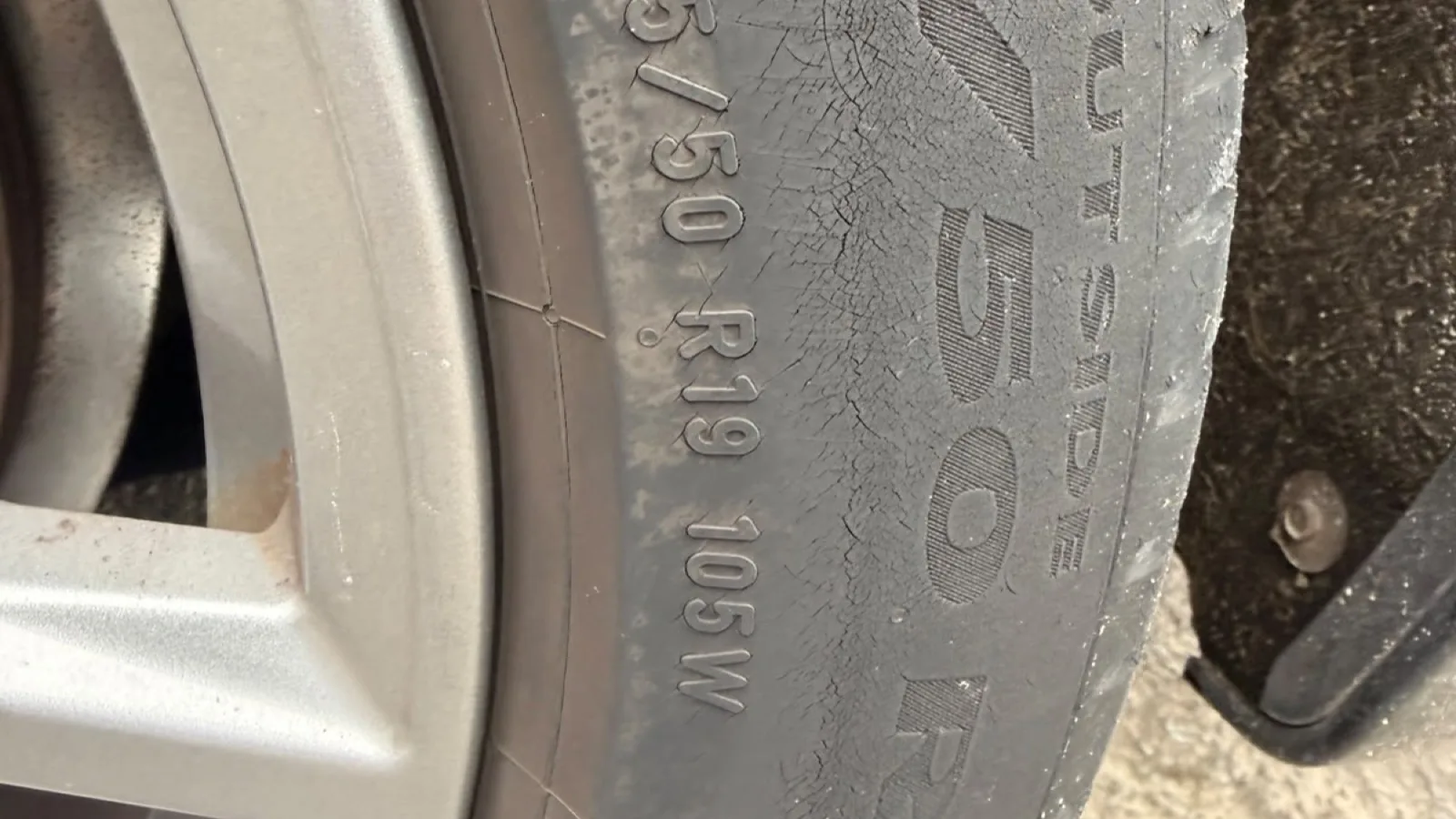
The size is on the sidewall of the tyre, or send us a photo of it. It lands with the fitter on shift. No call-out charge, and the fitting is already in the price.
You are through to YourNewTyres. What size are the tyres?
The size is printed on the sidewall, like 205/55 R16. Send that and where you are, and I will come back with a fitted price and the next slot.
A photo of the sidewall does the job if you would rather not type it out.
Opens WhatsApp with your message ready to send
Covered here: where is it safe to change a tyre; what tools do you need to change a tyre; how fast can you drive on a space saver spare; can you change a tyre on the rim yourself at home; when should you call a fitter instead of changing it yourself.
Only somewhere flat, firm and well away from moving traffic. A car park, a quiet side street, a wide lay by or your own drive. The jack needs level, solid ground. Soft verges, gravel and slopes let the car shift or fall.
Never change a wheel on a motorway hard shoulder. The Highway Code says do not try even simple repairs there. Get everyone out on the side away from traffic, go behind the barrier and call for help. The same goes for a fast A road with no safe place to stop, or a spot on a bend where drivers cannot see you.
If the tyre goes on a busy road, it is fine to drive slowly to a safe place, even if it ruins the tyre. A new tyre is cheap next to a crash. On a smart motorway, aim for an emergency area. Tyre blowout on the motorway covers what to do at speed.
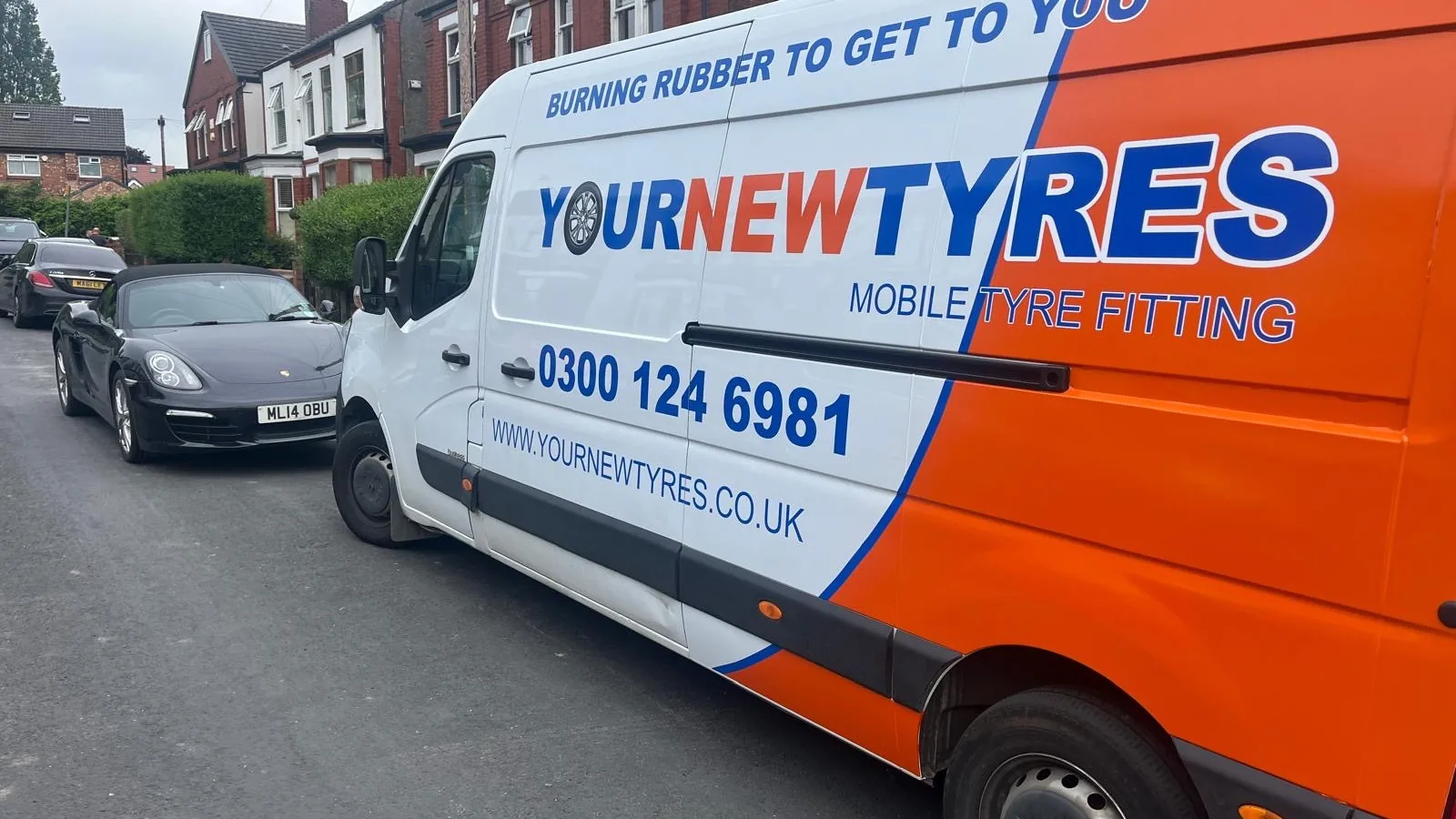
Four things, and all four must be in the car. A spare wheel. A jack. A wheel brace to undo the nuts. And, on most cars, the locking wheel nut key. Without that key, one nut on each wheel will not come off.
Find out what you have before you need it. Lift the boot floor and look. Many newer cars have no spare at all, just a sealant kit and a pump. A sealant kit can get you home on a small tread puncture, but it cannot fix a cut or a sidewall hole. Some cars have run flat tyres and no spare, because the tyre is built to carry the car for a short distance.
A torch, gloves, a mat to kneel on and a hi vis vest make the job far easier at night. Check that the spare holds air a couple of times a year. A flat spare is no help. Lost locking wheel nut key covers the most common missing piece.

Most space savers are limited to 50mph. The exact limit is printed on the wheel or a sticker, and it is in the handbook. Stick to it.
A space saver is a thin, light wheel built to get you home or to a fitter, not to live on the car. It grips less, brakes less well and can make the car feel odd in bends. Some makers also give a distance limit. Many suggest no more than 50 miles or so, but it varies by car.
Drive gently, leave extra room and avoid long motorway trips. Get the proper tyre fixed or replaced as soon as you can. If the flat tyre only has a small hole in the central tread, it may be repairable. We repair to BS AU 159 for £39.95 when it is. Spare vs run flat vs sealant compares the three setups.
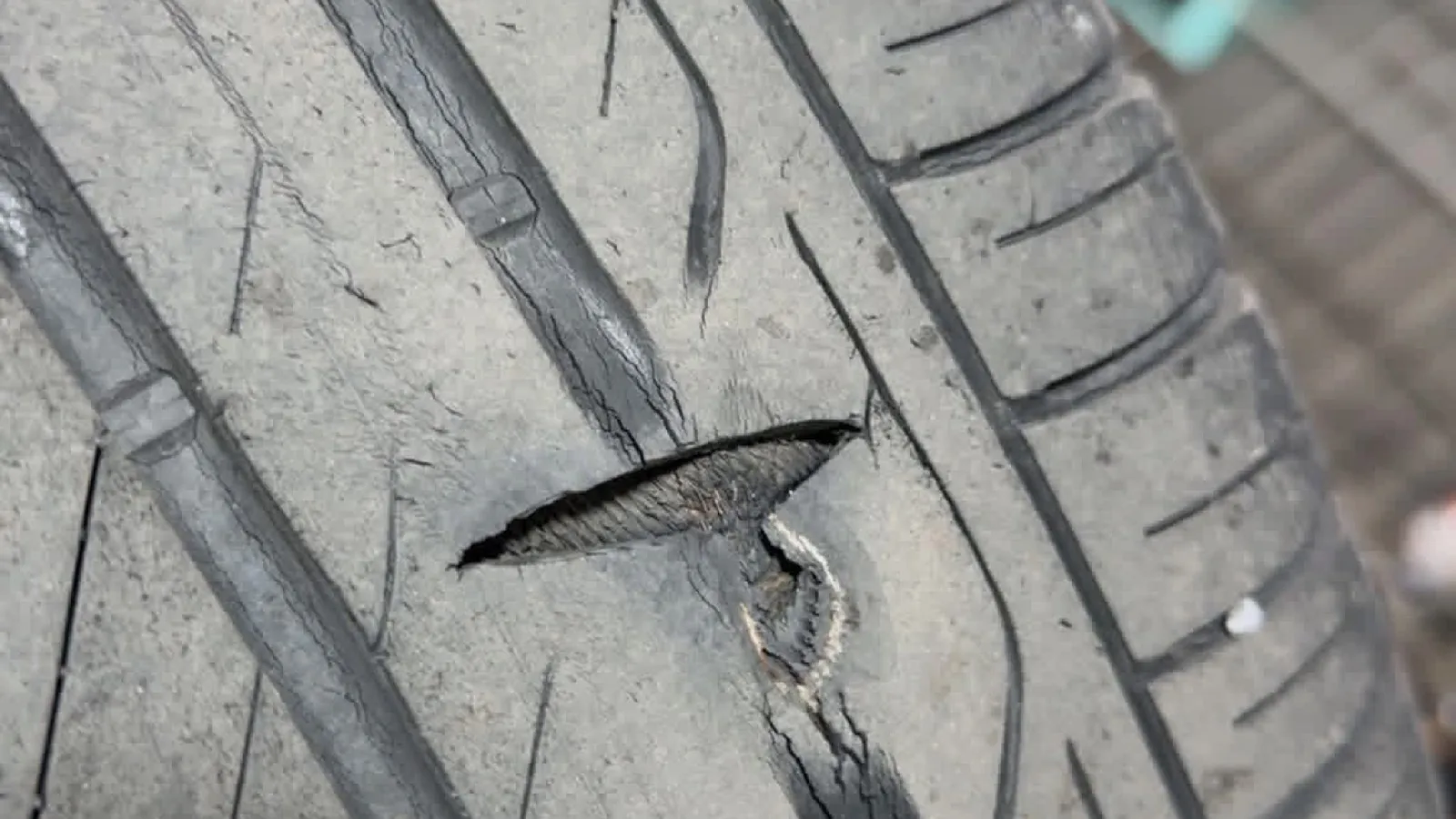
Swapping a wheel for the spare, yes. Taking a tyre off the rim and fitting a new one, not really. Not safely.
A tyre is locked onto the rim by a tight bead. Getting it off and on needs a tyre machine, and tyre levers risk bending the bead or scratching the wheel. Then the new tyre has to be balanced on a proper balancer, or the car shakes at speed. It also needs a new valve, the right pressure and the nuts torqued to the right figure. That is why people who say change a tyre usually mean change a wheel.
This is the part we do at your door. The van carries a tyre machine and a balancer, so the job is done on your drive, not in a garage. Can you fit tyres at home explains how, and wheel balancing shows why it matters.
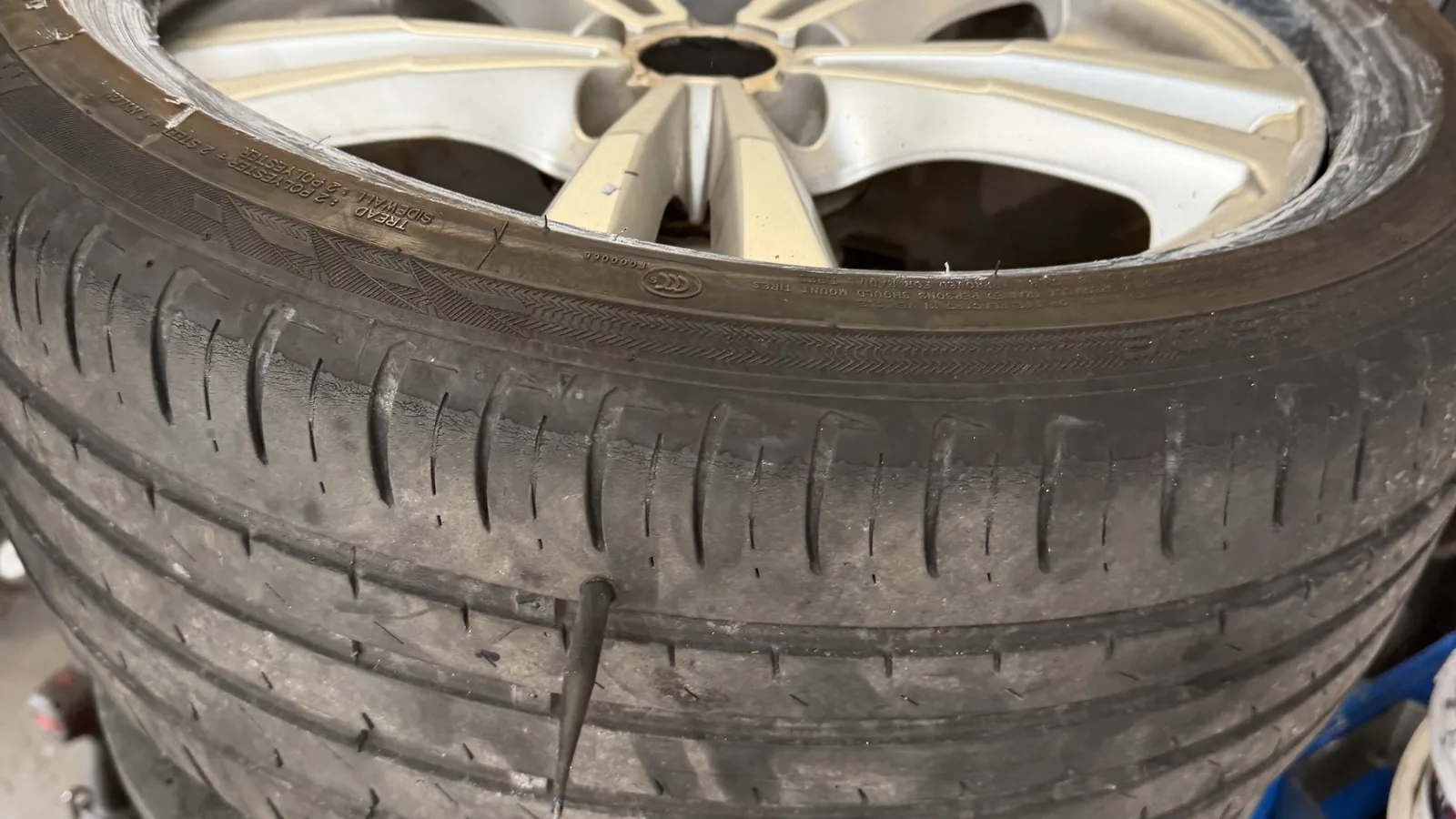
Call instead of doing it yourself when the spot is unsafe, when the kit is missing, or when the job is bigger than a wheel swap.
That means a hard shoulder or a fast road with no safe place to stop. A missing or broken locking nut key. Nuts that will not move even with your weight on the brace, which often means they are seized. A blowout that has damaged the wheel. No spare, or a spare that is flat too. A heavy car or van that the little jack was never meant for. And any time you just do not feel sure.
There is no prize for doing it yourself. We come out 24 hours a day, across the North West and North Wales. Emergency mobile tyre fitting explains how a callout works, and seized locking wheel nuts covers the stubborn ones.

The questions that usually come next.
 Tyre guidesRead the full guide.Read the guide →
 Flat tyre: what to doThe first ten minutes, step by step.Read the guide →
 Flat tyre and no spareWhat actually gets you moving again.Read the guide →
 Spare, run flat or sealant?Three ways a car copes with a flat.Read the guide →
 Lost your locking nut key?What to do before a tyre change.Read the guide →
 Emergency tyre fittingStuck now? A fitter on shift, day or night.Read the guide →
Every one of these puts someone in hospital each year.
The car can roll off the jack. Flat, firm ground only.
Crack the nuts with the wheel on the ground, or the wheel just spins.
Lift anywhere else and you can dent the floor or drop the car.
A jack is not a stand. Keep hands, knees and feet clear.
Go in a star pattern so the wheel sits flat on the hub.
Check the nuts again after a short drive. They can settle.
What happens after you message, wherever the car is parked.
Send your location, the registration and a photo of the tyre on WhatsApp. On a fast road, get behind the barrier first, then message us.
We send back a fitted price and a time. No call out charge is added on top, because the fitting is priced into the tyre itself.
We repair it to BS AU 159 if the hole is in the repairable area, or fit a new tyre from the van, balanced before we leave.
Nuts torqued by hand, pressure set, and your spare put back in the boot. You pay by a secure payment link sent to your phone.
4.4★★★★★average rating on Google
Stranded in a car park with no spare! Called and they came within the hour, changed the tyre and was on my way 20 minutes later. Great service, delighted they made it so easy.
Brilliant service, same day, quick and easy. Was really rushed for time and they moved things around to ensure they got to me to get it fixed. Would defo recommend
Got us out of an unfortunate place of a Luton van blowout, super quick helpful and fairly priced!
Send your location and the registration. We send back a price and a time, and come to you at home, work or the roadside, 24 hours a day.
Every hour you leave a flat tyre on a car is an hour you cannot use it. The van is on shift now, send the size.
What drivers ask when they are stood next to a flat.
Stop on flat, firm ground away from traffic, put the handbrake and hazards on, and block the opposite wheel. Loosen the nuts half a turn, jack the car at its jacking point, remove the nuts and the flat, fit the spare, then lower the car and tighten the nuts in a star pattern.
Take your time with the first part. Getting safe matters more than getting quick. Get everyone out and well away from the road before you touch the car. At night, turn on the hazards and use a torch. Find the jacking points in the handbook, because they differ from car to car. Flat tyre, what to do covers the very first steps after a tyre goes. Read it once now, so you are not reading it in the rain.
After the swap, check the spare's pressure and recheck the nuts after a short drive. Then get the flat looked at quickly. A space saver is only a short term fix. We can repair or replace the tyre at your home or work. Call 0300 124 6981 or message 07943 185471. Puncture repairs explains when a tyre can be saved.
Only if you are well away from moving traffic, on flat, firm ground, with space to work on the side of the car away from the road. Never change a wheel on a motorway hard shoulder or a fast road. Get behind the barrier and call for help instead.
Every year people are hurt changing wheels at the roadside, mostly by other vehicles, not by the car they are working on. A lay by with a wide margin or a side street is fine. A narrow verge on a busy A road is not. If in doubt, drive slowly to a safer spot, even on the flat, because a tyre costs far less than an injury. Tyre blowout on the motorway covers the motorway rules. The short version is simple: get out, get behind the barrier, and call.
We come out to roadside jobs 24 hours a day across the North West and North Wales. Tell us the road, the junction or a nearby landmark, and we come to you. Call 0300 124 6981. Emergency mobile tyre fitting explains the callout. You wait somewhere safe while we do the work, and the fitted price is agreed before we set off.
Yes. Loosen each nut about half a turn while the wheel is still on the ground, then jack the car up. With the tyre touching the road, the wheel cannot spin as you turn the brace. Once it is in the air, you can finish undoing them by hand.
Turn anticlockwise to loosen. If a nut is very tight, put the brace on so the handle points to the side, and push down with your foot, carefully. Do not jump on it. If it still will not move, the nut may be seized, and forcing it can round it off. Seized locking wheel nuts explains what to do next. A rounded nut is a much bigger job than a tight one, so stop before it gets that far.
The locking nut needs its key, which often lives in the glovebox or with the tool kit. No key, no way off. Lost locking wheel nut key covers the fix. Stuck? Call 0300 124 6981. We carry removal tools in the van and can usually get it off at the roadside. Then we fit the tyre and leave you with a nut that a normal key will undo.
Put the jack only on the jacking point shown in your car's handbook. On most cars it is a reinforced notch or pad on the sill, just behind the front wheel or just ahead of the rear wheel. Jacking anywhere else can dent the floor, crack a plastic panel or let the car slip.
Look for small arrows or notches on the sill below the doors. Some cars have a plastic cover that pops off. Make sure the jack head sits squarely in the right slot before you start winding. Raise it slowly and watch the car as it lifts. If it tilts or the jack leans, stop and lower it. Changing a tyre is a job for flat ground only, for this reason. A jack on a slope is how cars fall.
The jack that comes with the car is for emergencies. It is not a stand, so never put any part of your body under the car. On heavy cars, vans and SUVs, the little jack can struggle. Call 0300 124 6981 and we will use proper kit. Van tyres covers vans. A loaded van needs a proper trolley jack, not the one under the seat.
Changing a wheel for the spare is a short job once you know the car and have all the kit, but a first timer at the roadside should expect it to take a good while longer. Seized nuts, a missing locking key or a jack that will not fit can add a lot more.
Speed is not the goal. Getting safe, doing it right and checking the nuts after is what matters. Practise once on your drive on a dry day, so you know where the kit lives and how the jack works before you need it. How to check your tyres includes checking the spare while you are there. A spare that has sat flat for two years is no use on the night you need it. Check its pressure every few months and before long trips.
When we come to you, most tyres take about 20 to 40 minutes each to fit and balance. We reach most drivers in the core area in around 32 minutes on average. Call 0300 124 6981 or see how mobile tyre fitting works. You can stay in a warm car or a safe spot while the fitter does the work.
Wheel nuts should be tightened to the torque figure in your handbook, using a torque wrench. At the roadside, tighten them firmly with the wheel brace in a star pattern once the car is lowered, then have them checked with a torque wrench as soon as you can.
Too loose and the wheel can work free. Too tight and you can stretch the studs or make the next wheel change a nightmare. The star pattern matters because it pulls the wheel flat against the hub. Going round in a circle can leave it sitting slightly crooked. Wheel balancing explained covers other causes of a wobble. A shake that starts after a wheel change often means a nut is not tight or the wheel is not seated.
Recheck the nuts after a short drive, as they can settle. Alloy wheels are more prone to this than steel ones. When we fit a tyre, every nut is torqued by hand to the right figure. Call 0300 124 6981. Wheel alignment is worth a check if the car pulls after a flat. Hitting a kerb as the tyre went down can knock the tracking out.
You can, but only at or below the speed limit printed on the space saver, which is usually 50mph. That is slow for a motorway, so it is safer to use A roads if you can. Get the proper tyre sorted as soon as possible, as space savers are for short trips only.
A space saver is narrower and grips less than a normal tyre. The car may pull a little, brake less well and feel odd in bends. Leave more room and avoid hard braking. Some cars also warn you about a distance limit, so check the handbook. Spare vs run flat vs sealant explains the three options car makers give you. Each has limits you should know before a long trip.
We can fit a proper tyre wherever the car is, so you are not driving miles on the space saver. Message the size and your location to 07943 185471, or call 0300 124 6981. Tyre sizes shows the ones we fit most often. The van carries common sizes, so many roadside jobs are finished on the first visit.
Many new cars have no spare, just a sealant kit and a pump, or run flat tyres. A sealant kit can get you moving on a small tread puncture, but not a cut or sidewall damage. If the kit will not work, stay safe and call a mobile fitter to come to you.
Sealant kits have a use by date, so check yours. Read the instructions before you need them. Once sealant has been used, tell the fitter, as it has to be cleaned out before a repair. Some tyres cannot be repaired after sealant. Flat tyre, no spare goes through what to do step by step. Stay with the car only if it is safe to do so.
Run flat tyres let you drive on for a short distance at reduced speed, but they still need replacing or checking soon. Run flat tyres explained covers the rules. Either way, call 0300 124 6981 and we come out to you with the tyre. We tell you the time we expect to arrive and the fitted price before we set off, so you can plan.
Swapping a wheel for the spare, yes. Fitting a new tyre onto a rim is a different job. It needs a tyre machine to break and refit the bead, a balancer to stop vibration, a new valve and the right torque. Trying it with levers risks damaging the tyre and the wheel.
A tyre that is not seated right, not balanced or has a damaged bead can leak, shake at speed or fail. That is why tyre fitting is a job for proper kit. The good news is the kit can come to you. Can you fit tyres at home explains how a mobile fitter works on your drive. You get the same job as a garage, without the drive to one.
Our vans carry a tyre machine and a balancer, so the whole job is done on your drive or at work, not in a garage. Send the size or registration and we send back a fitted price and a time. Call 0300 124 6981. Mobile tyre fitting shows the full service. Every tyre is balanced on the van and fitted with a new valve before we leave.
Check the spare's pressure as soon as you can, recheck the wheel nuts after a short drive, and drive gently if it is a space saver. Then get the flat tyre repaired or replaced within a day or two. Do not keep driving on the spare for weeks.
Put the flat and the tools back in the boot safely. A loose wheel in the boot can fly forward in a hard stop. Take a photo of where the damage is on the flat tyre. It helps a fitter say straight away whether it can be repaired. Can a punctured tyre be repaired explains the rules. Damage in the shoulder or sidewall cannot be safely repaired.
If the damage is in the central three quarters of the tread and no more than 6mm, we can often repair it to BS AU 159 for £39.95. If not, we fit a new tyre. Call 0300 124 6981 or message 07943 185471. Nail in tyre covers a common cause. Leave the nail in until the fitter sees it, as pulling it out makes the leak worse.
Yes, call instead if the spot is unsafe, the wheel nuts are seized, the locking key is missing, the car has no usable spare, or you are not confident. A mobile tyre fitter comes to you and fits a proper new tyre, or repairs the old one, instead of a temporary spare.
There is no shame in it. Plenty of drivers never change a wheel in their life, and many modern cars make it harder than it used to be. What matters is that you, your passengers and the car are safe. If you are on a hard shoulder, get behind the barrier and wait there. Flat tyre, what to do covers how to stay safe while you wait. Keep your phone charged and your hazards on.
We come out 24 hours a day, across the North West and North Wales. There is no call out charge, because fitting is priced into the tyre. Call 0300 124 6981. AA approved mobile tyre fitting explains our approvals. We fit a proper tyre, not a temporary fix, so you drive away on something you can keep.
Yes. We come to your home, work or the roadside across the North West and North Wales, 24 hours a day, 365 days a year. Send the location and the registration and we send back a price and a time. We repair the tyre if we can, or fit a new one from the van.
Each tyre takes about 20 to 40 minutes and is balanced on the van before we leave. You pay by a secure payment link sent to your phone, at the price agreed first. We reach most drivers in our core area in around 32 minutes on average. Where we cover shows the areas. If you are not sure whether we reach you, send the postcode and we will tell you straight.
We are AA and RAC approved and cover 2,700+ areas. If the car is at work and you are not there, ask and we will send a photo of the finished job. Call 0300 124 6981 or message 07943 185471. Our services lists the rest. Tyres, punctures, locking nut removal and batteries, all at your door.