Welcome to

Mobile tyre fitting · North West & North Wales · We fit around you

Approved by the AA and RAC. No call-out charge. Around 32 minutes on average, 24 hours a day.
info@yournewtyres.co.ukTell us your name and tyre size — we will reply on WhatsApp with a price and an ETA.
Most car tyres in the UK last 20,000 to 40,000 miles. In years, that is often three to five for an average driver. Age matters too. Have tyres checked every year once they pass five years old, and replace them by 10 years whatever the tread says.
Where your tyres land in that range comes down to four things:
Miles tell you about the tread. Years tell you about the rubber. You need to watch both. Our guide on when to replace tyres covers the warning signs.
Here is the bit people miss. A tyre can look fine and still be too old. Rubber dries out and hardens with time, even on a car that sits on the drive. Harder rubber grips less in the wet. So a low mileage car can need tyres on age alone. The date code on the sidewall tells you how old each tyre is, and how to check your tyres shows where to find it.
Not sure how long yours have got? Send a photo of the tread and the sidewall on WhatsApp to 07943 185471, or call 0300 124 6981. A fitter tells you straight what is left. When it is time, we bring the tyres and fit them at home, work or the roadside. More answers sit in our tyre guides.
The size is on the sidewall of the tyre, or send us a photo of it. It lands with the fitter on shift. No call-out charge, and the fitting is already in the price.
You are through to YourNewTyres. What size are the tyres?
The size is printed on the sidewall, like 205/55 R16. Send that and where you are, and I will come back with a fitted price and the next slot.
A photo of the sidewall does the job if you would rather not type it out.
Opens WhatsApp with your message ready to send
Covered here: how many miles do tyres last; how many years do tyres last; how do you tell how old your tyres are; what makes tyres wear out faster; how can you make your tyres last longer.
The usual range is 20,000 to 40,000 miles. That is a wide gap, and it is wide for a reason. The same tyre can last twice as long on one car as it does on another.
The front tyres on a front wheel drive car do the steering, most of the braking and all of the pulling. They often wear out well before the rears. Rear tyres on the same car can go on much longer. Rear wheel drive cars spread the work more evenly, but the rears take the power and wear faster than you might expect.
Driving matters just as much. Steady motorway miles are gentle on tread. Town driving is not. Every roundabout, speed bump and hard stop scrubs a little rubber off. A heavy car, a car full of people, or a boot full of kit all add wear. So use the range as a guide and your own tread depth as the real answer.
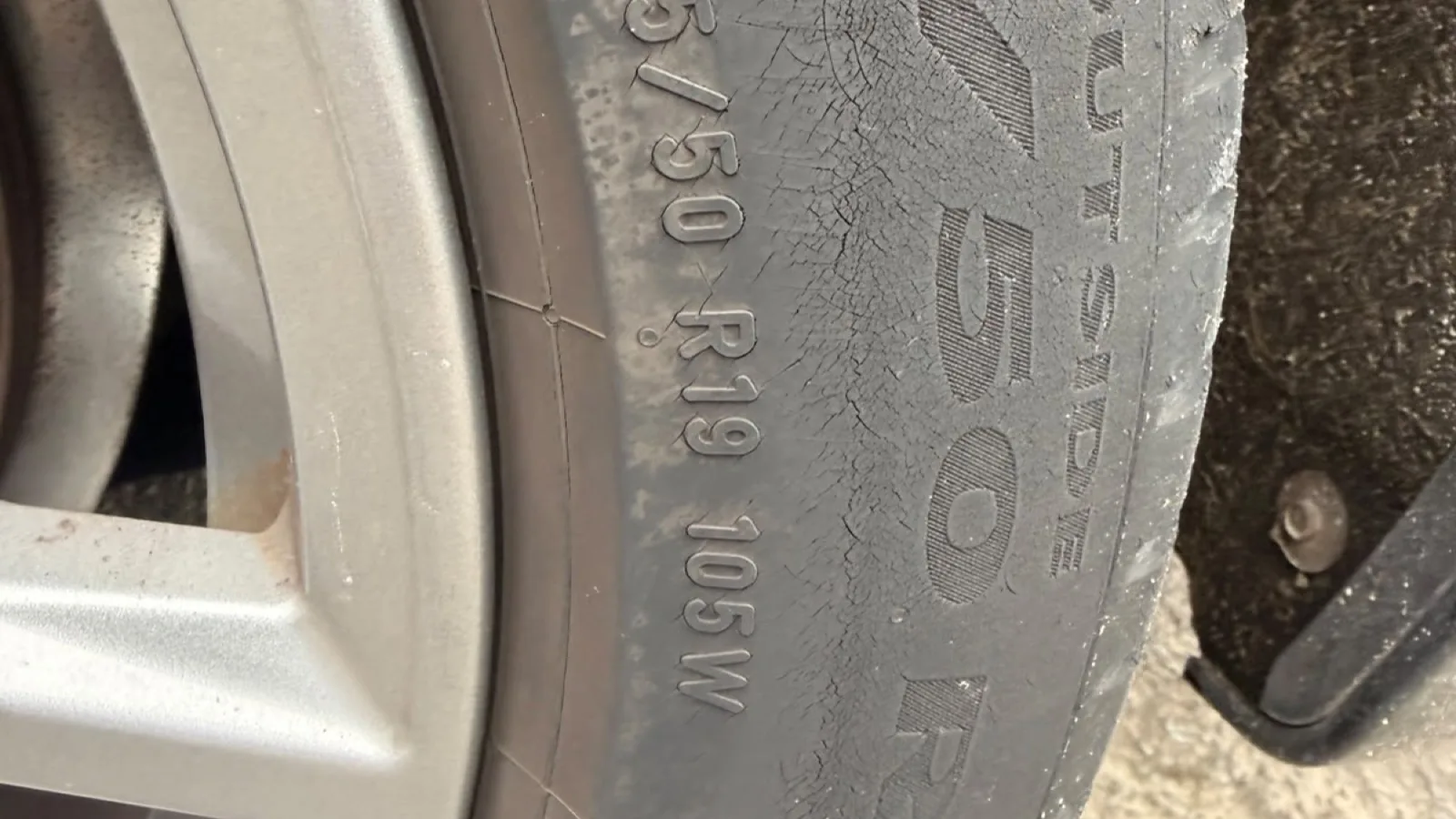
Rubber ages whether the car moves or not. Sun, ozone and heat dry the compound out. The tyre gets harder, grips less, and in time small cracks open in the sidewall and between the tread blocks.
Tyre makers give a simple rule. Once a tyre is five years old, have it checked every year. By 10 years old, replace it, even if the tread still looks deep. A car that only does a few thousand miles a year can reach that age with plenty of tread left. That is still a tyre to change.
There is no legal age limit for tyres on a private car in the UK. Since 2021 the law has barred tyres over 10 years old from the front axles of lorries, buses and coaches. That rule tells you what the experts think of old rubber, even if it does not apply to your car. If yours are cracking, read cracked or perished tyres.
Look on the sidewall for the letters DOT. After them comes a code, and the last four digits are the date. The first two digits are the week. The last two are the year. So 2421 means week 24 of 2021.
The date may only be on one side of the tyre. If you cannot see it, it is probably on the inside face, towards the car. A torch and a mirror help, or turn the steering to full lock to see more of the front tyres.
Check all four, and the spare too. Tyres on the same car are not always the same age. A tyre fitted after a puncture might be much newer than the rest. And a spare that has never touched the road can still be 10 years old. If you want the whole routine in one go, how to check your tyres walks you through it.
Low pressure is the big one. A soft tyre flexes more, runs hotter and wears on both outer edges. It also costs you fuel. Checking once a month takes five minutes and saves a lot of tread.
Tracking comes next. Hit a kerb or a pothole and a wheel can be knocked out of line. The tyre then scrubs along the road at a slight angle and one edge goes bald. You can spot it early with uneven tyre wear patterns.
Then there is the car and the driver. Heavy cars and electric cars are harder on tyres, because of the weight and the instant pull. Quick starts, late braking and fast corners all add wear. Worn suspension parts can make a tyre bounce and wear in patches. Fix the cause and the next set lasts longer.
Set the pressure to the figure on the door plate or in the handbook, with the tyres cold, once a month. That one habit does more for tyre life than anything else. What tyre pressure should my car be shows where to find it.
Get the tracking checked if the car pulls, the steering wheel sits off centre, or one edge wears faster. Some drivers swap tyres front to rear to even out the wear. It can help on some cars, and is tyre rotation worth it explains when.
Drive smoothly. Look ahead, ease off early, and take corners gently. It saves tread, fuel and brakes. And when the tyres are done, replace them before they are illegal. Legal is 1.6mm across the central three quarters. Grip in the wet drops well before that.

The questions that usually come next.
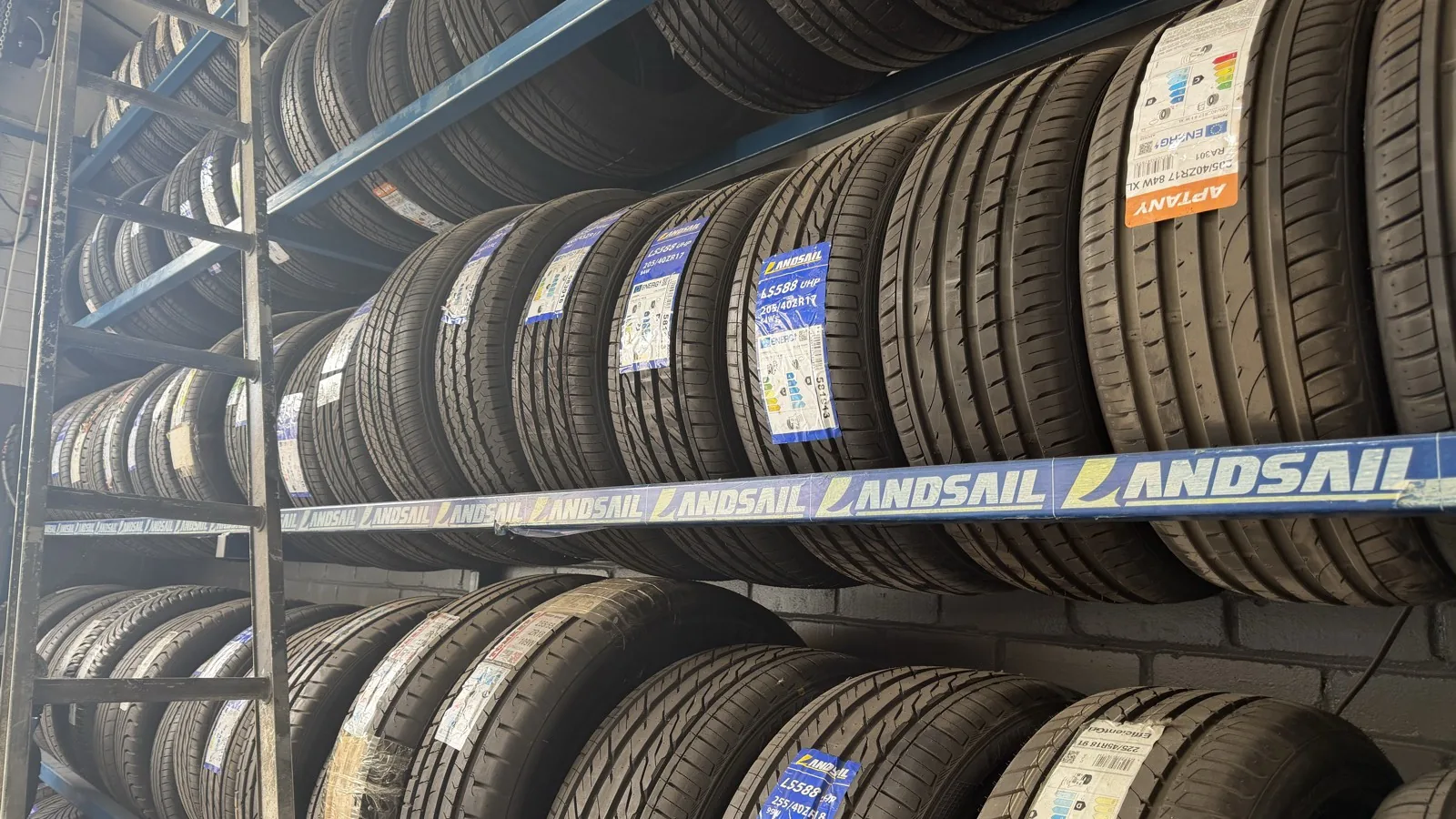 When to replace tyresRead the full guide.Read the guide →
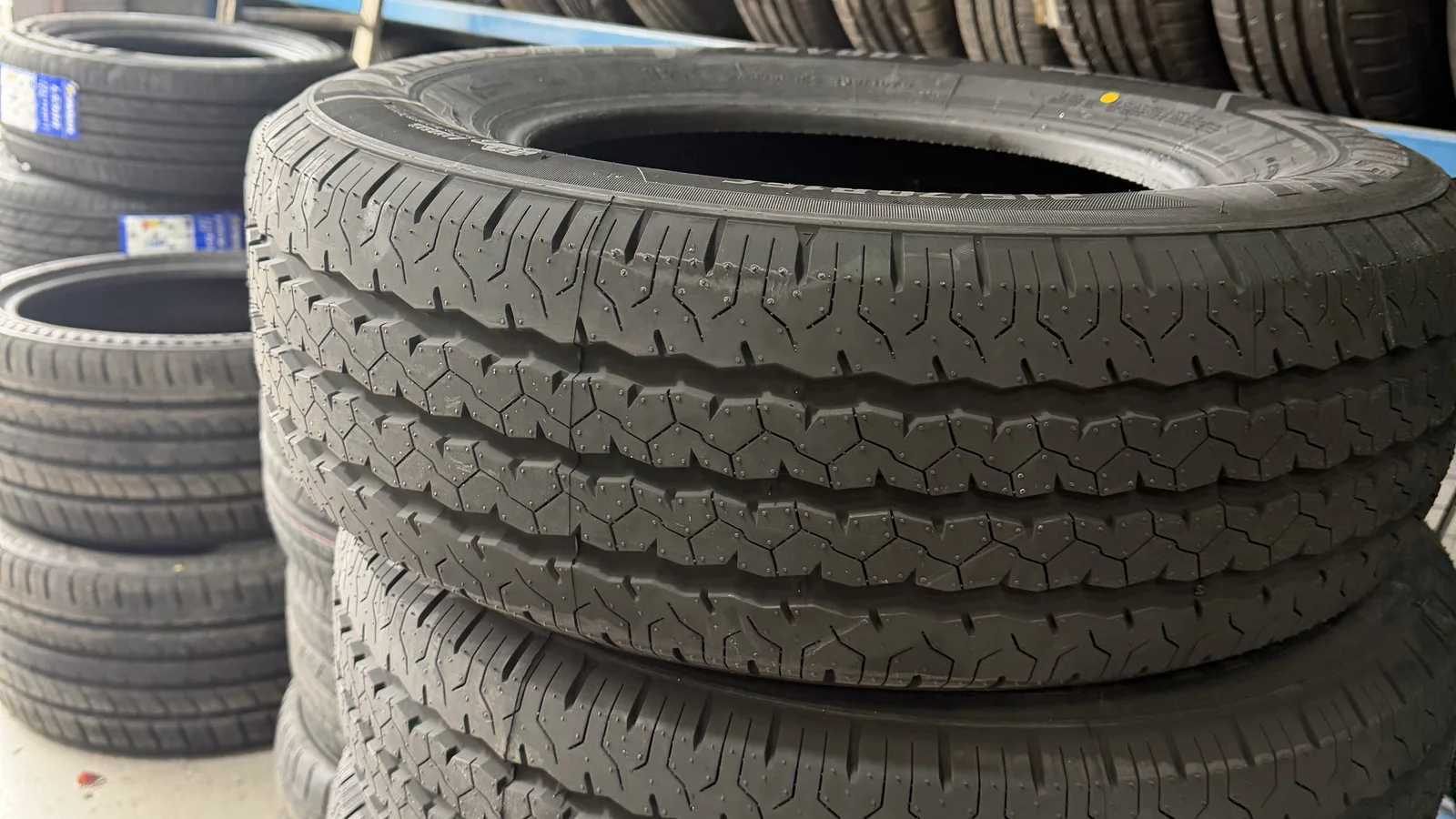 How to check your tyresRead the full guide.Read the guide →
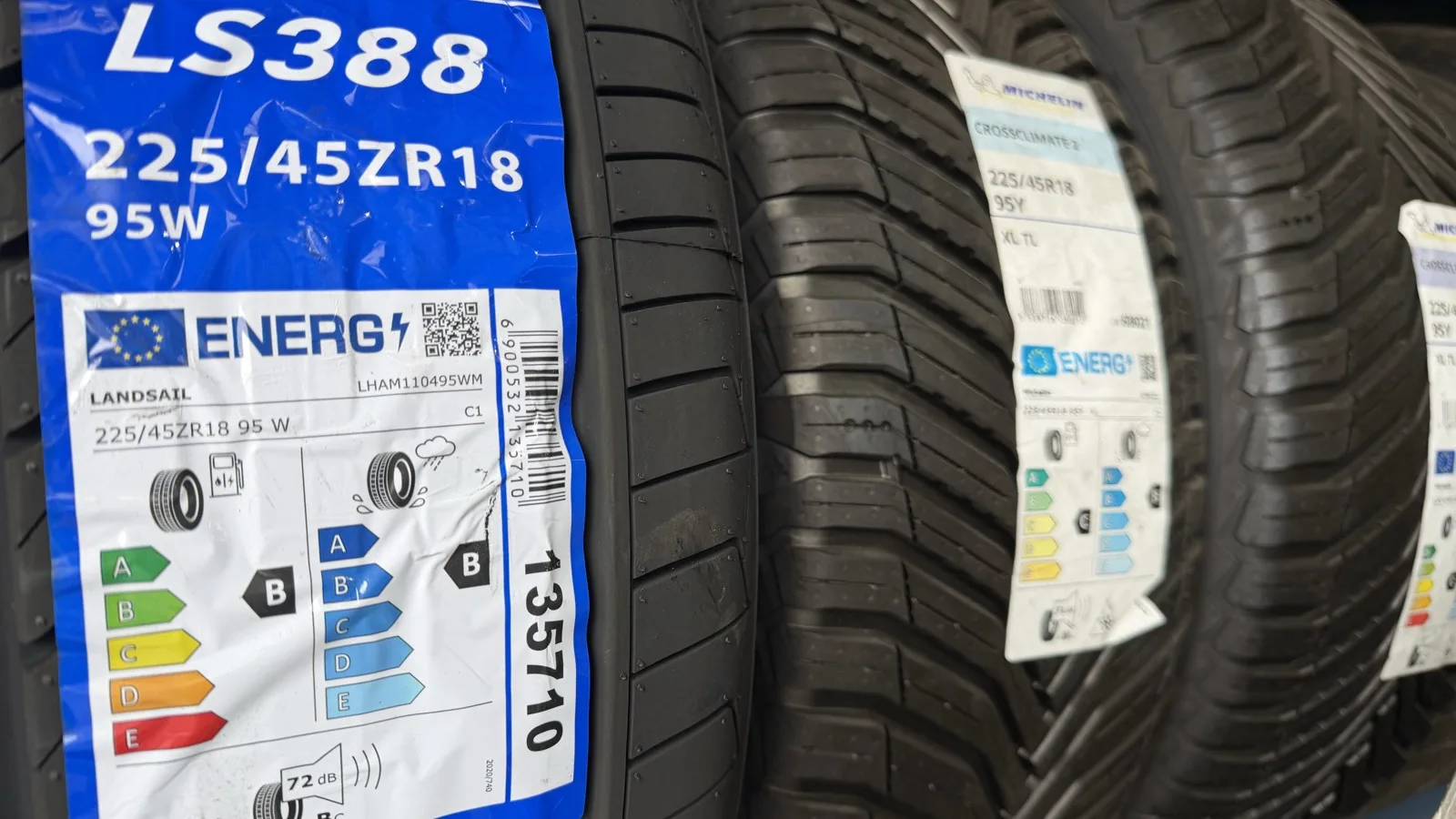 New car tyres wearing fastWhy the first set goes early.Read the guide →
 Uneven tyre wearRead the pattern and find the cause.Read the guide →
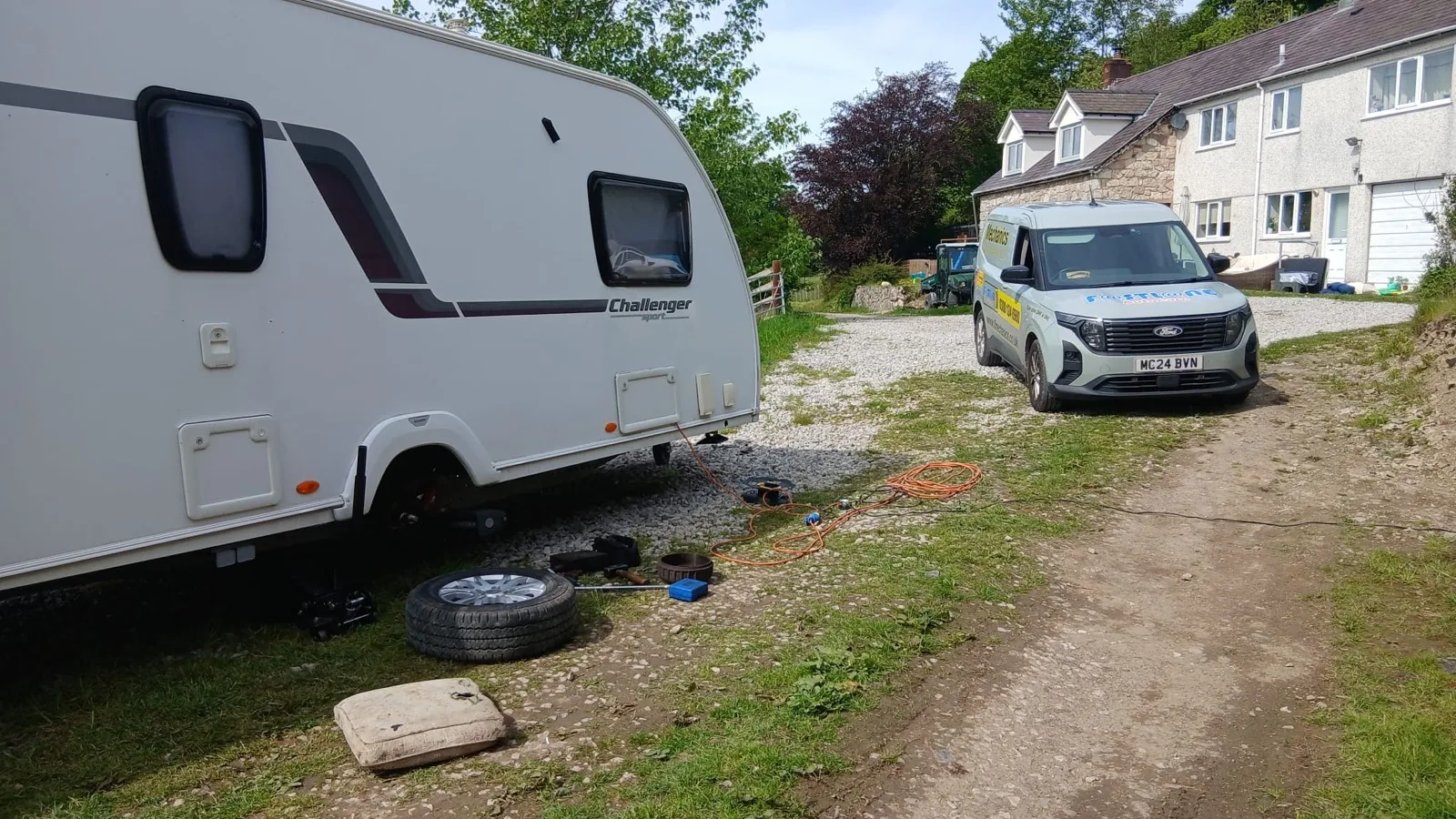 Replace two tyres or four?When a pair is fine and when it is not.Read the guide →
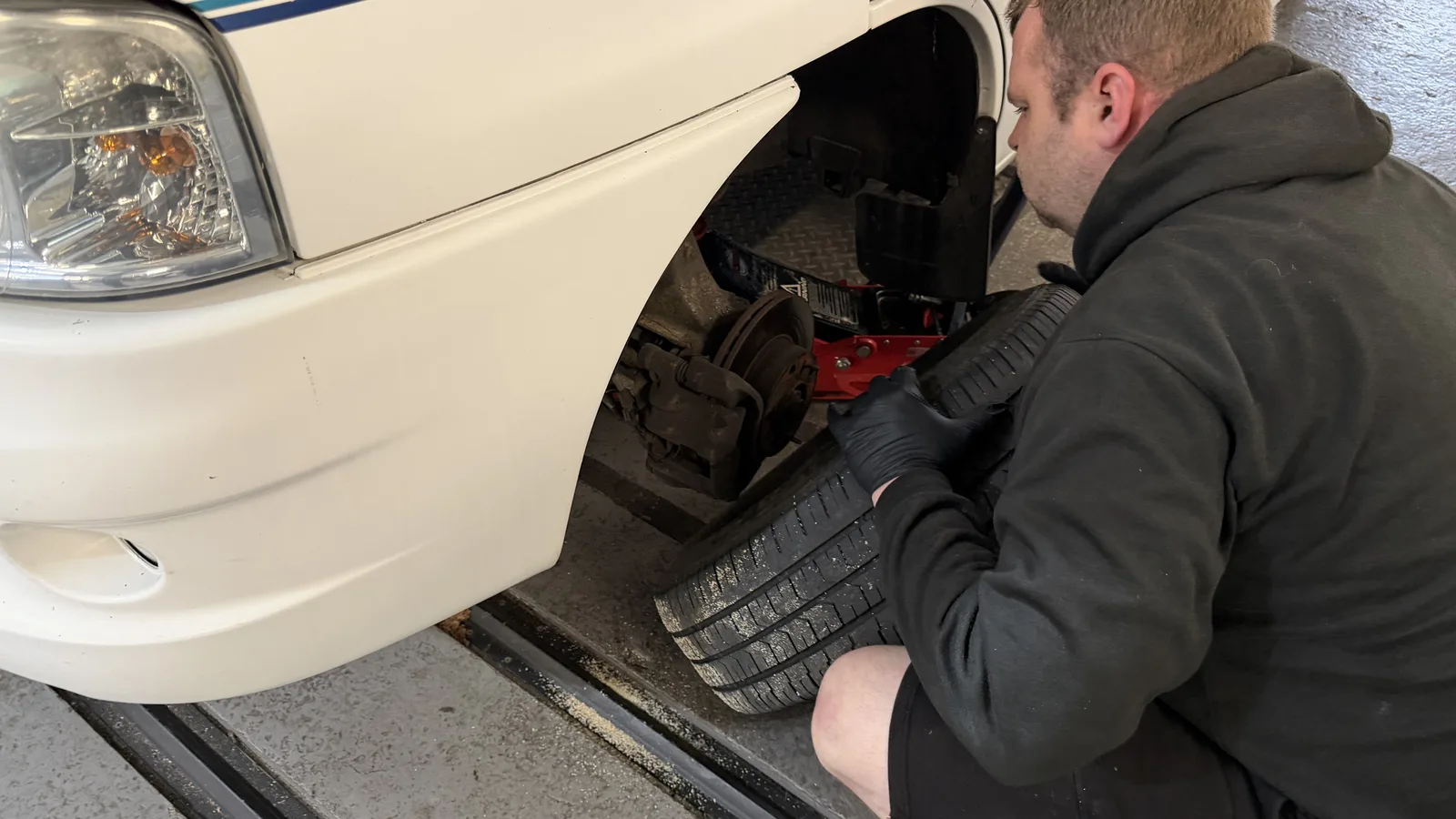 Mobile tyre fittingNew tyres fitted at home, work or the roadside.Read the guide →
Five minutes on the drive. It shows whether you have years left or weeks.
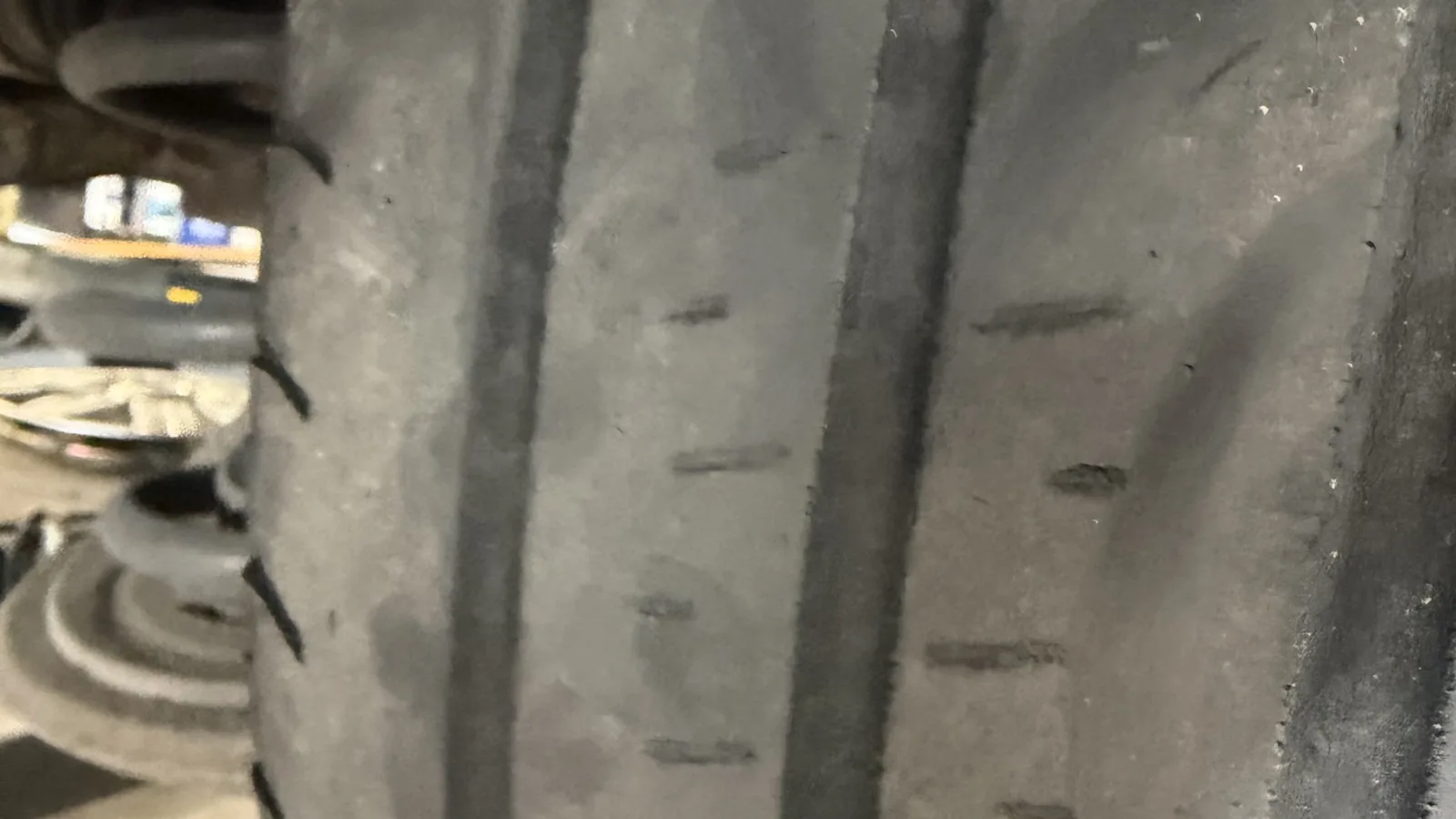
Legal is 1.6mm across the central three quarters. The wear bars in the grooves sit at that height.
The last four digits after DOT are the week and year. Past five years old, get it checked yearly.
Fine lines in the rubber mean the tyre is ageing. Deep cracks mean it needs changing.
One edge worn more than the other points to tracking. Both edges point to low pressure.
Fronts usually wear first. Compare them so one pair does not creep past the limit.
It ages like the rest. A spare past 10 years old is not one to rely on.
What happens after you message, wherever the car is parked.
A picture of the tread and the date code on WhatsApp is enough. A fitter tells you honestly whether you have months left or need tyres now.
Send the size or the registration. We reply with budget, mid range and premium options that fit, each priced as fitted, with a time to come out.
Home, work or the roadside across the North West and North Wales. In the core area we reach most drivers in around 32 minutes on average.
About 20 to 40 minutes per tyre. Balanced on the van, pressures set to the door plate, nuts torqued, and the old tyres taken away.
 Spread the cost of your tyres
Two or more tyres can go on pay monthly at 0%, subject to status. NHS and key workers can ask about up to 30% off.
4.4★★★★★average rating on Google
Got us out of an unfortunate place of a Luton van blowout, super quick helpful and fairly priced!
Stranded in a car park with no spare! Called and they came within the hour, changed the tyre and was on my way 20 minutes later. Great service, delighted they made it so easy.
Brilliant service, same day, quick and easy. Was really rushed for time and they moved things around to ensure they got to me to get it fixed. Would defo recommend
Send the size or the registration and where the car is. We send back a fitted price and a time, 24 hours a day, with no call out charge.
There is no out of hours rate and no waiting for the morning. Message now and we come to the car tonight.
What drivers ask us about miles, years and age.
Most car tyres last between 20,000 and 40,000 miles. Where yours land depends on which axle they sit on, how you drive, the pressures you run and the tyre itself. Front tyres on a front wheel drive car are often done well before the rears, sometimes at half the miles.
So do not go by the odometer alone. Two drivers with the same car can see very different numbers. One does steady motorway miles and checks pressures every month. The other does short town hops and never looks. The first set might last twice as long. Your tread depth is the only true answer, and the wear bars in the grooves show you when it hits the limit. Tyre wear indicators shows where to look.
Want a second opinion? Send a photo of the tread to 07943 185471, or call 0300 124 6981. A fitter will tell you how much is left and roughly how long that gives you at your mileage. If it is time, we quote a fitted price and come to you. Mobile tyre fitting covers how that works.
For an average driver, tyres usually wear out in three to five years. Low mileage cars can keep the same tyres much longer, but age still catches up. Have any tyre over five years old checked every year, and replace it by 10 years old even if the tread looks deep.
Why does age matter if the tread is fine? Because rubber hardens over time. A hard tyre grips less, especially on a cold wet road, and it is more likely to crack. That is why a car that sits on the drive most of the week can still need new tyres. Check the date code on the sidewall. Cracked or perished tyres shows what ageing rubber looks like.
A quick way to judge it: under five years with good tread, you are usually fine. Five to 10 years, look closely and get it checked. Over 10 years, change it. If you would like us to look, we can check the date codes and tread when we are out. Call 0300 124 6981 or read when to replace tyres for the full list of signs.
No, not automatically. Five years is the point to start checking a tyre every year, not the point to throw it away. If the tread is legal, the sidewalls are free of cracks and the tyre has no damage, it can stay on. The firm upper limit most makers give is 10 years.
Some drivers do change at five years, and there are cases where it makes sense. Caravans, motorhomes and cars that stand still for months age their tyres faster, because the rubber sits in one spot and bakes in the sun. How old can caravan tyres be covers that side. For a normal car used every week, a yearly look after five years is the sensible rule.
What should a check look for? Cracks between the tread blocks and on the sidewall. Bulges. Hard, shiny rubber. And tread depth, of course. If any of that shows up, change the tyre whatever its age. We fit at home or work across the North West and North Wales. See how to check your tyres to do the first look yourself.
Yes. Tyres age even when they sit still. The rubber dries out and hardens from heat, light and air, whether the tyre is on a parked car, in a garage or on a shelf. A tyre that has never been driven on can still be too old to trust.
This catches people out most with the spare. It sits in the boot for years and never wears, so it looks perfect. But if it is the same age as the car, and the car is 12 years old, the spare is 12 years old too. Check its date code the next time you open the boot. If it is past 10 years, treat it as a get you home tyre at best, driven gently and swapped soon. How to change a tyre covers using a spare safely.
Stored tyres last longest somewhere cool, dark and dry, away from heaters and electric motors. How to store tyres has the detail. When you buy new tyres, the date code should be recent. We check it before we fit, so you do not get old stock. You get a tyre with a fresh date and full tread, fitted where the car is parked. Call 0300 124 6981 if you want a fitted price.
On most cars, yes. The majority of UK cars are front wheel drive, so the front tyres steer, pull the car and do most of the braking. They often wear out first, sometimes in half the miles of the rears. On a rear wheel drive car the gap is smaller.
That is why it pays to check the fronts and rears separately. Four tyres fitted on the same day will not stay level. Measure the fronts first, because they are the ones that reach the limit early and catch drivers out at the MOT. When only the fronts are worn, you can usually replace just that pair. Should I replace 2 or 4 tyres explains when a pair is fine and where the new ones should go.
Some drivers swap the tyres front to rear to spread the wear. It can work, but only if the car and tyres allow it, and it is not right for every car. Is tyre rotation worth it covers when it helps. If one front tyre is wearing faster than the other, that is a different issue, usually tracking. We can take a look when we come out, and tell you before anything is fitted.
Tyres on electric cars often wear faster than on a similar petrol car. The battery makes the car heavy, and the motor delivers full pull the moment you press the pedal. Both scrub tread. Many EV drivers see fewer miles from a set than they expect.
You can claw some of that back. Keep the pressures right, because a heavy car on soft tyres wears them quickly. Pull away gently rather than using all that instant power. Brake early and let the car slow itself where you can. Check the tread every month, because it can drop faster than you are used to. And fit tyres made for the weight, with the right load rating. EV tyres explained covers what makes an electric car tyre different.
Heavy SUVs have the same problem for the same reason. How to choose SUV tyres explains the load numbers to look for. We fit electric car tyres at home or at work like any other, with the wheel balanced on the van. The van carries a torque wrench and the right sockets, so heavy wheels are no problem. Send the registration or call 0300 124 6981 for a fitted price.
Often, but not always. Many premium tyres are built to last more miles and to keep their grip as they wear. Some budget tyres wear quickly. But some premium tyres use soft rubber for grip and wear faster. The brand badge alone will not tell you the mileage.
The fair way to compare is cost per mile, not cost per tyre. A cheaper tyre that lasts half as long can cost more in the end. On a car that does big miles, a mid range or premium tyre often works out better. On a car that does short local trips, a good budget tyre makes sense. Budget vs premium tyres walks through the trade off.
Whatever you buy, the way you look after it matters more than the name. Right pressure, straight tracking and smooth driving add miles to any tyre. A premium tyre run soft and out of line will not last longer than a budget one looked after properly. When you are ready, we can quote budget, mid range and premium side by side, all fitted. See tyre brands explained for who makes what.
The first tyres on a new car often wear out quicker than drivers expect. Factory tyres are picked for grip, comfort and low noise, and sometimes that means softer rubber. Add a heavy car, big wheels and lots of town driving, and 15,000 miles or less is not unusual.
It is not always the tyre. A new car can still have its tracking knocked out by a kerb. Pressures can drift. And modern cars are heavier than the ones we grew up with, with wider tyres and bigger wheels that cost more to replace. New car tyres wearing fast goes through every cause, and what to check before you pay for another set.
If one edge is worn much more than the other, look at the tracking before new tyres go on. Wheel alignment and tracking explains what that means. Otherwise, the replacement tyre does not have to match the factory one. We can suggest one that suits your miles and your budget, and show you the difference in price before you choose. Call 0300 124 6981 to talk it through.
No. There is no legal age limit for tyres on a private car in the UK. The law cares about tread depth, damage and the right size and type. Since 2021, tyres over 10 years old have been banned from the front axles of lorries, buses and coaches, but that rule does not cover cars.
For cars, the legal line is tread. You need at least 1.6mm across the central three quarters of the tread, all the way round. Below that, you risk up to £2,500 and 3 points per tyre. Cuts, bulges and exposed cords are illegal too. So is a tyre of the wrong size or type for the car, or two different types on one axle. UK tyre law has the full rules.
Just because it is legal does not mean it is safe. An old tyre with deep tread can crack or lose grip. So treat 10 years as your own limit, even though the law does not set one. Older tyres on a car that tows or carries heavy loads deserve even more care. Failed an MOT on age related cracking? Failed MOT on tyres explains what the tester looks for.
Replace a tyre when the tread nears 1.6mm, when it passes 10 years old, or when it has damage like a bulge, a deep cut or cracks. Also change it if it keeps losing air from a spot that cannot be repaired. Any one of those is enough on its own.
The easy test is the wear bars. They are small raised blocks in the main grooves, set at 1.6mm. When the tread is level with them, the tyre is at the legal limit. Do not wait for that, especially before winter. A tyre with 2mm left clears far less water than a new one, so it feels much worse on a wet night. When to replace tyres lists every sign with photos.
If you are not sure, send us a photo. A fitter can usually tell from a clear picture whether a tyre has months left or needs changing now. WhatsApp 07943 185471 or call 0300 124 6981. If it does need changing, we come to you with the tyre, day or night, and there is no call out charge added to the price. Emergency mobile tyre fitting covers the urgent jobs.
Check your tyre pressures and tread once a month, and before any long trip. It takes about five minutes. Do it with the tyres cold, before you drive, and set them to the figure in the handbook or on the door plate. Look over the sidewalls at the same time.
Monthly checks are the cheapest way to make tyres last. A tyre that is a little soft wears faster, uses more fuel and grips less. Most pressure loss is slow, so you will not feel it in the steering. You will only see it on the gauge. Use the same gauge each time, because cheap ones can read differently. Petrol station gauges are fine, but check them against your own now and then. How to check your tyres has the full five minute routine.
Once a year, look at the date codes too. It is easy to forget a tyre is getting old when the tread still looks fine. If the tyre pressure warning light comes on between checks, do not ignore it. Stop somewhere safe, check the pressures, and look for a nail or a split. TPMS warning light explains what it means and what to do.
Yes. We fit new tyres at your home, your work or a safe spot at the roadside, across the North West and North Wales, 24 hours a day. There is no call out charge, because fitting is priced into the tyre. The price we send you is the fitted price.
Send the size from the sidewall, or just the registration, and where the car is. We send back budget, mid range and premium options that fit, with a fitted price and a time. One tyre usually takes about 20 to 40 minutes. If the car has locking wheel nuts, have the key ready, because the wheel cannot come off without it. Can you fit tyres at home covers what the fitter needs on the drive.
On two or more tyres you can pay monthly at 0%, subject to status. Payment is by a secure link sent to your phone, and we can send a photo of the finished job if you ask. NHS staff and key workers can ask about up to 30% off. Call 0300 124 6981 to book, or send the details on WhatsApp.