Welcome to

Mobile tyre fitting · North West & North Wales · We fit around you

Approved by the AA and RAC. No call-out charge. Around 32 minutes on average, 24 hours a day.
info@yournewtyres.co.ukTell us your name and tyre size — we will reply on WhatsApp with a price and an ETA.
Warm air is only the obvious one. Any of these is worth a proper check rather than a can from the shop.
The system is low on refrigerant and cannot shed the heat. It cools slowly and gives up on hot days. A proper regas fixes it.
Air con regas →
The system is empty, which means it has a leak. We find that out with a vacuum test before we put a penny of gas in.
Book a check →
Air con is what dries the air in a modern car. If it takes a whole junction to see out on a damp morning, that is the system telling you.
How it works →
Bacteria on the evaporator behind the dash, not a gas fault. We treat it on the same visit rather than sell you gas you do not need.
Talk to us →The size is on the sidewall of the tyre, or send us a photo of it. It lands with the fitter on shift. No call-out charge, and the fitting is already in the price.
You are through to YourNewTyres. What size are the tyres?
The size is printed on the sidewall, like 205/55 R16. Send that and where you are, and I will come back with a fitted price and the next slot.
A photo of the sidewall does the job if you would rather not type it out.
Opens WhatsApp with your message ready to send
It is not a badge on the van. It changes how the job is done.
The old gas is pulled into a cylinder and recycled. Nothing is released on your drive.
The system is pulled into a deep vacuum, which boils off moisture and proves whether it holds. A system that will not hold is not charged.
Every car has a specified charge. Too little and it blows warm, too much and it strains the compressor. We weigh it in, with the right oil.
R134a for older cars, R1234yf from 2017 onwards. Both on the van, never mixed, never substituted.
Your car's age decides it, not your budget. Tell us the registration and we will confirm which one before we quote.
Around 45 minutes to an hour. You can carry on with your day.
We connect the gauges and read what is in the system. Empty means a leak, and we tell you before we spend your money.
The old refrigerant and oil are drawn out into the machine and logged, exactly as the qualification requires.
The system is pulled into a vacuum to remove moisture, then held to prove it is tight.
Fresh refrigerant and oil weighed in to the maker's figure, then we run the car and check the vent temperature.
Under Regulation 307/2008 and the Fluorinated Greenhouse Gases Regulations 2015, anyone recovering refrigerant from the air conditioning in a car or a van under 3.5 tonnes must hold a recognised F-Gas qualification, issued by a body such as the IMI or City and Guilds and regulated by Defra. Our technicians hold it, and we bring the equipment for both R134a and R1234yf to your home or workplace. Call 0300 124 6981 or WhatsApp the registration for a price.
The gases inside a car's air conditioning are fluorinated greenhouse gases, and they are regulated because a kilo of the older R134a does as much damage in the atmosphere as more than a tonne of carbon dioxide. The rules say who may handle them, ban venting them to the atmosphere, ban refilling a system that has an abnormal leak until the leak is fixed, and ban the throwaway cylinders that used to be common. The gov.uk wording is blunt: it is against the law to work with equipment containing F-gases without the correct qualification. When our technician recovers the gas from your car it goes into a cylinder for recycling, and the amount that goes back in is weighed, not guessed.
Five steps, in this order. Read the pressures to see what is in there. Recover the old refrigerant and oil into the machine and log it. Pull the system into a deep vacuum, which boils moisture out of it and proves whether it holds pressure. Weigh in the exact charge the manufacturer specifies, with the correct oil for that system. Then run the car and measure the temperature at the vents. A system that will not hold a vacuum does not get charged, because that gas would be in the atmosphere within weeks and you would be back where you started.
The whole job takes about 45 minutes to an hour and happens where the car is parked: your drive, the work car park, the depot. There is no call-out charge and no waiting room. Plenty of customers book it alongside tyre fitting or a battery so the car is sorted in one visit, and fleets have us do a run of vehicles in an afternoon. Spring is the sensible time to book, before the first hot week when everyone discovers at once that the air con has quietly given up.
The guides our customers read most before they book.
 Mobile tyre fitting costWhat goes into the price and why there is no call-out fee on top.Read the guide →
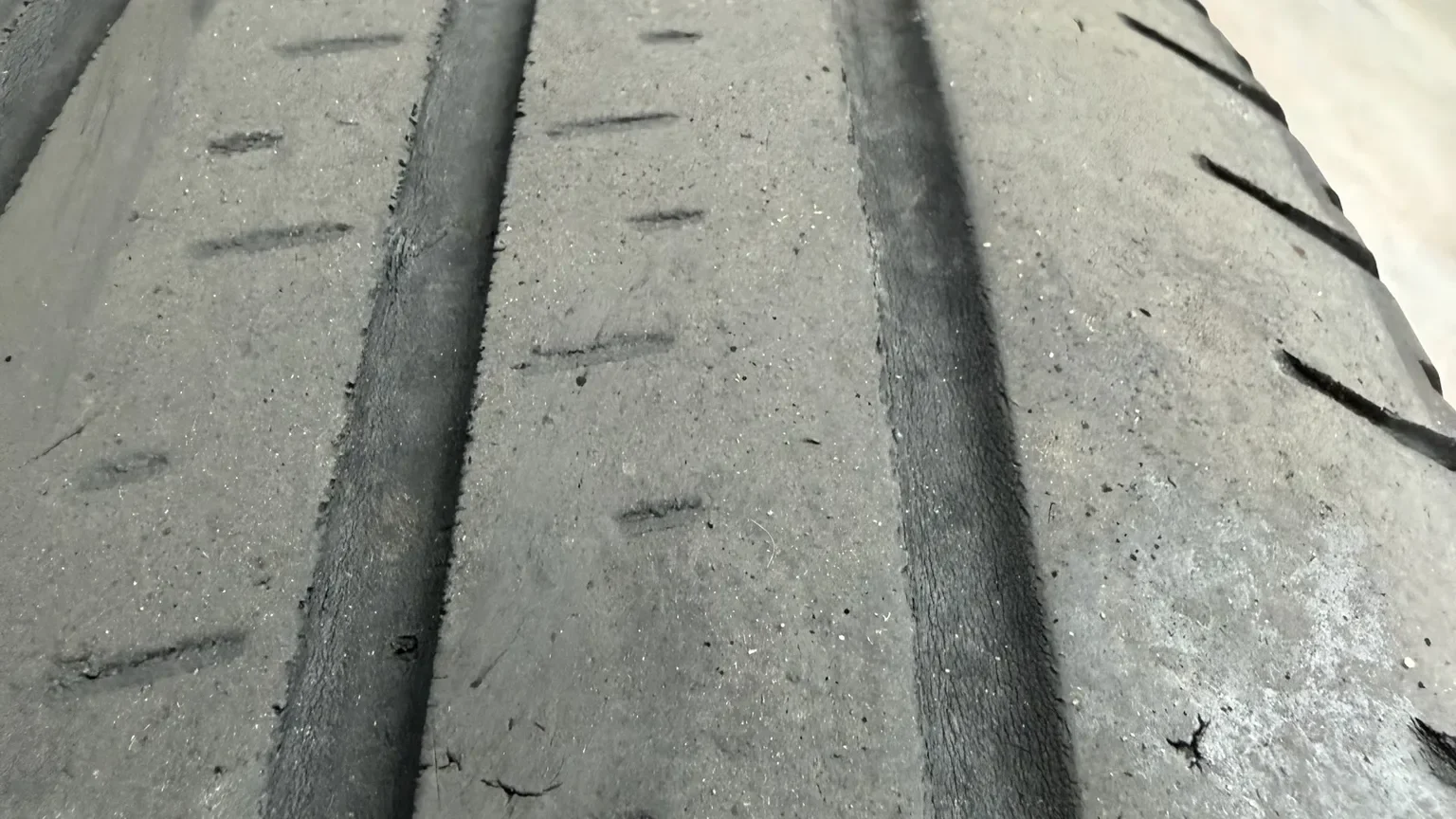 How to check your tyresA five minute check that catches most of what we get called out for.Read the guide →Correct tyre pressureWhere to find the right figure for your car and why it moves in winter.Read the guide →
 TPMS sensor replacementWhat the pressure sensors cost and when they actually need replacing.Read the guide →
 Tyre pressure in cold weatherWhy the light comes on in November and what to do about it.Read the guide →
 Pay monthly tyresSpread the cost over the months at 0% interest, with subject to status.Read the guide →
Send us the car and your postcode on WhatsApp, or call. One price, the right gas, done at your door by an F-Gas trained technician.
The questions drivers ask us about regassing, refrigerant and the law.
Yes. In the UK it is against the law to recover refrigerant from a vehicle air conditioning system unless you hold a recognised F-Gas qualification.
The qualification is issued by a body such as the Institute of the Motor Industry or City and Guilds, and the scheme is regulated by Defra under Regulation 307/2008 and the Fluorinated Greenhouse Gases Regulations 2015. Our technicians are F-Gas trained, so every air con regas we do at your door is done legally, with the old gas recovered and recycled rather than released.
You can buy the cans, but think about what one actually does. It adds gas on top of whatever is already in the system without measuring it, it cannot recover the old refrigerant, and it cannot find the leak.
Overcharging a system is as bad for it as running it empty. If the air con has stopped blowing cold, the honest answer is a proper recovery, vacuum, leak check and recharge by a qualified technician. It costs a little more than a can and it fixes the problem rather than hiding it.
They are the two refrigerants used in car air conditioning. R134a was the standard from the mid 1990s; new vehicle types had to change from 2011 and every new car and van sold from 2017 uses a low-GWP gas, in practice R1234yf.
The two are not interchangeable, they need different equipment, and R1234yf costs more per kilo. We carry equipment for both and we check which one your car takes before we start, so you get the right gas at the right price.
Most manufacturers suggest every two years or so. A healthy system loses a small amount of refrigerant each year through the seals and hoses.
If yours has gone from ice cold to warm in a single summer, that is not normal loss, that is a leak, and topping it up without finding the leak just puts the gas into the atmosphere. Our regas includes a vacuum test that shows whether the system is holding, and we tell you what we find.
Low refrigerant is the usual reason and a regas fixes it. If the system is empty rather than low, there is a leak somewhere, often a condenser at the front of the car that has been stoned.
A compressor that will not engage, a blocked cabin filter or a fault in the controls can all produce warm air too. Our technician checks pressures and looks for the obvious faults before charging the system, because putting expensive gas into a system with a hole in it helps nobody.
Recover the old gas into a cylinder instead of venting it, pull the system into a vacuum to boil off moisture and prove it holds, weigh in exactly the charge the car maker specifies, add the right oil, and log it.
That is the process the qualification teaches and the law requires. A can does one of those five things, badly.
Deliberately releasing F-gas into the atmosphere is an offence, and so is recovering it without the qualification to do so.
These gases are powerful greenhouse gases, thousands of times stronger than carbon dioxide weight for weight in the case of R134a, which is why the whole chain from the car factory to the scrapyard is regulated. When we recover the gas from your car it goes into a cylinder for recycling, not into the sky above your drive.
About 45 minutes to an hour at your door, sometimes a little longer on a large system or when the vacuum test needs time to prove the system is tight.
You do not need to be there for all of it. We can do it on the drive while you work from home, or in the car park while you are at your desk. Book it alongside a tyre fitting or on its own.
Not on its own. A musty smell is usually bacteria growing on the evaporator, the cold part behind the dashboard, and it needs an antibacterial treatment rather than more gas.
We can do both on the same visit. Running the air con for a few minutes with the cooling off before you park helps stop the smell coming back.
Yes, because the gas costs a good deal more than R134a and it needs its own recovery machine.
If your car is a 2017 or later model it almost certainly uses R1234yf. There is no legal way to put the cheaper R134a into it, and doing so can damage the system. Tell us the car and registration when you book and we will quote for the right gas.
Yes, anything up to 3.5 tonnes and eight seats, which is the range the vehicle F-Gas qualification covers.
That includes the vans that are out on the road all day in July, and if you run more than one we can add the air con to our fleet tyre fitting visits so the whole fleet is done in one go.
No. An MOT does not test the air conditioning at all, and most standard services only check that it blows cold.
A regas is a separate job, which is why so many cars go five or six years without one and then arrive at the first hot week of the year blowing warm. Booking it in the spring, before you need it, is the easy win.
Send us the car, the registration and your postcode on WhatsApp, or call 0300 124 6981.
We tell you which refrigerant the car takes, give you one price and a time, and come to your home or work across the North West and North Wales. Full details on our air con regas page.