Welcome to

Mobile tyre fitting · North West & North Wales · We fit around you

Approved by the AA and RAC. No call-out charge. Around 32 minutes on average, 24 hours a day.
info@yournewtyres.co.ukTell us your name and tyre size — we will reply on WhatsApp with a price and an ETA.
Cracked tyres are dangerous when the cracks are deep enough to see into, reach the cords, or come with hard, brittle rubber. A tyre like that can fail without warning at speed. Fine surface lines on a sound tyre are usually cosmetic, but they mean the tyre is ageing. Watch light cracking. Replace deep or spreading cracks now.
Perished just means old rubber. Sun, heat, ozone in the air and months of standing still dry the tyre out. It goes stiff. Then it splits into a web of little lines as it flexes. So a car can have plenty of tread and still have tyres that are finished. Age counts as much as miles. How long tyres last covers both.
Depth is the whole question. Lines that sit on the surface and close up when you press them are early days. Cracks that open into gaps, run round the sidewall or sit at the bottom of the tread grooves are in the part that holds the air. Cuts deep enough to show the cords break UK tyre law as well.
Not sure which you have? Send a close photo of the worst bit and your tyre size to 07943 185471 on WhatsApp, or call 0300 124 6981. A fitter tells you fine for now, or change it. If it needs changing, we fit the new tyre wherever the car is parked.
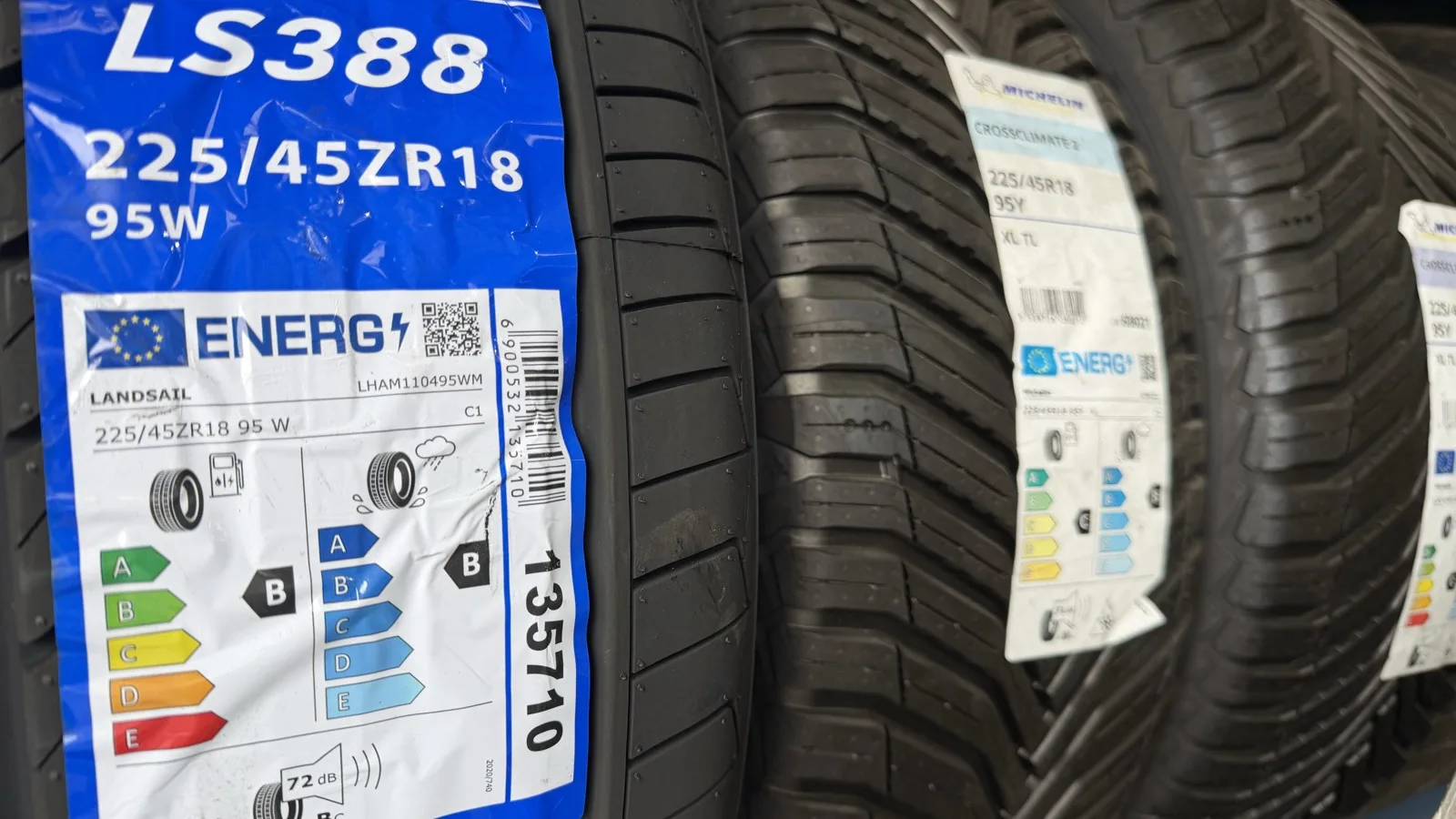
The size is on the sidewall of the tyre, or send us a photo of it. It lands with the fitter on shift. No call-out charge, and the fitting is already in the price.
You are through to YourNewTyres. What size are the tyres?
The size is printed on the sidewall, like 205/55 R16. Send that and where you are, and I will come back with a fitted price and the next slot.
A photo of the sidewall does the job if you would rather not type it out.
Opens WhatsApp with your message ready to send
Covered here: what causes tyres to crack and perish; are cracked tyres dangerous to drive on; how to tell harmless crazing from cracks that matter; how old are your tyres? reading the date code; are cracked tyres illegal, and will they fail an mot.
Tyres are built with waxes and oils that protect the rubber. When the car is driven, the tyre flexes and keeps that protection working. When it sits still or bakes in the sun, the rubber dries out. Sunlight and ozone attack the outside. Heat speeds it all up.
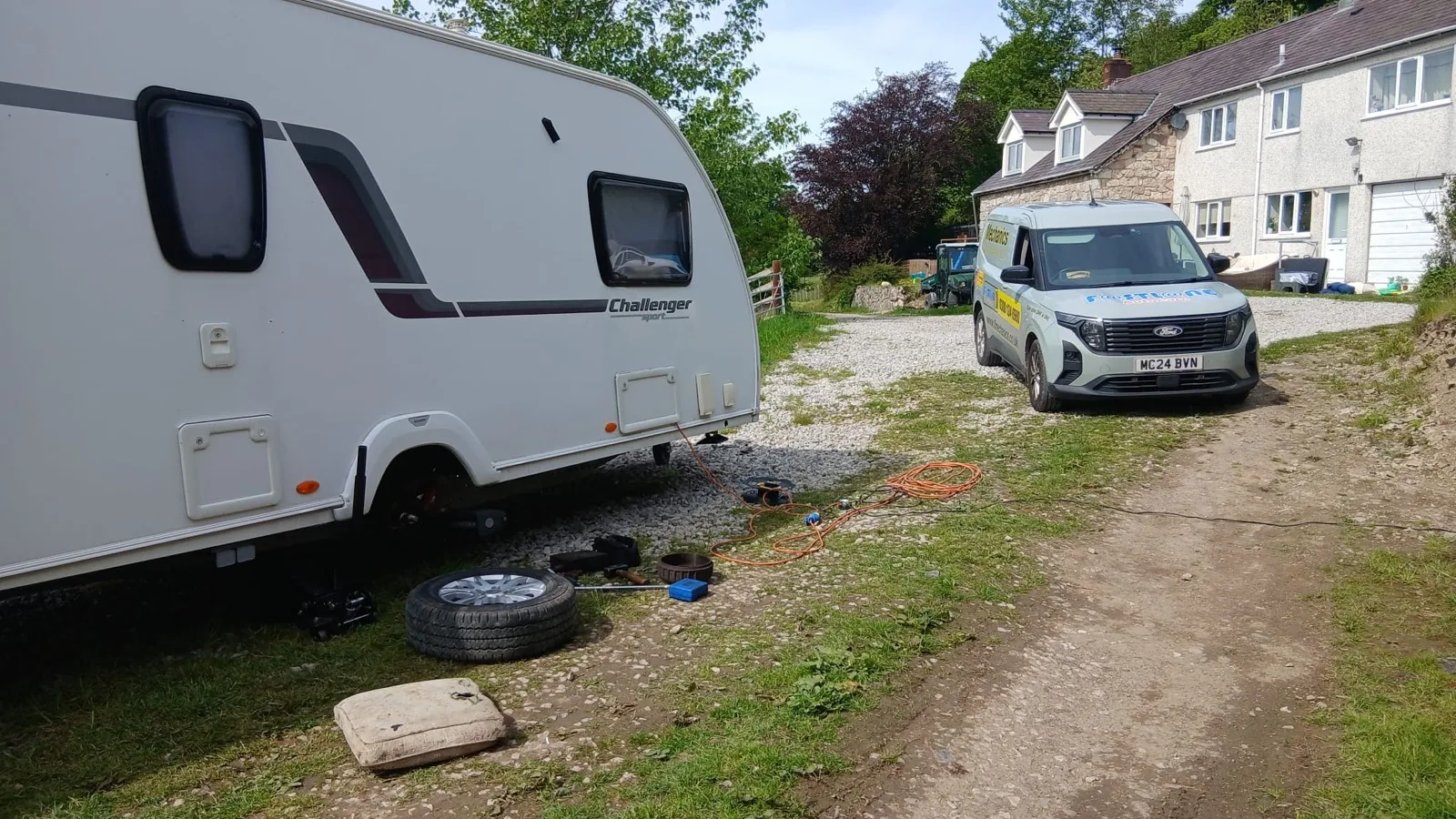
So the worst cracking we see is not on busy cars. It is on the second car that moves once a week. The classic in the garage. The caravan and the motorhome that stand all winter. The car parked facing the sun on the same drive for years.
Low pressure adds to it, because a soft tyre bends harder on every turn. Strong cleaning products can strip the surface too. The tread can look almost new, but the rubber aged out before it wore out. Got a caravan? See caravan tyres, because they crack more than anything else we fit.
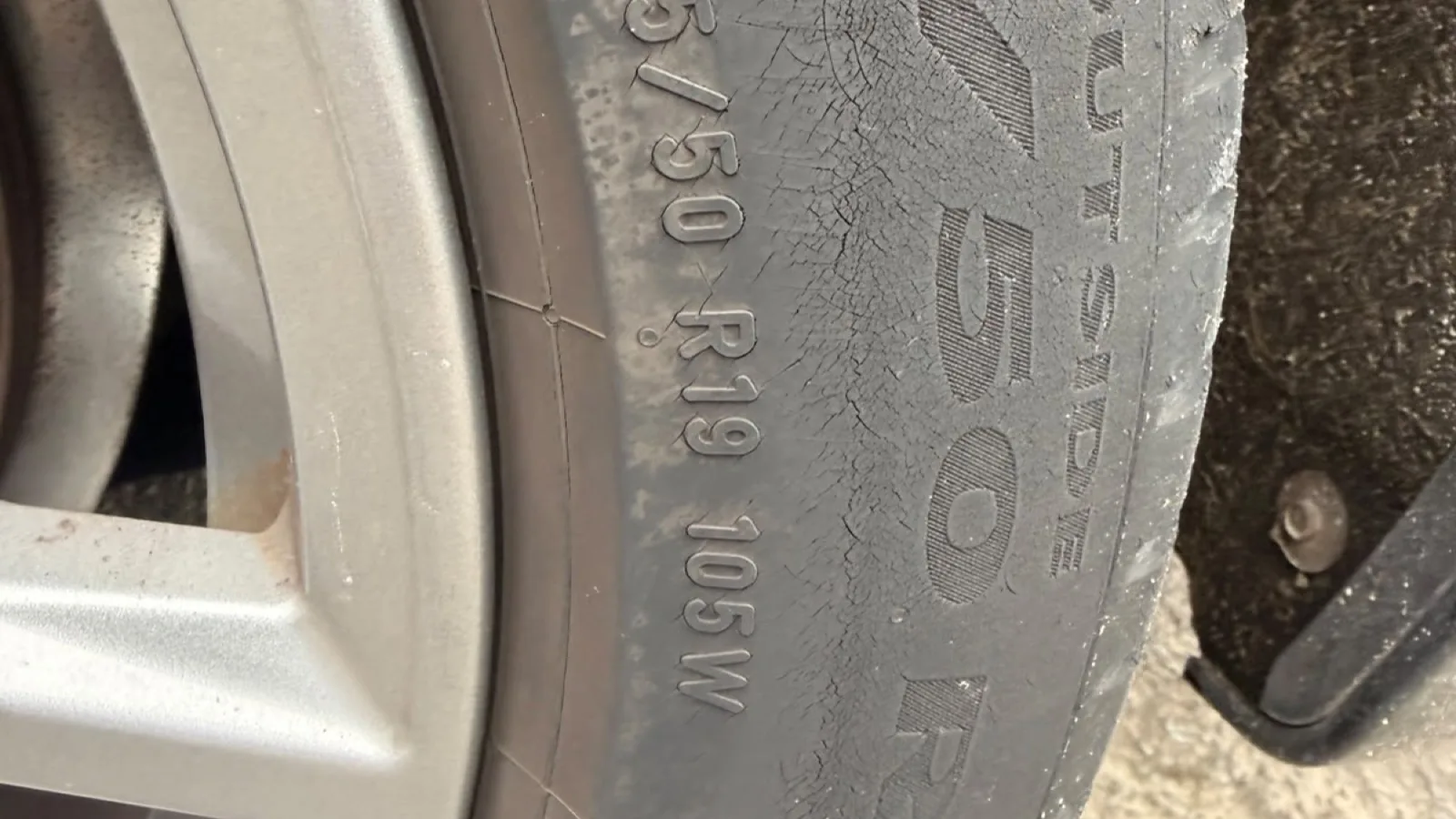
It comes down to how deep the cracks go. A light web of lines on the sidewall, called crazing, is on the surface. The tyre is not going to burst tomorrow. But the rubber is ageing, so keep an eye on it.
Deep cracks are a different story. A tyre holds air under pressure and carries the car on its sidewalls. Cracks that open when you squeeze the rubber, run in a line round the tyre, or sit in the bottom of the grooves weaken all of that. Add heat and weight, like a long motorway run with a full car, and a weak tyre can split or blow out with no warning.
That is the real danger. It is why a tyre with plenty of tread can still be unsafe. If the rubber also feels hard or looks faded and chalky, it has lost grip too. It will take longer to stop in the wet. That is a tyre to change, not to watch.
Do this in daylight. Turn the steering to full lock so you can see the front tyres. Look at both sidewalls, the tread, and the edge where they meet. The inside sidewall is easy to miss and often the worst, so use a torch.
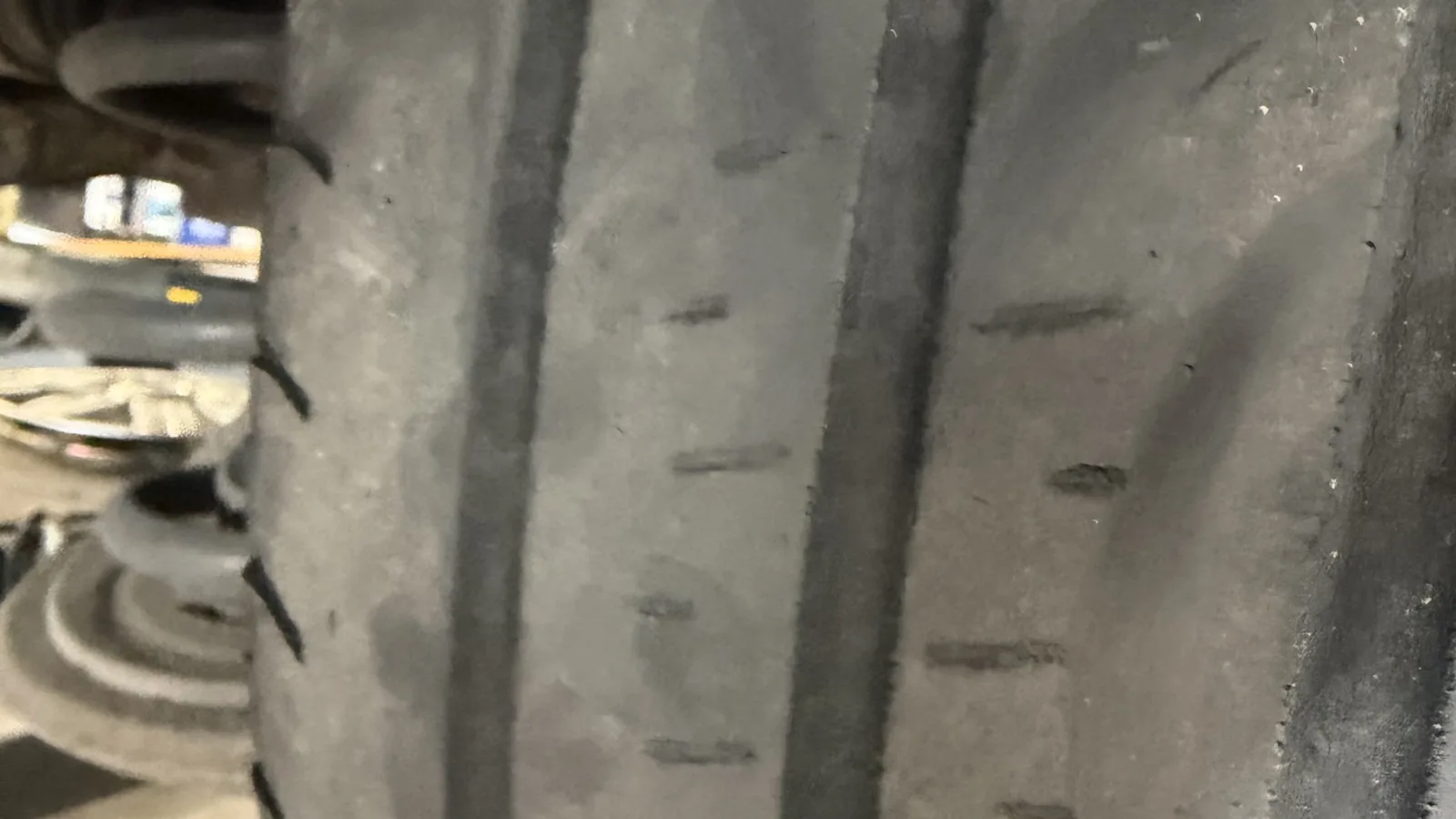
Now press a fingernail across a crack. If it just marks the surface, that is crazing. If your nail drops into a gap, the crack has gone deeper than the skin. Act on these: cracks that join up into a line, cracks in the bottom of the tread grooves, and cracks close to the wheel rim.
A bulge, a lump or cords showing means stop. That tyre must be replaced before the car moves. Still not sure? Take a close photo in daylight and send it to us. It is usually enough for a fitter to give you a clear yes or no in a few minutes, with no pressure to buy.
Every tyre has a date on the sidewall. Look for the letters DOT. The last four digits are the week and year it was made. So 2319 means week 23 of 2019. Only three digits? That tyre is very old.
Age and cracking go together, so check the date when you see lines. Many tyre makers say to have a tyre inspected every year once it is five years old. An older tyre that is cracking is a strong case for a new one, whatever the tread says. Do not forget the spare.
A spare that has never touched the road can still be ten years old and badly perished, and you only find out on the day you need it. The date is sometimes on the inside face only, which is hard to see on the car. We read it with the wheel off as part of any visit, and tell you what we find on all five tyres.
The law does not name cracking. It does ban tyres with a lump, bulge or tear from the structure failing, any cords or ply showing, and cuts over a set size that reach the cords. Deep cracks can tick those boxes. Then the tyre is illegal, and it can cost up to £2,500 and 3 points per tyre.
At the MOT, cords showing, a bulge or serious damage is a fail. Light crazing alone will not normally fail. It may be written down as an advisory. Treat an advisory as a warning with a date on it, not a pass. Failed on tyres already?
See failed MOT on tyres for how we sort it before the retest. The tread still has to be 1.6mm or more across the middle three quarters. So a cracked tyre that is also worn fails twice over, and that is a quick decision.
The questions that usually come next.
 How long do tyres last?Miles, years and the signs it is time.Read the guide →
 UK tyre law1.6mm, the fines and the points.Read the guide →
 Failed mot on tyresRead the full guide.Read the guide →
 Caravan tyresRead the full guide.Read the guide →
 Tyre wear indicatorsThe little bars that mark 1.6mm.Read the guide →
 Mobile tyre fittingNew tyres fitted at home, work or the roadside.Read the guide →
Most of them have nothing to do with how far you drive.
Strong sun dries the outside of the rubber. A car parked facing south on the same drive for years shows it first.
Ozone slowly attacks rubber. It is why a tyre can crack even in a dark garage, just more slowly.
The protective oils in a tyre get used up over the years. Then the rubber goes hard and splits.
A tyre that never flexes loses its protection faster. Caravans, classics and second cars suffer most.
A soft tyre bends hard at the sidewall on every turn. That bending opens up cracks much sooner.
Some strong cleaning products strip the surface of the rubber. Plain soapy water is the safe choice.
On the drive, in daylight, all four tyres and the spare.
Full lock one way, then the other. Now you can see the whole face of each front tyre.
The inside sidewall faces the car. That is where cracks hide. A torch makes it easy.
Surface lines only mark. If a fingernail drops into a crack, it has gone deeper than the skin.
Cracks at the bottom of the tread grooves matter more than lines on the side. Spread the tread and look.
Four digits after DOT give the week and year. Old and cracked is a strong case for new tyres.
A soft tyre bends harder and cracks sooner. Use the number on the door pillar or in the handbook.
What happens after you message, wherever the car is parked.
Message the size from the sidewall or just the registration. We check the van stock and send back a fitted price and a time, usually within minutes.
Home, work or the roadside, day or night. In the core area the van reaches most drivers in around 32 minutes on average, with no call out charge.
The fitter looks over the tyre, the wheel and the valve before anything comes off. If something else needs attention you hear about it first, with the price.
About 20 to 40 minutes per tyre. The wheel is balanced on the van, pressures are set to the door plate and every nut is torqued by hand.
4.4★★★★★average rating on Google
Got us out of an unfortunate place of a Luton van blowout, super quick helpful and fairly priced!
Stranded in a car park with no spare! Called and they came within the hour, changed the tyre and was on my way 20 minutes later. Great service, delighted they made it so easy.
Brilliant service, same day, quick and easy. Was really rushed for time and they moved things around to ensure they got to me to get it fixed. Would defo recommend
Call 0300 124 6981 and speak to someone who fits tyres for a living. You get an honest answer first and a price second.
The van is on shift right now. Common sizes are on board, and the price is the same at midnight as it is at midday.
Answered by people who fit tyres every day.
They can be. Old rubber loses strength and grip. If perishing has left deep cracks, hard rubber, or cracks near the rim or in the tread grooves, the tyre can fail under load. Replace it. Light surface perishing on a sound tyre is different. That needs watching, not changing today.
Perished rubber also grips less, most of all in the wet, because the rubber has gone hard. A tyre can look fine and still stop a lot further than it did when new. That matters most in winter and on fast roads. How long tyres last shows how age and miles each wear a tyre out, and why low miles do not mean a young tyre.
Not sure how far gone yours are? Send us a photo. We will tell you if they can stay on for now or need changing. If they do, we fit new ones at your home or work, so you do not lose a morning at a garage. Call 0300 124 6981, or see mobile tyre fitting for how a visit works and what to have ready.
Slightly perished tyres are not usually dangerous straight away. Fine lines on the sidewall are a normal sign of age. A tyre with light crazing, good tread and the right pressure is generally fine for everyday driving. But it is ageing. Check it every few weeks and look for the lines getting deeper.
Slight turns serious when the cracks get deeper or spread. Lines that open up, join into long cracks, appear in the tread grooves or come with a bulge mean stop trusting that tyre. Check the date too. Slight perishing on an old tyre is further along than it looks. UK tyre law sets out what is illegal and what it costs.
Perished tyres on a car that sits still a lot get worse faster than on a car used every day. Got a long trip, a heavy load or a tow coming up? Have them checked first. We can look at them and fit new ones on the drive if needed. See replace two tyres or four for how many to change, or call 0300 124 6981.
Tyre crazing is a web of fine, shallow lines on the surface of the rubber, usually on the sidewall. It happens as the outer skin dries out with age, sun and ozone. On its own it is mostly cosmetic. But it is the first stage of perishing, and it tells you the tyre is getting old.
It is named after the crazed look of old glaze on a plate, and it looks much the same. The lines are fine and close together, and they close up when you press the rubber. Deep cracks are different. They have a gap you can see into and can reach the structure underneath. The fingernail test in our cracked tyre guide tells them apart in seconds.
Crazing is most common on tyres that stand still for long spells. Caravans, motorhomes and weekend cars are the usual ones. Driving the car often and keeping the pressure right both slow it down. For vehicles that stand all winter, see motorhome tyres, or call 0300 124 6981 and ask a fitter about yours. It takes two minutes and could save you a blowout.
Perished means the rubber has aged and broken down. A perished tyre has lost its stretch, looks dull or faded, and shows cracks on the sidewall or in the tread. Time, sun, ozone and heat cause it, not driving. So it can happen to a tyre that has barely worn at all.
A new tyre is soft and a little oily to touch, because of the protective chemicals in the rubber. As those get used up, the rubber goes hard, grip drops and cracks appear. It happens slowly, so the question is how far along the tyre is. How long tyres last gives the signs to look for at each stage, from new to finished.
Been told a tyre is perished? Ask to see where. A good fitter shows you the cracks and the date code, not just a wave at the car. That is how we work on every visit. You see it, then you decide. See about us for who we are, or call 0300 124 6981 for a second opinion. We would rather you keep a good tyre than buy one you do not need.
Small cracks in the tread matter more than the same cracks on the side, especially at the bottom of the grooves. That spot sits close to the belts that give the tyre its strength. Cracks there can let water in and weaken the tyre. Have tread cracks checked soon, not at the next service.
Tiny lines on the tread blocks themselves are common on older tyres and less of a worry. Spread the tread with your fingers and look down into the grooves. Cracks along the bottom, or rubber that looks split, are the serious kind. Uneven tyre wear shows other things to look for while you are down there.
Tread cracks often come from age and low pressure together. A soft tyre bends at the grooves on every turn. We check the cracks and the cause, so your new tyres last longer. Read correct tyre pressure to set yours, or call 0300 124 6981 and we will look at them for you. If they are fine, we say so, and you keep your money. If they are not, we fit new ones there and then.
The law does not name cracking, but deep cracks can make a tyre illegal. It is an offence to use a tyre with a lump, bulge or tear from the structure failing, any cords or ply showing, or a cut over the set size that reaches the cords. The fine is up to £2,500 and 3 points per tyre.
The tread rules still apply: at least 1.6mm across the middle three quarters, all the way round. A cracked tyre that is also worn is illegal twice over. UK tyre law sets out every rule, the fines, and how the police judge a tyre at the roadside. Four bad tyres could mean twelve points, which is a ban. That is a lot to risk on one tyre.
Insurers can also take a hard line on a tyre in poor condition after a crash. If you are asking whether a cracked tyre is legal, the safe answer is to replace it. We fit at your door with no call out charge, because fitting is built into the price. See find your tyre size to get a price in minutes. Then pick a time that suits you.
Cracked tyres fail an MOT when the damage shows the cords, causes a bulge or lump, or is serious enough to weaken the tyre. Light surface crazing will not normally fail on its own. The tester may note it as an advisory. Read that as a warning that the tyre is on its way out.
Testers also check tread depth, that sizes and types match on each axle, and any cuts or damage. An old, cracked tyre often fails on more than one point. Failed MOT on tyres covers the common reasons and how to get the car back through its retest fast, without driving it round on a failed tyre.
Got an advisory for cracking? The best time to change the tyre is before your next long trip, not before your next test. We can fit at home, or in the test centre car park so the retest happens the same day. Call 0300 124 6981 or send the size. See where we cover. We reach most drivers in our core area in around 32 minutes on average.
No. Cracking is the whole tyre ageing, not one hole, so there is nothing to patch. Tyre shine and dressings make cracks look better, but they do not put strength back. A cracked tyre either stays on while the cracks are shallow, or it gets replaced when they are not.
A puncture repair is a different thing. A nail in the tread of a sound tyre can often be repaired to BS AU 159. Not in a perished tyre, though, because the repair needs healthy rubber around it to hold. See can a punctured tyre be repaired for the rules. If your tyre is both cracked and punctured, it is a new tyre.
If one tyre is cracked, check the others. They were probably fitted at the same time and have aged the same way. When the tyres on an axle need changing, we fit them as a pair so the car stops and steers evenly. See mixing tyres for why, or call 0300 124 6981 for a price on a pair. We send it back in minutes. Budget, mid range or premium, your choice.
Because tyres age as well as wear. Rubber dries and stiffens with time, sun and ozone whether you drive or not. A car that does low miles keeps its tread for years, so the tyres reach cracking age long before they wear down. We see it all the time on second cars and caravans.
Standing still makes it worse. Tyres are made to be used, and flexing helps bring their protective oils to the surface. A car that sits for weeks in the same spot, in full sun, ages its tyres faster than one used every day. How long tyres last explains the balance between miles and years, in plain terms.
Check the date on the sidewall. Several years old and cracking? Now is a good time to replace them, even with tread left. For a low mileage car, a mid range tyre is often the smart buy. You get good grip without paying for miles you will never do. See mid range tyres, or call 0300 124 6981. We quote more than one option so you can see the real difference in price.
You cannot stop tyres ageing, but you can slow it right down. Keep them at the right pressure. Use the car often. Park out of strong sun when you can. Skip harsh cleaning products on the rubber. For caravans and motorhomes that stand for months, wheel covers help a lot against sun.
Pressure is the one most people miss. A tyre run a few psi low bends more at the sidewall, heats up and cracks sooner. Check pressures every month and before long trips. Use the number on the door pillar or in the handbook, not the one on the tyre. Correct tyre pressure shows where to find yours.
Laying a vehicle up for winter? Move it a short way every few weeks, so the same patch of tyre is not carrying the weight all season. When the tyres do need changing, we fit on the drive or at the storage site, so you do not have to tow it anywhere. See caravan tyres or call 0300 124 6981. Tell us where it is stored and we will tell you if we can get to it.
There is no single legal age limit for car tyres, so condition decides. Many tyre makers say to have a tyre inspected every year once it is five years old. An older tyre with cracks, hard rubber or any bulge should be replaced, even if the tread is well above the legal limit.
The date follows the letters DOT on the sidewall. The last four digits are the week and year it was made, so 1521 means week 15 of 2021. Check the spare too. It is often the oldest tyre on the car, and the one you are relying on when things go wrong. Reading your tyre size covers the other markings on the sidewall.
Age is only half the story. That is why we look at the date and the rubber together. A five year old tyre on a car used daily and kept in a garage may be fine. The same age on a caravan left in the sun may not be. See how long tyres last for the full picture. When in doubt, send us a photo of the date and the worst crack.
Yes. We fit new tyres at your home, your work or the roadside across the North West and North Wales, 24 hours a day. Send the size or the registration. We send back a fitted price and a time. There is no call out charge, because the cost of fitting is built into the tyre price.
Each tyre takes about 20 to 40 minutes. We check the others while we are there, spare included, and tell you honestly if they can wait. The old tyres leave with us, so there is nothing to get rid of. Mobile tyre fitting explains the visit in more detail, including what we need from you.
For caravans, motorhomes and cars that barely move, we fit where the vehicle is kept. On two or more tyres you can pay monthly at 0%, subject to status. NHS and key workers can ask about up to 30% off. Call 0300 124 6981 to book, and get it done this week. Cracks only get deeper, so there is no upside to waiting. The longer you leave it, the more likely it goes on a motorway.